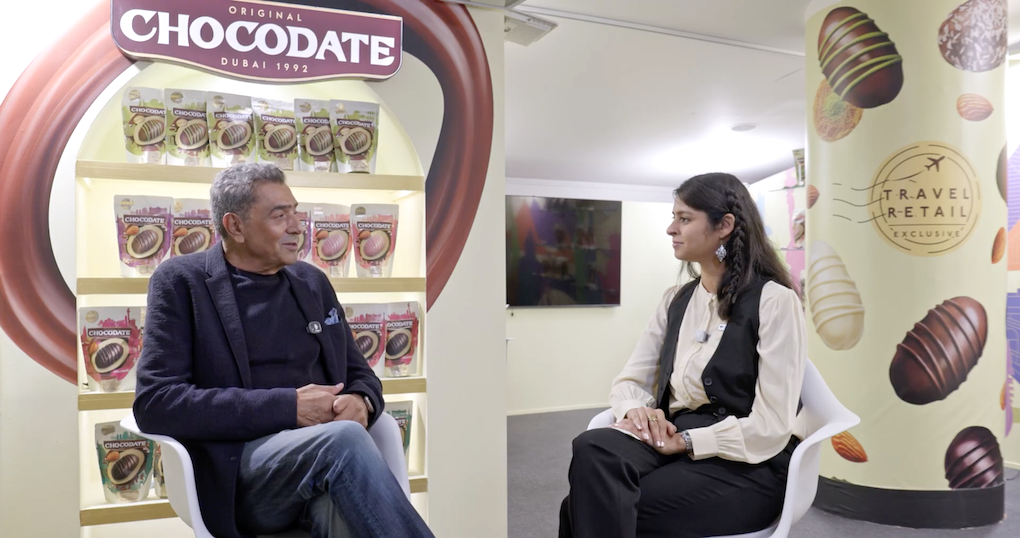




When Fawaz Masri set out to create Chocodate in 1992, he had two ambitions: to develop something distinctly connected to Dubai and to take it far beyond the city.
“I wanted to create a product that was unique in its nature and could travel all over the world,” recalls the Notions Global Founder & CEO.
“Being based in Dubai, what came to mind was to use something relevant to the area. So I chose the date, added roasted almonds coming from the USA and covered it with Belgian chocolate.”
More than three decades later, that combination has taken Chocodate into international markets, with travel retail playing an important role in its expansion.
Speaking to The Moodie Davitt Report Managing Editor Ameesha Raizada at the TFWA World Exhibition, Fawaz Masri and Chief Business Development Officer Razan Masri reflect on the brand’s journey, its longstanding partnership with Dubai Duty Free and how it is adapting to changing traveller expectations.
For Fawaz Masri, Chocodate’s identity as “the gift from Dubai” has been central to its success. Now, the company is taking that sense of place further, developing destination-inspired packaging that connects its products to the markets in which they are sold.
“Customers are getting bored of going from one duty free to another, seeing the same thing, with global products looking the same all over the world,” Razan Masri observes.
“So we’re going all in. We’re personalising, localising.”
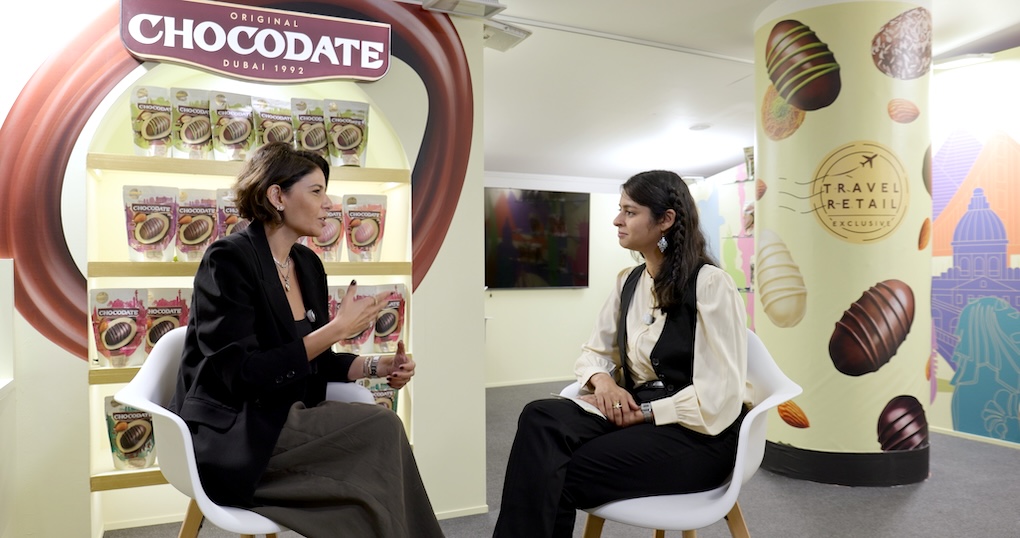
She also reflects on how changing attitudes towards health and indulgence have worked in the brand’s favour.
“Before the health and wellness trend picked up, we were swimming against the tide to convince people why such a healthy product is indulgent in its own way. You’re not giving up anything taste-wise.
“Now we’re swimming with the tide, not against it. We are very happy that we’re the right product at the right moment.”
The video interview also explores the importance of sampling, the evolution of Chocodate’s product range and the flexibility that allows the company to respond to opportunities across different markets.
“The thing about us is we are not so huge that we’re bureaucratic and can’t move quickly,” Razan says. “If we find an opportunity, we’re very fast, lean, and we can adapt to a market no matter how small or big it is.” ✈