

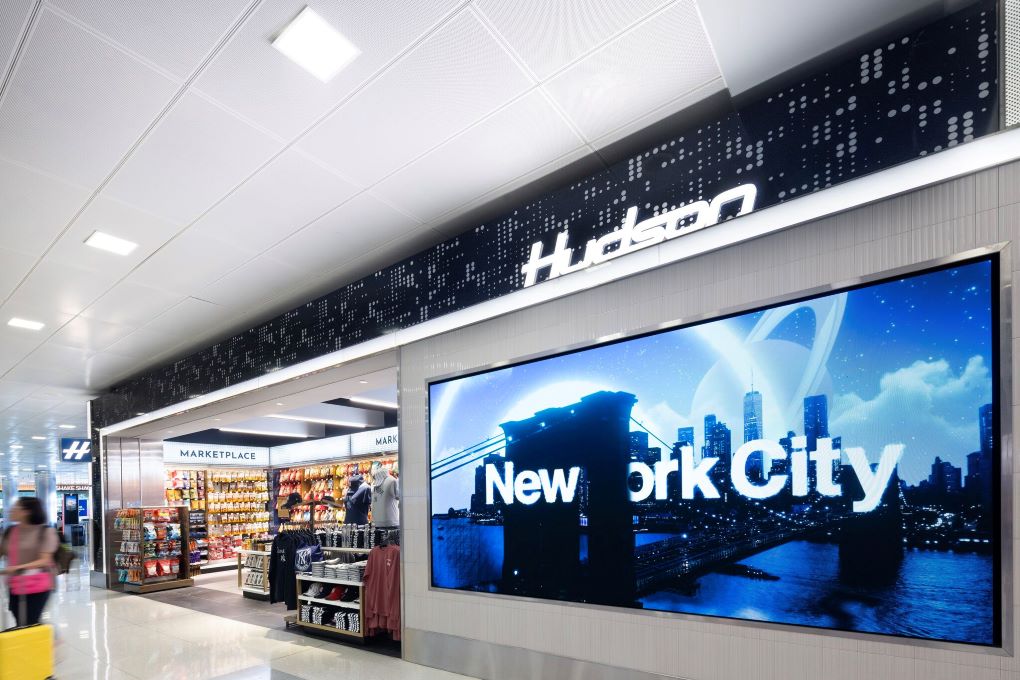
NORTH AMERICA. “One of the most ambitious programmes we’ve delivered in North America.” That’s how Avolta President & CEO, North America Steve Johnson describes the transformation across retail and dining that is taking place at New York JFK International Airport’s terminals, with Avolta playing a prominent part.
In the past 18 months the company has captured big contracts at terminals 4, 5, 6 and 8 spanning duty-free, duty-paid, travel essentials and food & beverage.

The pan-terminal investment programme is not just about adding scale but quality too, says Johnson.
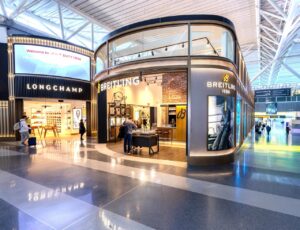
“What distinguishes this project is the number of first-of-their-kind concepts, both for New York and for the global travel retail channel. At Terminal 8, for example, we’ve introduced hybrid environments such as Blinded Tiger, a speakeasy-style cocktail bar embedded within a duty-free store, and Bubbles on 5th, a Champagne-led experience integrated into a luxury fragrance environment.
“These are not traditional adjacencies; they are fully blended concepts designed around how travellers actually behave.”
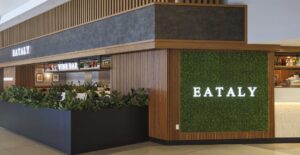
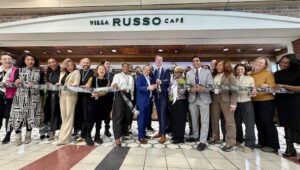
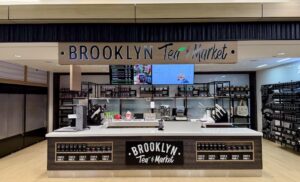
In food & beverage Avolta has brought some well-known New York brands into the airport environment for the first time, including Eataly and Momofuku, alongside strong local partners such as Brooklyn Tea and Villa Russo.
“That combination of globally recognised names and authentic local operators is central to how we create a sense of place,” he adds.
In parallel, the ‘Made in New York’ programme introduces locally produced goods, from artisanal confectionery to small-batch spirits, many of which are new to airport retail, offering “a more authentic connection to the city”, says Johnson.
The JFK pipeline includes additional hybrid concepts and new dining formats across four terminals. Several of these will introduce new formats to both New York and travel retail globally, “reinforcing JFK as a flagship location for innovation within our portfolio”.
Importantly, says Johnson, capital expenditure is not simply about the amount of money spent but on how this translates into performance and growing spend per passenger.
“Through design and layout, we create environments that encourage passengers to stay longer and engage across categories. Hybrid concepts play a key role, integrating retail and F&B to extend dwell time and increase cross-category spend.
“Technology-enabled infrastructure then reduces friction and improves throughput, with mobile POS, self-checkout and self-ordering helping capture demand more efficiently, particularly at peak times.
“Importantly, these investments also improve operational productivity, allowing our teams to focus more on customer interaction rather than transactional processes.
“So while the headline investment is significant, what matters is that it creates more productive space, not just more space, driving sustainable revenue growth over time.”
Achieving those aims also means moving beyond traditional retail and creating “environments that are experience-driven, locally relevant and commercially effective”.
Johnson says: “At JFK, that starts with how the space is designed. Rather than separating categories, we bring them together in ways that reflect how people actually browse, eat and shop. That creates a more natural flow through the space and encourages discovery.
“We then layer in local storytelling. Through initiatives like ‘Made in New York’, travellers encounter products and brands that are genuinely connected to the city, rather than generic global assortments. That authenticity is critical, particularly for international passengers.
“We also invest in programmable experiences, from tastings and brand activations to more intimate formats like speakeasy-style environments. These create moments that stand out in what is otherwise a highly functional journey.
“Finally, digital integration plays an important role. Through Club Avolta, we can connect retail and F&B, personalise offers and make the experience more relevant to the individual traveller.
“The objective is straightforward: create an environment where passengers are more engaged, spend more time and ultimately have a better experience, because that is what drives commercial performance.”
Avolta’s now well-developed capabilities in combining hybrid retail with technology will see their most advanced expression yet at JFK, he adds.
“From a concept perspective, hybridisation allows us to break down traditional barriers between categories,” says Johnson. “Instead of a linear journey, shop, then eat, we create environments where those activities happen in parallel. That increases engagement and leads to higher overall spend.
“Technology acts as the enabler of that ecosystem. At the centre of this is Club Avolta, which connects retail and F&B into a single loyalty framework. This allows us to recognise customers across touchpoints and deliver more relevant offers throughout their journey.
“We are also deploying smart retail tools, such as digital product discovery interfaces, and friction-reducing solutions like mobile POS and self-checkout. These are particularly important in an airport environment, where time sensitivity is a key constraint.
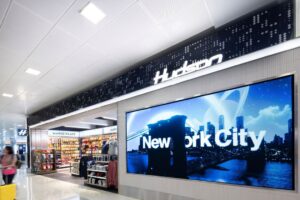
“In addition, we are investing in digital media and in-store activation, which allows brands to engage customers dynamically and keeps the environment visually compelling.
“The combination of hybrid concepts and technology creates a more flexible and responsive model, one that can serve both time-pressed travellers and those who are willing to dwell and explore.”
Expansion at JFK bolsters other contract gains in the USA through 2025 that include retail and dining concessions at Atlanta, San Jose and Washington Dulles airports, plus an expanded footprint at Dallas Fort Worth Airport. Big investment programmes by the company are taking shape at Miami and Palm Beach airports across duty paid and food & beverage, as well as in F&B at San Antonio and Toronto Pearson airports in Canada.
These will build on existing business in the vital North America division, which delivered core turnover of CHF4 billion (US$5.06 billion) in 2025, from 99 airports and 11 non-airport locations (principally motorways) and almost 1,900 points-of-sale.
Commenting on market conditions today, Johnson says the “trading environment in North America is mixed”.
He adds: “Domestic demand has softened in some segments, and international recovery remains uneven. That said, the sector continues to demonstrate resilience.
“Our approach is to focus on the levers we can directly influence, experience quality, premiumisation and conversion efficiency. Even in a softer demand environment, there is still significant opportunity to grow spend per passenger through better execution.
“Looking ahead to 2026, we remain constructive. Airport infrastructure investment across the region is substantial, and the pipeline of redevelopment projects continues to create long-term opportunities.”
Broadly, he concludes, the North American market will continue to evolve “toward higher-quality, more experience-led environments, with greater integration of digital capabilities. Our recent contract wins position us well to participate in that next phase.” ✈