

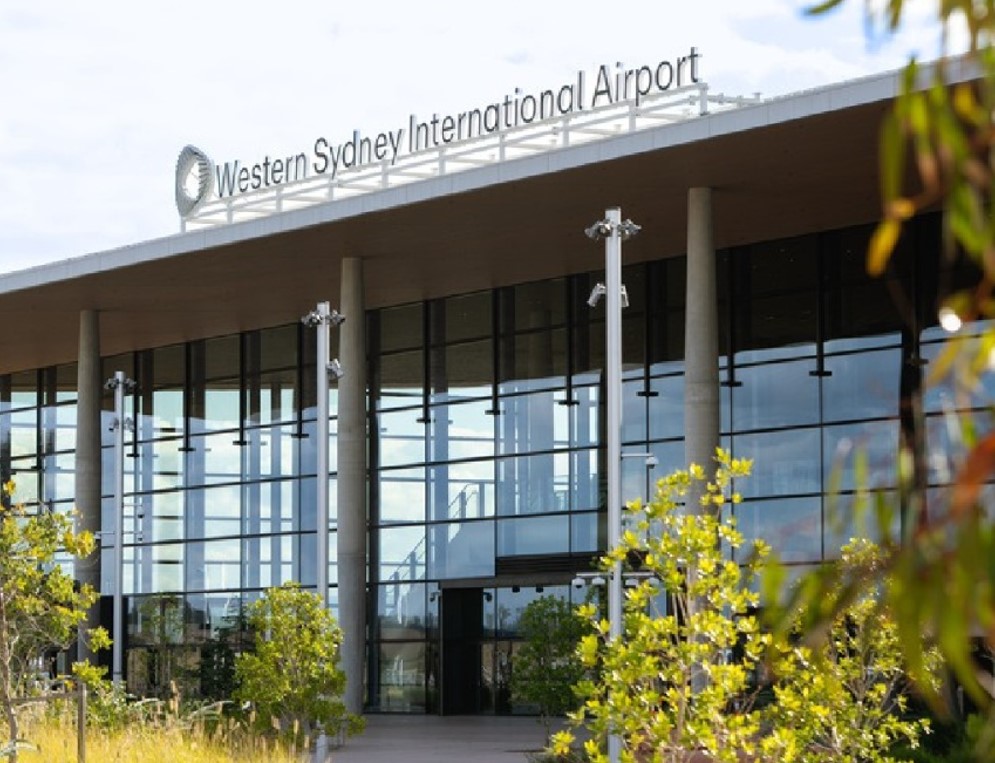
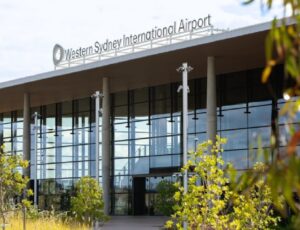
AUSTRALIA. This is a critical time in the ramp-up phase at Western Sydney International (Nancy-Bird Walton) Airport (WSI), with air cargo services having launched on 27 July, to be followed by passenger flights from 25 October.
For the commercial team led by General Manager Retail Glyn Williams, it is an exciting period.
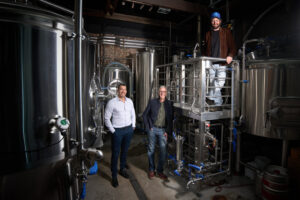
Recently the first food & beverage partnerships at the new 24-hour global gateway were revealed, with two sites awarded to Mountain Culture Beer Co, an acclaimed Blue Mountains craft brewery, under a partnership with Airport Retail Group Australia. More F&B announcements will follow.
Among the anchor partners at the airport is Lagardère AWPL, which WSI recently named as winner of dual ten-year contracts for the duty-free and travel essentials concessions.
The Pacific region’s largest travel retailer will operate 11 stores, embracing 1,900sq m for duty free and 1,200sq m for travel essentials and speciality retail, spanning the international and domestic precincts. The business will trade under the brand name ‘Duty Free at WSI’.
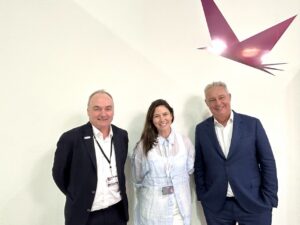
Williams explains to The Moodie Davitt Report why, beyond financial terms, the airport company chose Lagardère AWPL as partner.
“It was about their access to brands, whether it be above the storefront or the inside the store, and it was their ability to operate across multiple categories. When you start talking about operating efficiencies, particularly in an airport that is commencing trade, it was crucial to consider viability in the first number of years.
“This is also a highly established group within the Australian market, one we hold in very high regard, and we felt they were the partner we wanted to do business with.”
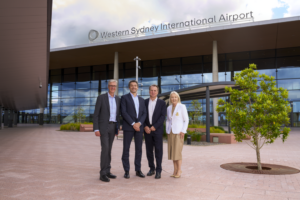
Also, as this is a greenfield site, flexibility is part of the contract agreement too.
Williams says: “The Lagardère AWPL contract is styled uniquely for our location that is starting up. It incentivises us as a partnership to enable flexibility and for each party to benefit as sales grow.”
Having a large partner enables the airport to be flexible and adaptable to the needs of its audience from day one, he adds.
“We will be doing a lot of testing in the new environment. Naturally we hope we get it right, but working with a partner that has such a flexible approach themselves, we know that we can manoeuvre and ensure we have the right product for the customers that are coming through at any given point.”
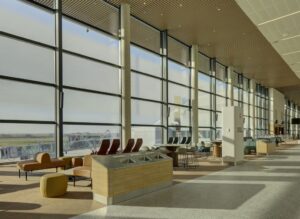
The potential local and regional audience for WSI is growing as Sydney expands westwards, offering a solid base for the future – with Singapore Airlines, Air New Zealand, Qantas and Jetstar announced as airline partners to date, with ticket sales already under way.
“When we talk to luxury and P&C brands, their databases are telling them that where they are most active is also shifting west within Sydney,” says Williams. “That shows how the money and the propensity to spend is shifting, and that applies to other categories too.”
Elaborating on why brands should eye the new airport as an exciting location, Williams says: “This is the first international greenfield airport built in Australia for over 50 years, and there is no other in the planning.
“Brands have got a number of opportunity locations at the airports in Australia and New Zealand, but here is one that is starting off, will move towards 10 million passengers in a short period, and with a growth profile for expansion up to 82 million passengers in the years ahead.
“That is an amazing proposition if you can take a first mover or a foundation position and say, we want to be on that journey.”
Addressing how luxury is treated in particular, Williams says that the days of offering A$3,000 (US$2,066) handbags as an entry position with a particular demographic in mind are over (especially now that Chinese overseas shopping spend has declined).
“We think about this differently today. You still need a premium product offer within the store but we want to develop a value brand proposition that meets the requirements of all passengers going through, not just one upper tier demographic. That is crucial.
“It’s time to start bringing the offer back to what your passenger really requires, and to me that is now lifestyle leisure. The shopper is focused more on what value they are going to get from their spend, rather than overspending on an item for the impression it makes.”
In other developments, leading Out of Home media company JCDecaux has been awarded the contract to manage the airport’s digital advertising assets. Alongside the appointment of Lagardère AWPL (and that of Global Exchange as foreign exchange services provider), this shows the belief and commitment among major global players to becoming part of the Western Sydney International Airport story, says Williams.
“These players get first-mover advantage. A ten-year deal means that well beyond the ramp-up, which we appreciate is part of it, you can gain the benefit of being here for the long term.”
WSI management has pledged that travellers will encounter a strong, diverse consumer-facing and commercial offer that blends local, regional and global themes and concepts. Within this, creating a Western Sydney identity was key.
Williams says: “If we take duty free, we have that core part of the offer that people expect, we have surprise and we have what we call the ‘best of the west’. Lagardère AWPL have committed to working with the local community on a number of brand projects and there will be selections of these dotted throughout the retail.
“In F&B we are so excited about welcoming a first-to-airport brand in Mountain Culture Beer, which has an amazing back story and has grown dramatically from small beginnings. As they grew they took over a facility about 10km from our airport, and are talking about even developing a WSI beer.
“What all of this says is that we are committed to the growth and development of Western Sydney businesses.”
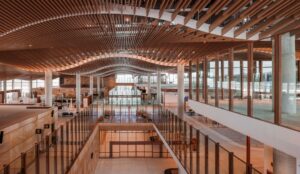
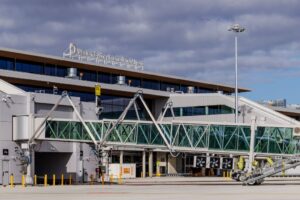
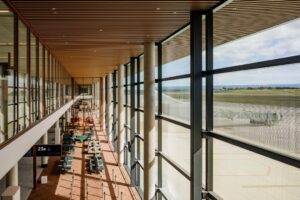
WSI’s ambition also comes to life in the terminal’s design, described as transformative for Australian airport architecture, which is “grounded in place, shaped by light, and built for the future of aviation”.
Developed by COX Architecture and Zaha Hadid Architects, and constructed by Multiplex and Woods Bagot, the terminal combines innovation and functionality while reflecting that local identity.
“Sense of space is an important idea here,” says Williams. “In domestic, when you walk through security, every passenger can see every single tenancy within that space, and when they arrive back off their flight, it is the same.
“It is then up to the retailer to engage, but the fit-outs are going to be so beautiful, allied to that 100% footfall, that we are confident we will see great results.”
He adds, “What is also important is that this is the most technologically advanced airport in Australia, with seamless processes that enable you to get through quickly, enter the commercial spaces and see all stores at once, which hopefully means increased visitation and spend.”
What would WSI management like the first travellers’ impression to be as they enter the space, we ask finally?
Williams says, “We want people to feel the wow factor, experience the scale of what has being developed and embrace being one of the first passengers walking through this exceptional, brand-new airport.” ✈