
Even amid the headwinds buffeting the premium to prestige spirits market today, William Grant & Sons takes an upbeat view of the opportunities that single malts in particular represent, with travel retail a vital channel in amplifying its brands to new audiences.
Regional Managing Director, Global Travel Retail Rufus Parkinson says, “We came out of 2025 with momentum in the channel, and saw good growth across last year that has continued.
“We are navigating the impact of geopolitical events, particularly in the Middle East. And on the broader macro side, consumer confidence is weaker than it was and inflation is having an impact. But speaking broadly, the picture remains positive, both across malts and gin in travel retail, even if it’s not the same in every domestic market.
“We are grounded and realistic, but we have reasons to be quietly positive.”
At a time when the spirits category is under pressure and some retailers are even cutting back on the breadth of their offerings, the brand owner identifies the levers required to recruit and engage a changing audience.
“First,” says Parkinson, “the context is that consumers generally have less dwell time than they used to. So how do you engage them, and within a short period of time, get your storytelling and point of difference across? People are on a discovery journey, they are eager to learn and here digital plays a big part pre-trip, especially for younger consumers.
“Then, how do you follow through at the point of sale, through advocacy, Brand Ambassadors and digital elements that bring your story to life in store?
“That advocacy takes different forms in different markets. A Brand Ambassador selling to an Indian traveller is very different to selling to a Chinese traveller or to an American traveller. We have to be quite savvy and granular in terms of how we approach that.”
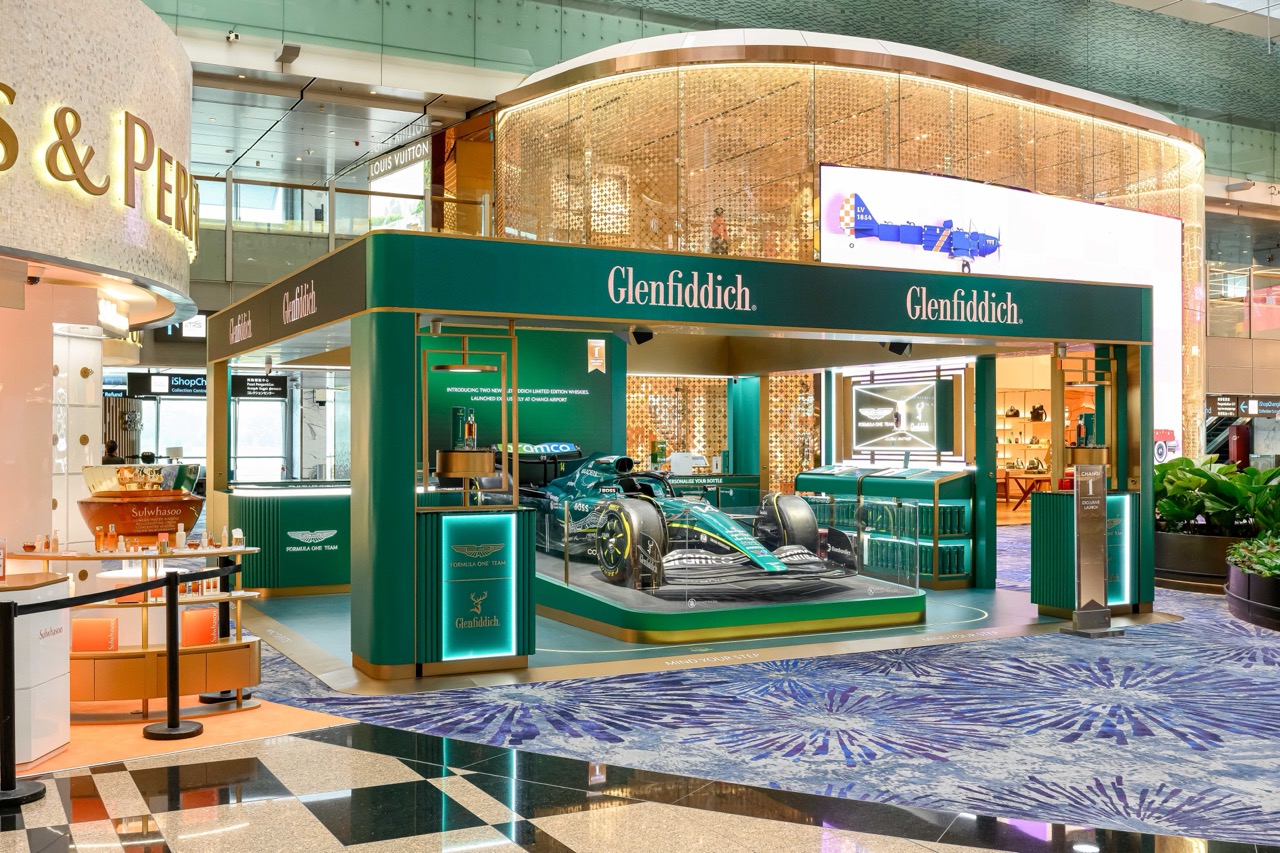
The company has also invested in partnerships that give it access through new channels, for example with the Aston Martin Formula 1 Team, with which Glenfiddich has partnered in a big play for the brand.

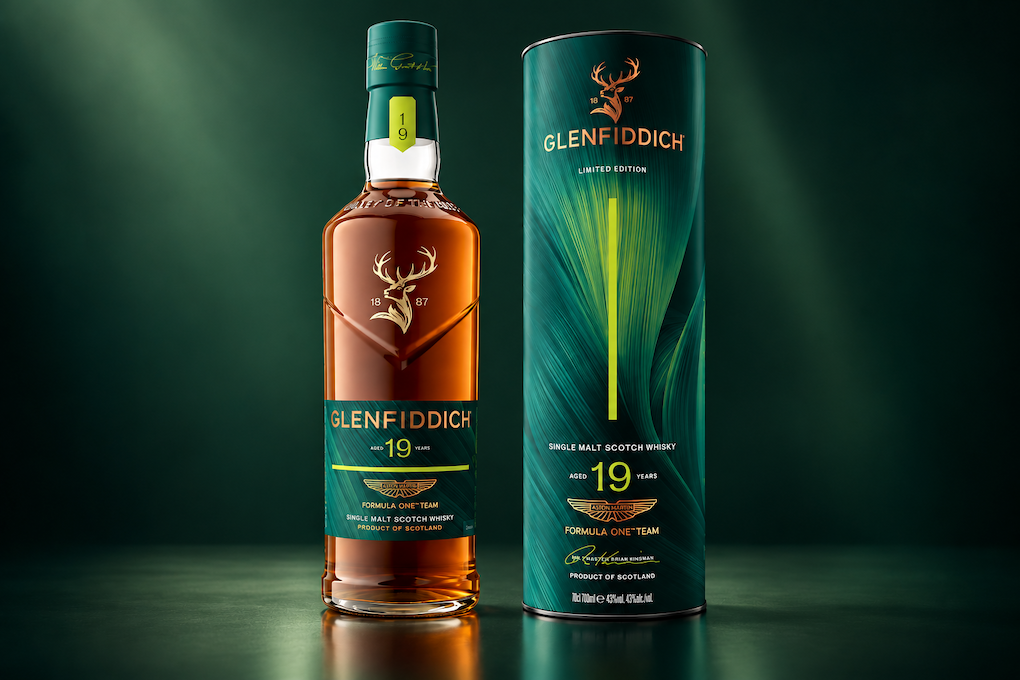
This included the launch last year of a travel retail-exclusive (TREX) Glenfiddich 19 Year Old Limited Edition alongside a high-impact campaign. This featured a flagship activation in Singapore Changi Airport Terminal 3 across September and October 2025, close to the Singapore Grand Prix.
“We have been quite selective and deliberate about the platforms and the partnerships that we have,” says Parkinson. “Aston Martin and Glenfiddich work well, not just because we want to be in Formula 1, but these two brands really fit well together through heritage, innovation, precision and quality.”
Such partnerships also bring new consumers into the category.
During the Singapore concourse activation noted above, says Parkinson, “we found a huge number of consumers coming through who were not existing single malt consumers, but they were interested in Formula 1 and in trying something new.”
Creating excitement in travel retail can also come from effectively playing gifting or festive occasions and having the right propositions. Here, the company has invested to study and understand how best to deploy its assets.
Parkinson says, “We put a category team in place about 18 months ago that is really starting to help us in to get under the skin of those opportunities and also build stronger partnerships with the retailers.
“Those partnerships are critical, and we have to ensure that we are all aligned. We are starting to help some retailers with category projects in their new spaces, supporting them in engaging with consumers in that retail environment.”
Differentiation too plays its part.
“A platform such as Formula 1 can be very successful as it was with our 19 Year Old Glenfiddich created with Aston Martin. That adds a true point of difference.
“You cannot have differentiation for differentiation’s sake. It has to be thought through. What are you actually offering to the consumer? Where is the value add? Is it an amazing liquid story, a limited edition that you can only find for a certain period of time, or is it something through the packaging that is attractive or relevant for a particular occasion?”
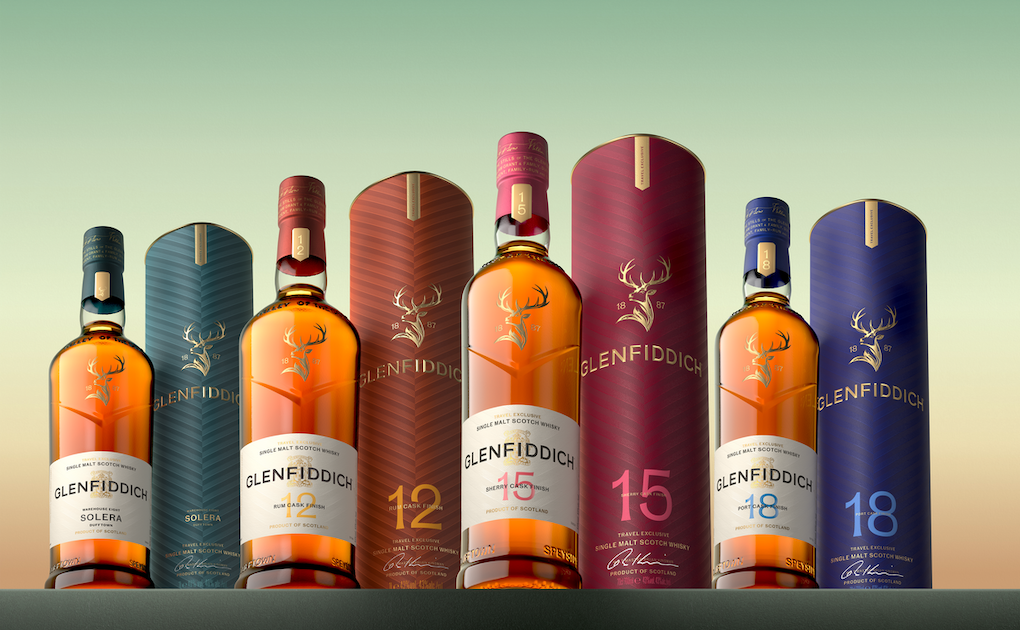
The latest example of differentiation coming to life is the introduction of Glenfiddich’s The Voyage Collection, a new permanent TREX range that showcases key milestones in the brand’s cask maturation and finishing evolution. The Voyage line highlights Glenfiddich’s long-standing focus on wood management, cask finishing and flavour development.
Parkinson says, “As a permanent exclusive range, it not only strengthens Glenfiddich’s presence in the channel, but also signals a bold new expression of the brand for consumers around the world.”
Asia Pacific priorities
With an eye on Asia Pacific in particular, Parkinson identifies the key markets for growth and investment.
“In South Korea, we have good momentum. The Balvenie is the leading single malt in the market domestically and at the airport.
“India is crucial and we see good growth there. Glenfiddich is the number one brand among single malts, and a real power brand, and that has propelled us both in India and in the Middle East.
“There is a strong desire for premium whisky and people are moving up the ladder. We also have a strong Monkey Shoulder business in India, which brings energy and versatility to the category, and recruits new consumers into whisky.”
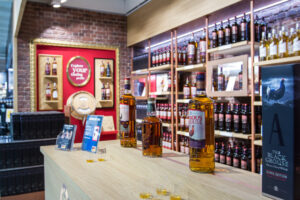
China remains a challenging market but one with real long-term opportunities as domestically international spirits is still only 1% of total spirits consumption, and within this segment Cognac outweighs other categories.
“In China it is still about growing the pie and recruiting consumers. Within travel retail we are gaining new, younger adult consumers who are focused on the authenticity and the storytelling. For them it is not just about a brand or a price.”
He adds, “There are regional specifics in every market so identifying the next growth drivers in each is key.”
Single malts continue to represent huge opportunity in these markets and worldwide, he adds.
“In the short term, we face some realities about where the consumer is in terms of their spending, but if you take a three-to-five-year view, there are many more premium whisky markets coming into focus that will be significant for malts.
“If we as brand owners introduce and educate and provide enough excitement along the way, the consumer will gravitate to that space.
“I believe there is so much more interest in that space versus some of the other categories that cannot tell the same story in terms of their architecture and liquid experience.
“Single malt has that advantage. We have seen it in the way that Taiwan has progressed, in the way that Korea is going, even China now as well. It will happen if we, as marketers and brand owners, get it right.”
Taking leadership
Parkinson also highlights how William Grant & Sons can maintain a strong leadership role in the channel, notably in single malts.
“We are becoming stronger in how we deploy data and category insights, with the investments in our teams and driving that insight to action on the shop floor.
“If you look at the brand portfolio too, Glenfiddich is a big recruitment driver for single malts. It plays that role within our portfolio and for the retailer as well. This is being supported by a new visual identity.
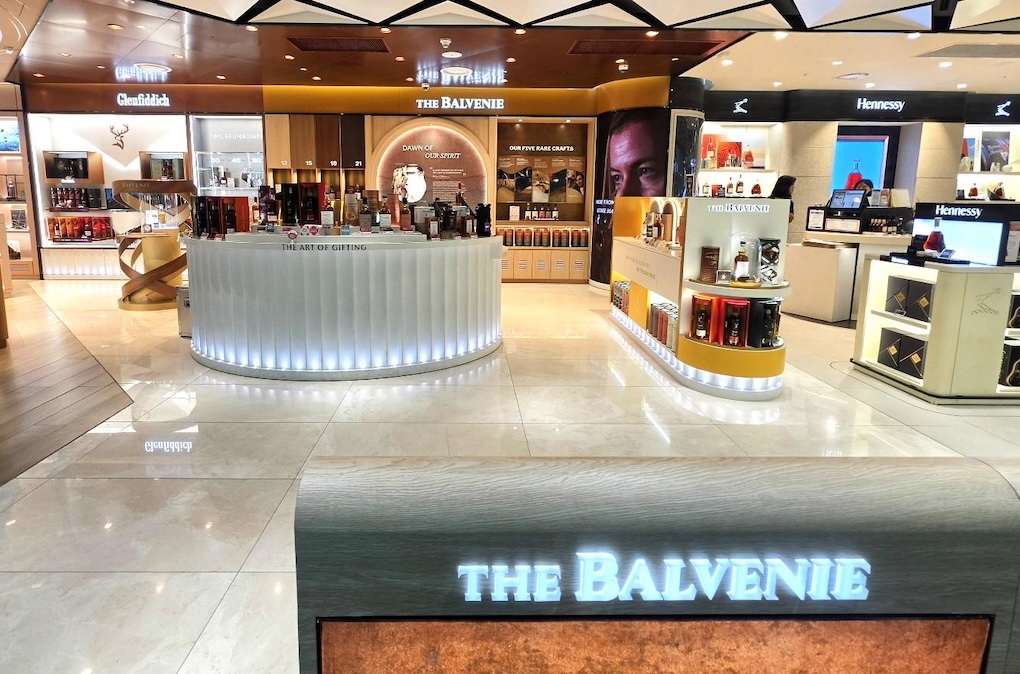
“The Balvenie carries that handcrafted appeal, leaning perhaps towards the malt drinker who wants to try something different and move on in their journey.”
Recent innovation around The Balvenie has come from a landmark creative collaboration between the brand and American visual artist Daniel Arsham for a limited-edition collection inspired by the distillery’s ‘Five Rare Crafts’ – barley, cooperage, malting floor, copper stills and Malt Master expertise.
Working closely with Malt Master Kelsey McKechnie, Arsham is designing a phased artistic programme that will roll out in stages and is connected to the release of The Dawn of Our Spirit, a hand-crafted whisky collection that includes an ultra-rare expression and a series of collectable limited editions.
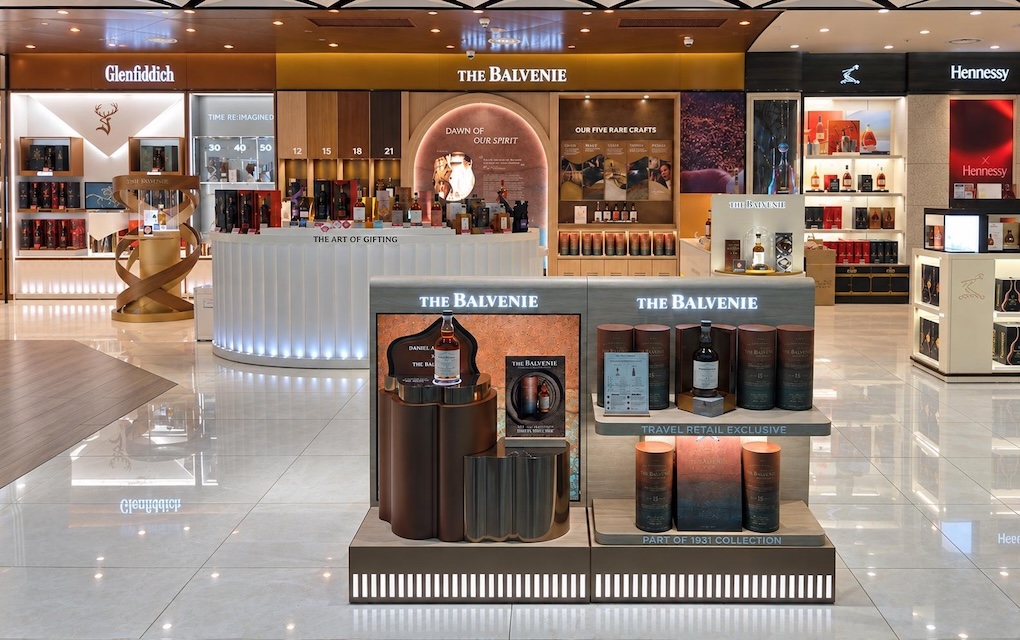
In recent days the brand owner also celebrated The Balvenie’s 1931 Collection with an airport-wide activation at Incheon International Airport. Click here for more.
Monkey Shoulder has a strong runway for growth, with its own new visual identity being reimagined, with Grant’s also playing a role in encouraging consumers into Scotch.
And then there is The Famous Grouse, which joined the portfolio last year following the brand’s sale by The Edrington Group.
Parkinson says, “We will bring innovation to the brand in the future and see how we can develop that brand into a bigger franchise, playing on the accessibility of Scotch.”
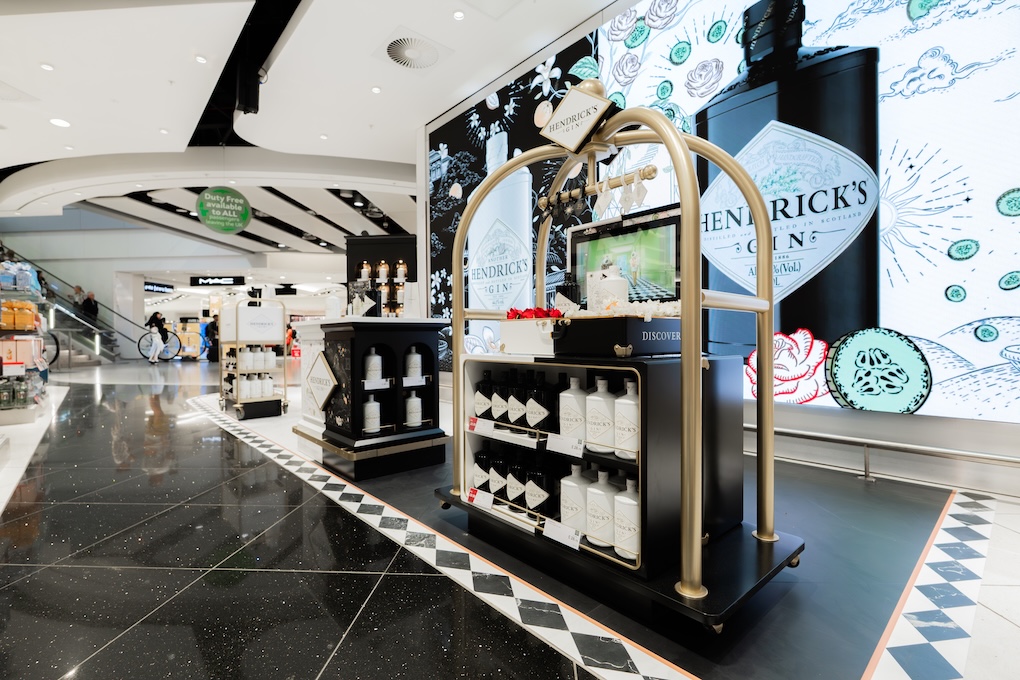
In gin, Hendrick’s is “doing the most disruptive things within the category today”, says Parkinson, “and continuing to drive a premium-plus level of gin consumption”.
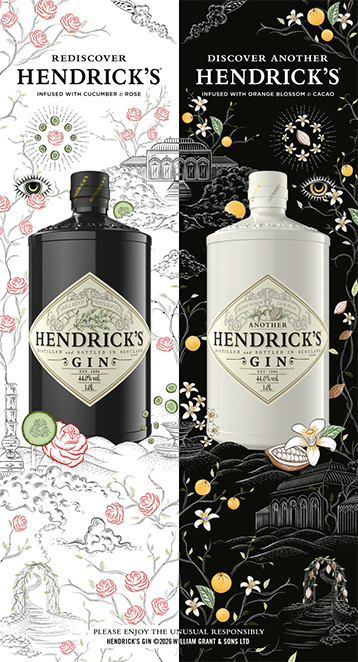
The company’s Whimsical Watering Can gifting proposition last year delivered disruption and newness in the channel. This year, Another Hendrick’s became the first new permanent expression added to the gin brand’s portfolio in nine years. It is also the only innovation in the brand’s history to be launched globally across all markets, including in travel retail.
We close by asking Parkinson how the market looks set to evolve further, and how closer partnerships with retailers can support penetration and conversion.
“Retailers want differentiation, and at the same time they also want to have those physical activations that have an element of wow factor and retail-tainment.
“We are looking at how we can bring to bear the interactivity and gamification of, for example, a Formula 1 simulator, in a way that helps us all build stronger brands and bring real value to the category.
“How do you interrupt the shopper during their journey? It remains a challenge to get footfall into the store, and then how do you convert those consumers. We have had a lot of discussion around that, whether it is through Brand Ambassadors, the Formula 1 platform or others.”
The categories and how they are displayed is also changing in line with consumer trends.
“If we go back pre-COVID, many shops were laid out around Cognac in Asia Pacific, or blended Scotch elsewhere, based on where the consumer was at that time. Now the consumer has shifted, so we are having discussions about how that comes into play when renovations are being made.
“The market is changing, and we are moving with it. The insights that we can bring to our partners and our innovation pipeline shows that we have the plans in place.” ✈