And when it’s time for leaving Mozambique
To say goodbye to sand and sea
You turn around to take a final peek
And you see why it’s so unique to be
Among the lovely people living free
Upon the beach of sunny Mozambique
– Mozambique – Bob Dylan and Jacques Levy
Prologue: Meet Kamal Moukheiber, Founder & CEO of Bongani Cigars, a financier-turned-entrepreneur on a mission to build a world-class cigar business out of Maputo, Mozambique, using African tobacco, African talent and international expertise.
Moukheiber’s inspiration for Bongani Cigars was Californian wine giant Robert Mondavi, the legendary ‘Father of American wine’. Why couldn’t Africa, too, make its own great product – in this case premium cigars – rather than simply being cast as a provider of quality leaf for international brands? Especially when the vast and diverse continent has the soil, the climate and the people.
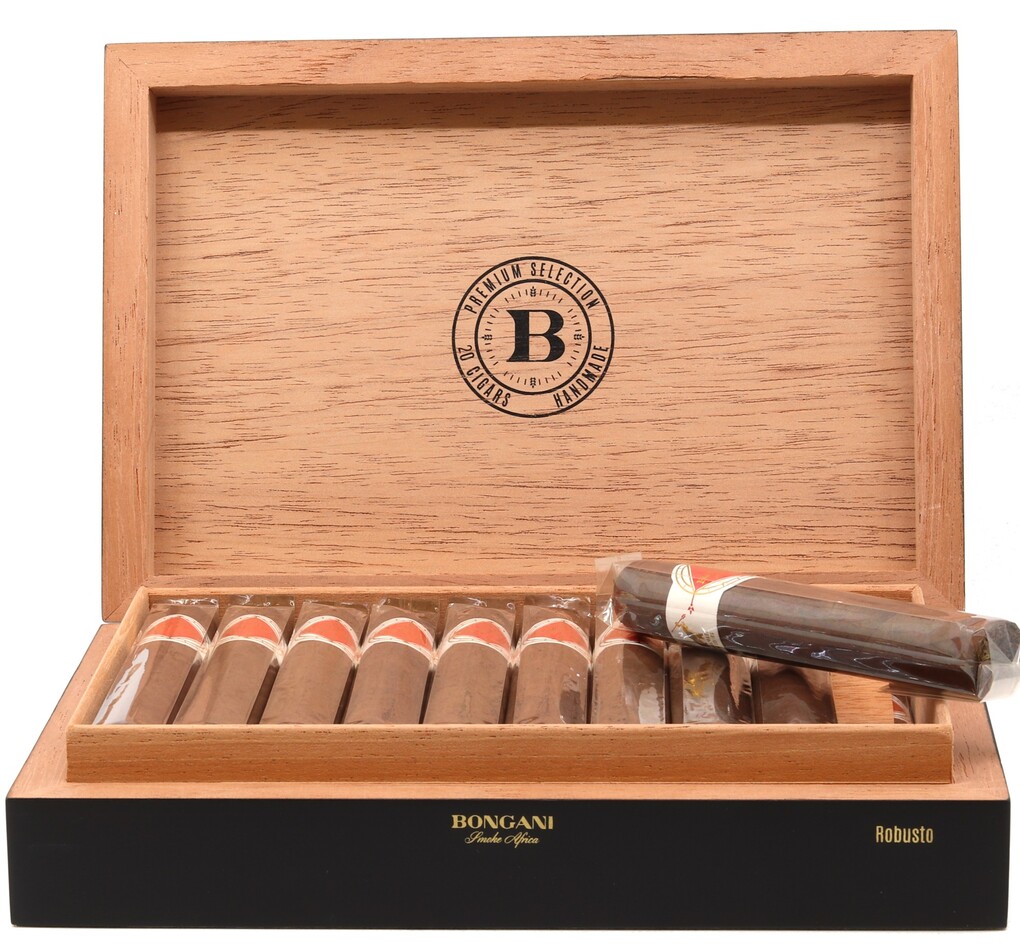
What started as a side project in 2013 has grown into a globally ambitious, boutique brand now available in multiple domestic markets, supported by a promising travel retail business. The company’s mission? To create a long-term sustainable enterprise based on exclusive, authentic and emphatically African cigars.
Bongani means ‘be grateful’ in Zulu. A name and philosophy rooted in African heritage, expressed through hand-rolled cigars aged in Ghanaian cedar, wrapped in fine Cameroon leaf, and sold as a globally respected luxury product.
In a fascinating exchange, The Moodie Davitt Report Founder & Chairman Martin Moodie discovered that Moukheiber already has much to be grateful for since his fateful decision to fully commit himself to the world of fine cigars.
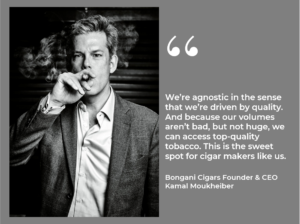
Martin Moodie: Kamal, I am always fascinated by tales of entrepreneurial success – including the back story as much as the ultimate creation. I note your background in investment banking with the likes of Credit Suisse and Lehman Brothers. Tell me about the whole journey.
Kamal Moukheiber: My background is Lebanese. I grew up in Lebanon during the war, and then I left in ’92. I went to France to study at business school [HEC Paris], which was a typical and very good thing to do at the time.
From there I went to London, where I worked in finance for about 15 years. It was a fantastic experience. My parents aren’t alive anymore, but I still have cousins and other family in Lebanon.
By the way, when you do business in Africa, being Lebanese actually helps a lot because you understand the culture. There are Lebanese everywhere and I have Lebanese clients wherever I go.
After those 15 years I found myself deciding to leave finance. It was great and paid lots of money but I wanted to do some other stuff, some more exciting and concrete projects.
I found myself in Mozambique, at first doing a real estate project. Incidentally, the architect we chose for that project [Diébédo Francis Kéré] is an African, who in 2022 won The Pritzker Architecture Prize, architecture’s highest accolade – like the Nobel Prize of architecture.
That suddenly positioned our project [which formed part of the body of work that earned Kéré the award] as being a part of modern Mozambique heritage. It was really cool, especially as for a long time The Pritzker Prize had been given to whoever built the newest skyscraper or the biggest, most flashy building.
Then it became more about how you can build in an accessible way for people who otherwise could not afford housing. And how you can build with local material but still have elegance and efficiency. Kéré was at the forefront of that, and we worked with him for our project.
When I started the project, I was flying back and forth between London and Maputo. Then one day, one of my partners said, “Hey, why don’t you move to Maputo?”
For me, London was the centre of the universe. It hadn’t even occurred to me that one would move out of London for anywhere. But when I mentioned it to my wife, much to my surprise she said, “Yes, why not? We’ve lived here for 15 years, so why not try something else just for fun?”
Next thing you know, we had this quintessential London family moving to Maputo. That was back in 2013, and then I started Bongani as a side project.
What was the genesis of that?
I saw some guys smoking cigars and thought, “Wouldn’t it be cool to have a cigar brand and actually make the cigars?” I didn’t have much vision beyond that, I just wanted to make cigars.
When I started that project, so many good things happened. Normally, when you start a new project, you only have problems, only mountains to cross. Yet so much good stuff was happening that I actually kept an excel sheet of all of them and the good coincidences.
One of the coincidences was reading the biography of Roberto Mondavi [1913–2008, the pioneering American winemaker who revolutionised the California wine industry]. He’s the guy who effectively started the quality wine industry in America. He was the first to bring the casks and the knowhow from France to Napa Valley and start selling, having asked, “Why can we not make top quality wine in America?”
I was reading this and thinking, that’s exactly what we should be doing. Why isn’t there an African cigar? You have all these Africans buying cigars and cigar consumption was growing a lot.
The point being, cigar smoking isn’t what it used to be – the rich guy in the three-piece suit smoking, that’s not what it’s about now. It’s growing a lot. People want to enjoy a cigar the same way they might enjoy a rum or a Cognac or a whisky.
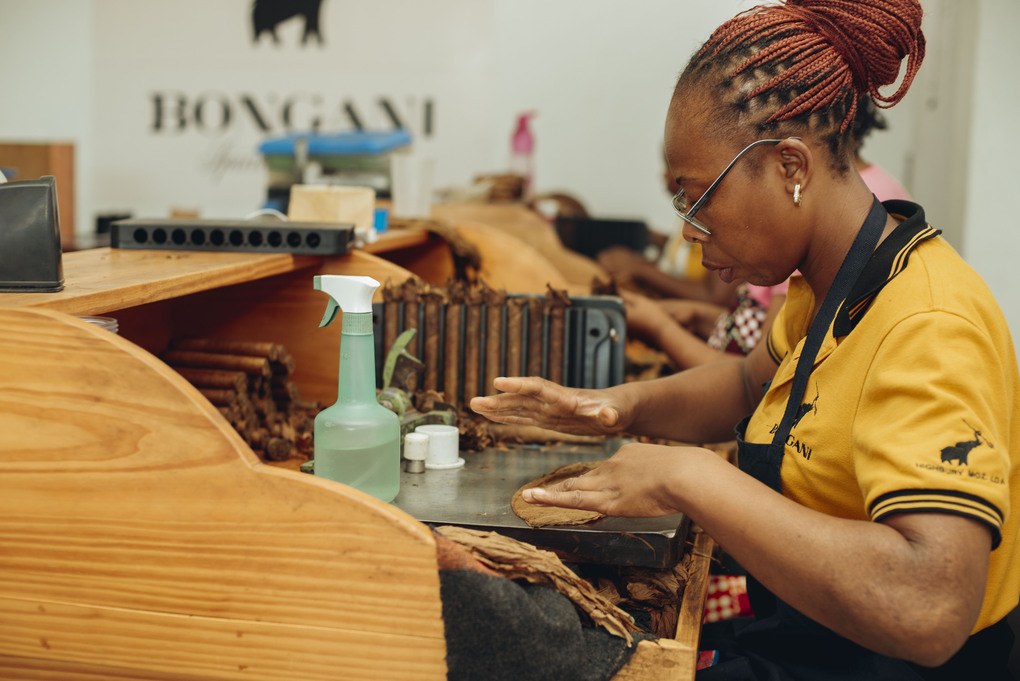
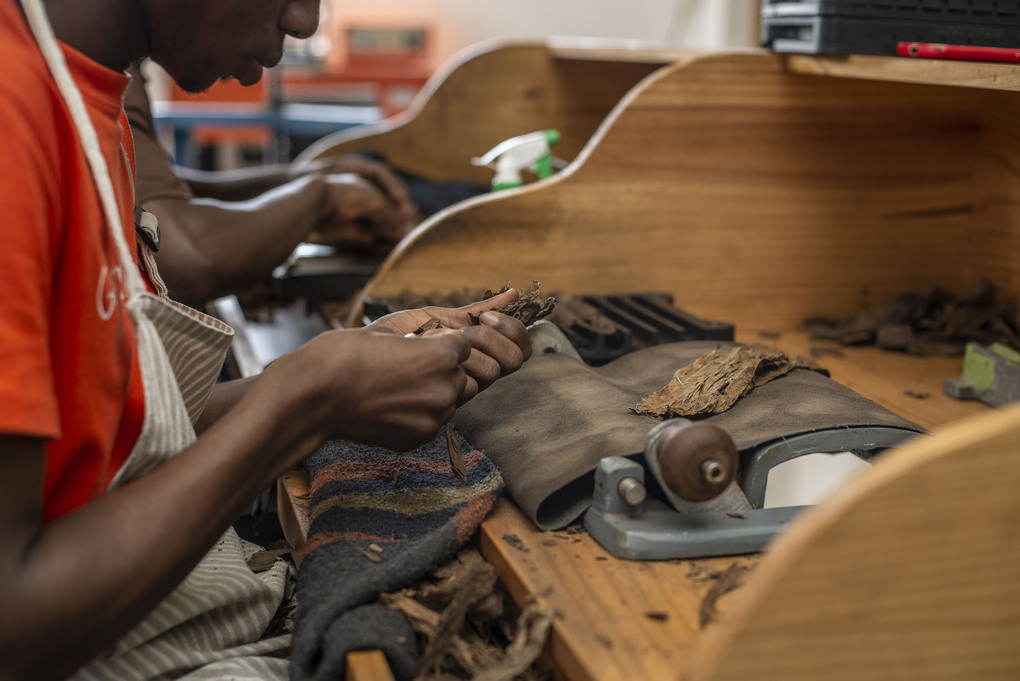
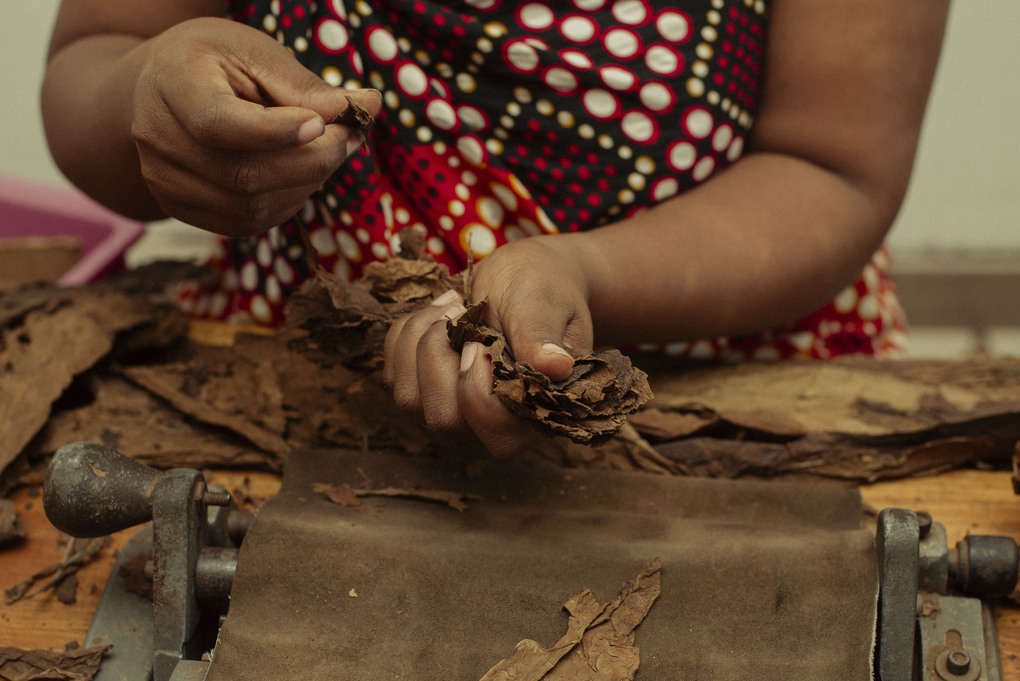
So that’s how we started. I went to the Dominican Republic, where I hired a leading cigar master who was a top guy at General Cigar Company with the Macanudo brand. He came with me to Maputo to train our team of Mozambican cigar rollers to the same level as you would find in the Dominican Republic.
When did you go to market?
We made our first cigar in December 2016. This whole area – Zimbabwe, Zambia, Malawi, Mozambique – is a huge tobacco-growing region. Africa has been growing top-quality tobacco for 100 years. However, as is so often the case with Africa, they ship the raw material instead of making the product on the ground.
For example, there’s a statistic that stuck with me. Africa produces a lot of coffee, which is sold for about US$13 billion each year. That coffee is then repackaged and resold around the world for US$80 billion by a range of leading coffee brands. So that tells you how much Africa is leaving on the table.
Cameroon, for example, produces one of the best cigar wrappers in the world. Mozambique has 3,000 kilometres of stunning beaches, it’s an amazing place to be.
Very often, when I do a presentation, particularly with our American friends who aren’t always geographically aware, I start by showing them a picture of a bridge and asking, “Can you tell me where this is?” And of course, they say Golden Gate or somewhere in New York. And I say, “No, this is the Maputo–Katembe bridge in Mozambique.”
The point is, some people, particularly in our generation, imagine Africa as being all civil war and famine and safaris. All clichés. We want to show there’s a whole other side to Africa.
That’s particularly interesting to me Kamal. I visited Addis Ababa in Ethiopia a few months back. And my goodness, it has a beautiful airport – Bole International – where a superb new airport duty-free store was opened by the Alfarag family during my visit.
And, to your point, any westerner visiting Addis Ababa – the airport or a city in profound transformation – will see their preconceptions fly out the window. It’s a startlingly modern city, and what I’m hearing from you suggests that Mozambique is equally interesting.
Tell us about the way you are building the brand.
We do a lot of promotional events in Africa and beyond. We did one in Prague, we rolled cigars in Johannesburg at the Whisky Live Festival, and also in Lagos at the Isimi Lagos Festival at the end of November.
In Mozambique we are present every year at the MTN Bushfire Festival in Eswatini. We showcase cigars in the VIP lounge and listen to excellent music over a weekend. It’s a bit like Glastonbury in the UK and happens on a farm every summer. You have bands coming from all over Africa to play. Really cool.
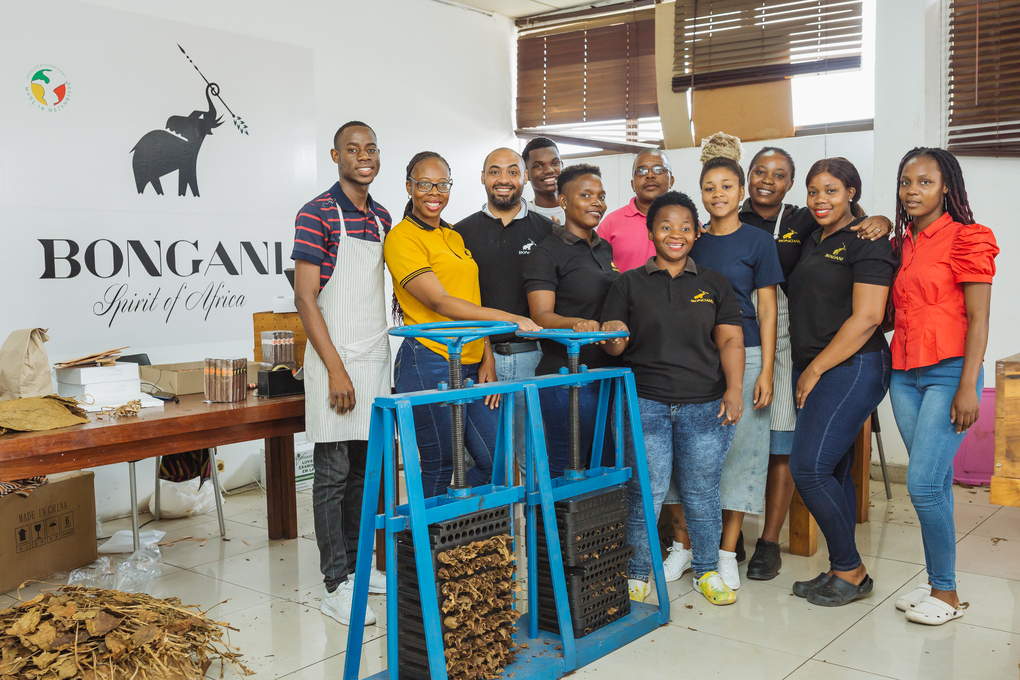
We’re growing our team. We’ve bought an area in a free zone where we’re going to put our own fabrica [a production, rolling and packaging unit].
We now include four cigar sizes with a fifth coming up. For example we have the Robusto, which is a 5×50 gauge. That’s the same size as the Partagas D №4, for example. And we have the Bongani 458 Toro, which is 6 x 58 ring gauge. That’s a big stick.
We also have the Gordo, a short but thick [4 x 58], cigar, rich in aroma, perfect for when people don’t have too much time to sit and smoke a cigar.
We recently launched a new exclusive sampler box at duty-free shops in South Africa, Kenya and elsewhere for Christmas travel.
Your production and packaging are striking. What are the key details?
Our cigars are aged in cedarwood sheets. Our cedar comes from Ghana in West Africa and it’s very fragrant. The point is to use as much African material as possible.
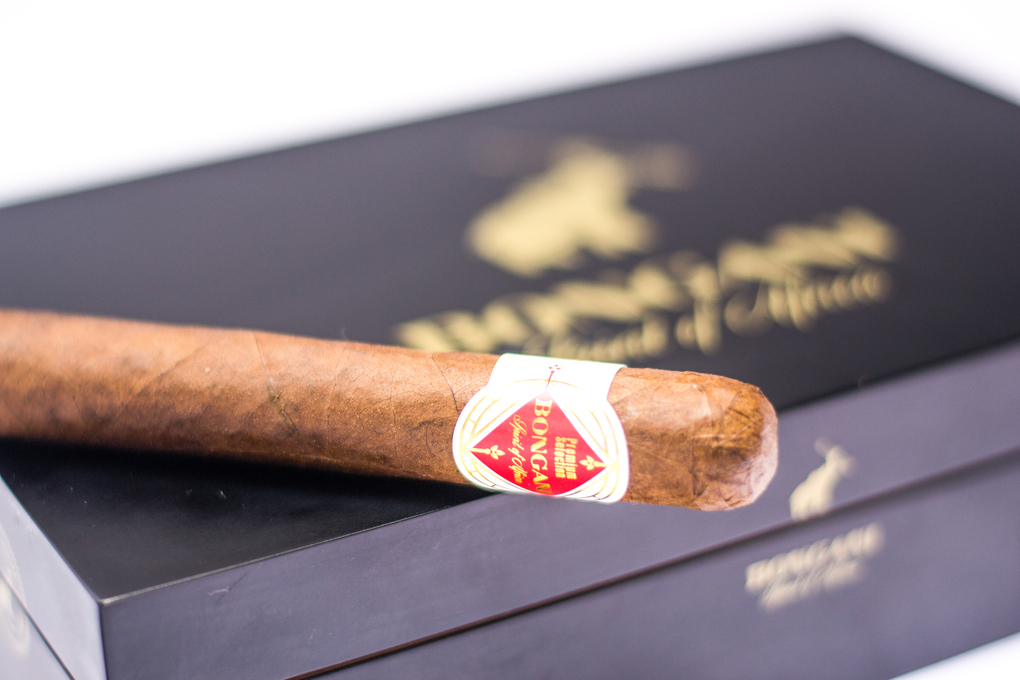
We have really beautiful boxes. They’re dark blue with our gold logo on top. The colours of the brand are black and gold, which are the colours of many flags in that part of Africa. Our logo, by the way, is an elephant holding a Swahili spear from Kenya. And Bongani means ‘be grateful’ in Zulu.
How established is your travel retail business?
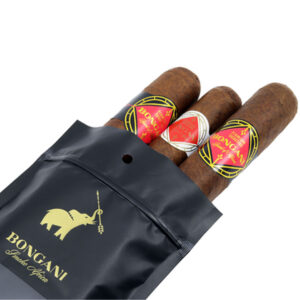
In duty free, the pack that is selling very well is a humidifying pack of three cigars (pictured right) – either three of the same cigar or three different ones.
The pack maintains humidity. So even in shops that don’t have a humidor, which can happen in Africa, they can still sell the packs.
Big Five at O. R. Tambo International Airport Johannesburg, for example, is a major client. These sell like hot cakes.
People come into the store who may not know the brand and ask for African cigars and the staff say, yes, we have Bongani. So customers may not buy a box if they don’t know the brand, but they will pick up a few packs like this.
We are also launching a luxury box exclusively for travel retail. And we are introducing a new cigar size specifically for the channel.
We have a compellingly unique story, being the only African cigar brand and we have a packaging range that is designed for travel retail.
We are also seeking to expand our presence across Africa in travel retail. We see a lot of interest both from domestic and international markets among people looking to bring back home something special made in Africa.
We are currently working only with Big Five and Dufry [Avolta]. To be fair, we haven’t been the most aggressive in going after the travel retail space but there is definite potential.
There is also definite potential in travel retail-exclusives (TREXs), for which we even have our own annual awards. TREXs are important to the consumer because they represent something you can’t get anywhere else. But they’re really important for the retailer as well.
Every travel retailer on the planet is under fire from local market competition, cut-throat pricing locally, online competition, cross-border rivals, you name it. With a TREX, they can offer something that differentiates from the High Street and also avoids invidious price comparisons.
So it ticks a lot of boxes. If you watch an Avolta, Heinemann or Lagardère Retail, for example, you’ll find that they’re moving more and more into that travel exclusive space.
Thank you very much for the advice. This is something we can do. We’re still a boutique brand, it’s not like we’re everywhere but wherever we are, we sell well. And surprisingly, so many people pick Bongani up in Johannesburg or in Nairobi, then go back to the US, and then I get a call from a shop in the US saying, “Hey, where can I find your cigars?” It’s quite amazing how word gets around.
How many markets are you in now?
About ten. We’re in Mozambique, but also South Africa, Kenya, starting now again in Nigeria, and we’re in Congo, Ivory Coast and so on. In Nigeria and South Africa we sell directly through our own websites, plus the usual distribution channels.
In Kenya, we’re quite big, and we work with Dufry on the duty-free side as I mentioned. In all the other markets, we have local distributors. In South Africa, we’ve been with Big Five for eight years. If I look at their very first order size and then the last one, it’s probably five or six times bigger.
So that’s why I think we can do more in Africa. For example, we’re not in Ethiopia. We’re a small brand, so we can move quickly. We don’t have huge layers of authorisations. Outside Africa, it would be interesting to be in a few duty-free locations.
What about your leaf. Are you buying everything from contract farmers or have you acquired land and plantations?
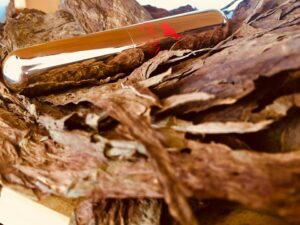
No, we don’t grow our own tobacco. We bring seeds from the Dominican Republic and give them to local farmers. To be clear we buy leaf both from Africa and outside Africa.
Basically, we’re after the very best tobacco we can find. We’re agnostic in the sense that we’re driven by quality. And because our volumes aren’t bad, but not absolutely huge, we can access top-quality tobacco. This is the sweet spot for cigar makers like us.
You need to have your own facility and be your own producer, because too many people just white label. They go to a factory in the Dominican Republic or wherever and say, “Hey, make my cigar.” Fine, but then when you come back six months to a year later, you’re at the back of the queue, and you don’t control your volumes and your quality.
That model doesn’t work. If you produce yourself and your volumes aren’t enormous, then you’re in that sweet spot where you control your quality and can get top tobacco.
What’s the Bongani ownership structure?
I have business partners. I started it 100% and for a long time it was just mine then I opened it up for some very interesting partners Our Honorary Chairman is Bob Lutz, who was a big name in the car industry for 47 years, holding leadership roles for the likes of General Motors, Ford and Chrysler in the US. He was on the board of BMW. He is 93 but is one sturdy, fantastic guy.
He’s a big cigar smoker and has smoked cigars all his adult life. He was featured back in the 80s in Cigar Aficionado magazine for his great knowledge and collection of cigars.
Another partner might be of interest to you. Are you familiar with the Yellowstone series with Kevin Costner?
Yes.
One of the co-stars – Denim Richards – is also one of my shareholders. And then we have a whole group of smaller shareholders, some of the biggest and brightest businessmen out of Miami and the US. Solid guys.
They came in later. They actually called me and said, “Hey, we love your product, we love your cigars, can we be a part of this?” So we did a small investment programme for them. That’s the background, and I remain the majority shareholder.
What’s the long-term ambition?
Good question. The ambition is to be a perennial survivor, a company that is there for the very long term, producing extremely high-quality cigars and increasing that high quality at a high price.
We’re not going for volume, we’re not going horizontal. We’re going for exclusive all the time.
One unique aspect about us is we are one of the very few manufacturers who sell directly through our online platforms. So the long-term vision is to develop this client base with direct access to our clients. Duty free works very well in that model.
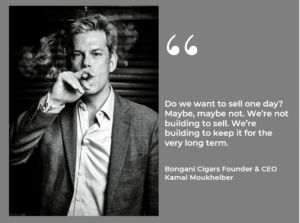
Do we want to sell one day? Maybe, maybe not. We’re not building to sell. We’re building to keep it for the very long term. That’s where we are.
All our employees are empowered, keen and they love what they’re doing. I don’t know if that answers your question. There isn’t some crazy vision. As I said, we’re not building to sell, though if it ever happens, it happens. But that’s not the plan. The plan is about being exclusive and perennial, something that lasts.
It needs to be profitable and solid enough, built on a strong foundation, so that it endures.
In short, you’re in the building phase, like any entrepreneur, and what happens down the line you will deal with in due course. You are not getting too far ahead of yourself, which is very good. Given your background, we’ll have to have a glass of Chateau Musar together sometime. With a Bongani cigar, of course.
I’d like that. ✈