


INTERNATIONAL. Artificial intelligence and social media are playing an increasingly important role in travel shopping discovery but that influence is not yet translating into airport sales, according to new Kearney research commissioned by Tax Free World Association (TFWA).
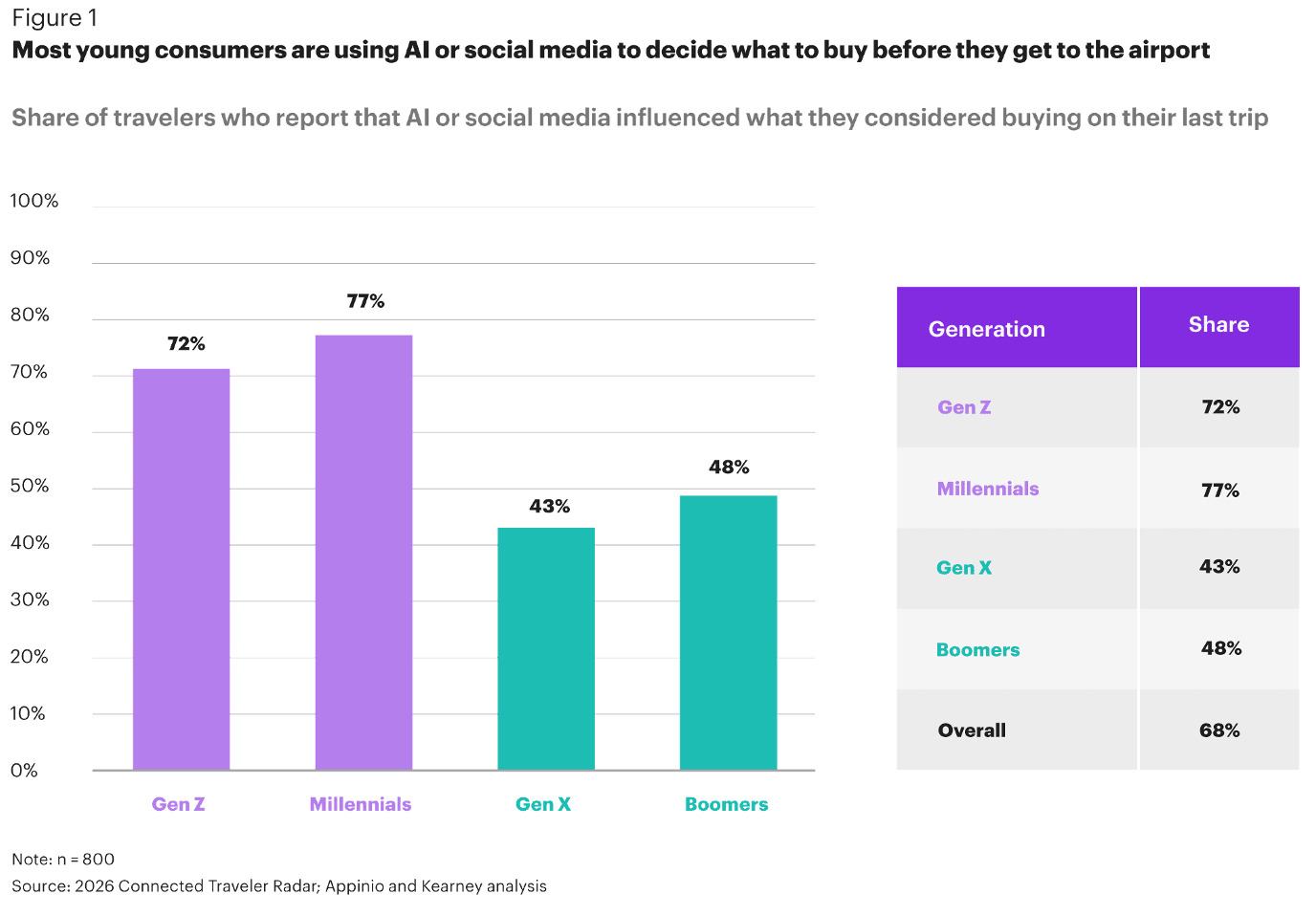
The study found 68% of travellers said AI or social media influenced what they considered buying on their last trip. The figure rises to 77% among Millennials and 72% among Gen Z travellers.
However, 64% of travellers who used AI or social media to research travel retail subsequently walked past airport stores without making a purchase.
Kearney unveiled the findings yesterday (30 September) at TFWA World Exhibition & Conference in Cannes (follow our live coverage here). Its fourth annual travel retail report, The connected traveler: how AI turns data into travel retail growth, draws on a survey of 800 international travellers, 20 executive interviews and more than 100 industry benchmarks.
Research raises the bar for the store
The findings underline a growing distinction between digital product discovery and purchase conversion.
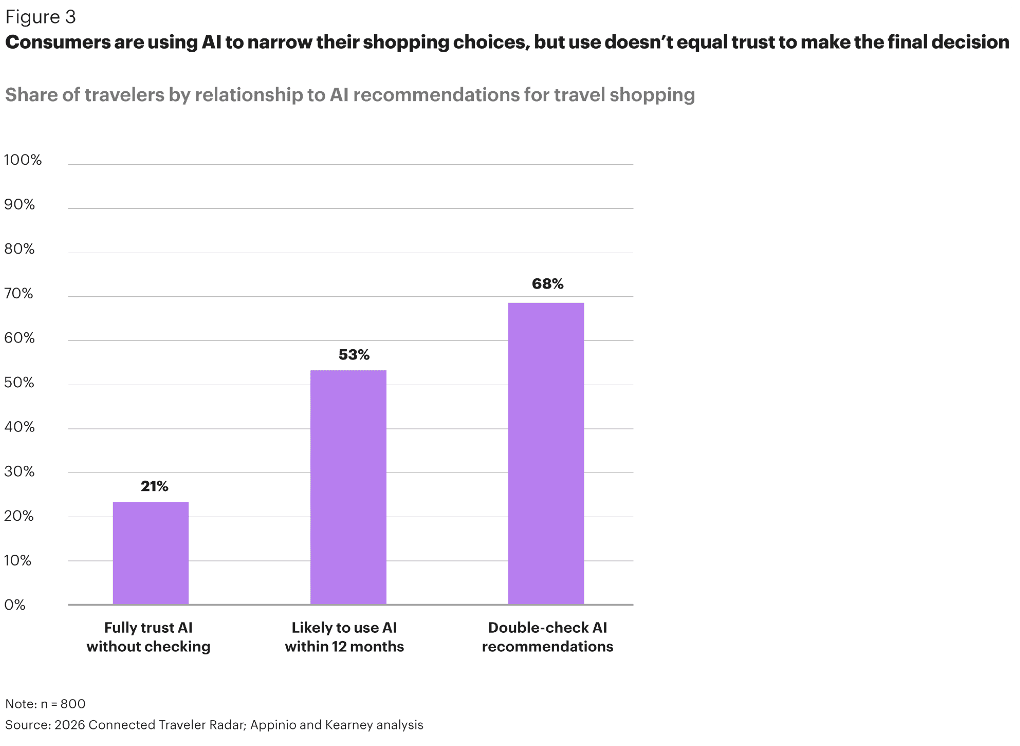
Travellers who research offers before travelling are 42% more likely to arrive at the airport with a shopping shortlist. But AI recommendations do not necessarily command consumer trust: 68% of respondents said they double-check AI-generated recommendations through other sources, while just 21% said they trust them completely.
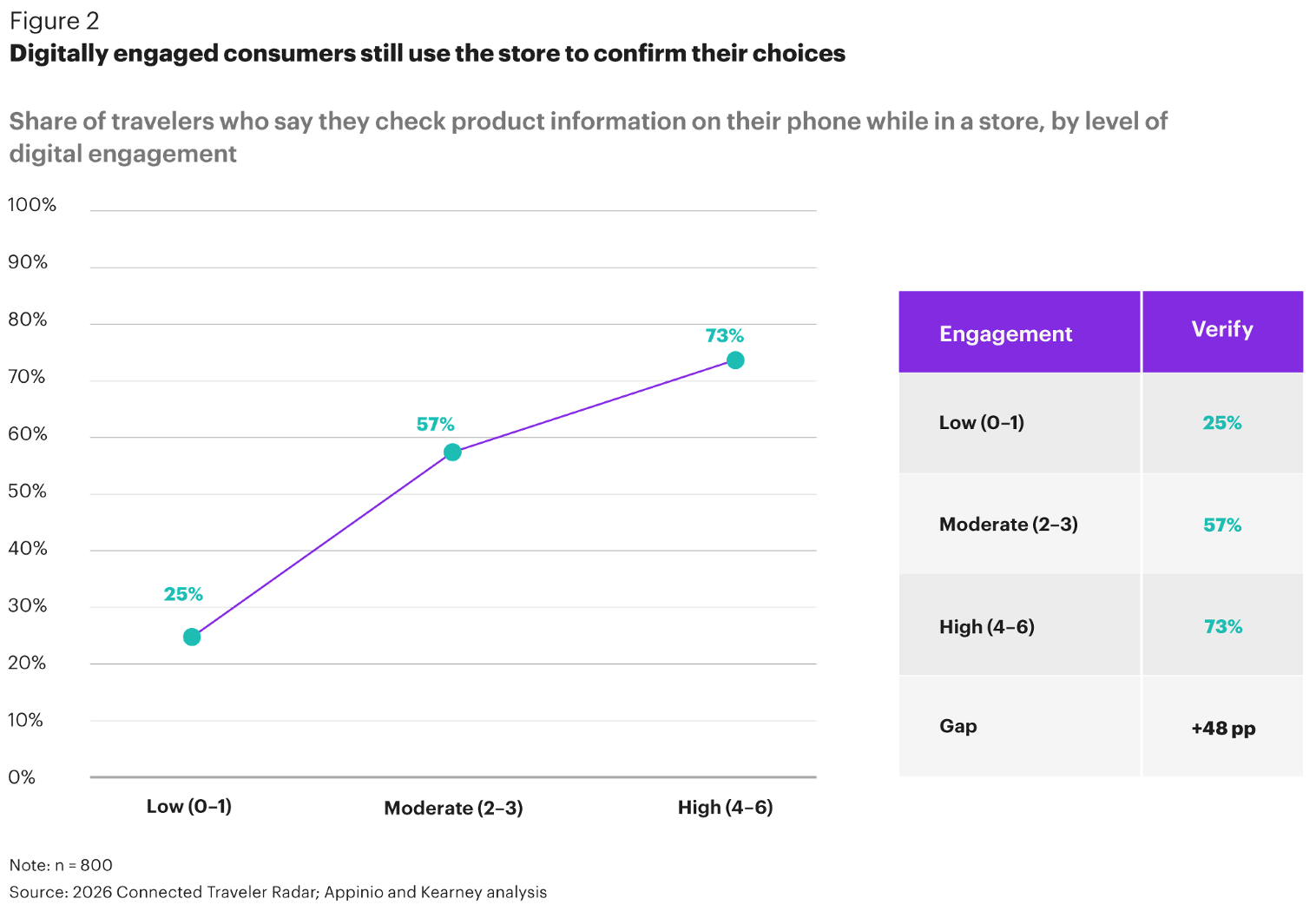
Digital engagement also appears to increase the importance of the physical store as a validation point. Some 73% of the most digitally engaged travellers check prices, reviews or product information in-store, compared with 25% among those with limited pre-airport digital activity.
Price remains a conversion barrier
Despite the changing discovery journey, Kearney identifies the traditional duty-free value proposition as a central issue.
Some 49% of respondents questioned whether airport prices were sufficiently attractive, while the same proportion said they compare airport pricing with online or High Street alternatives. That figure reaches 52% among Millennials.
Kearney argues that retailers therefore need to ensure product and pricing information is accurate and easily accessible through AI search while giving travellers compelling reasons to visit stores, including sampling, tasting and specialist advice.
Attention, exclusivity and human interaction
The report also highlights passenger attention during dwell time as an increasingly valuable commercial asset. With travellers dividing their attention between physical and digital channels, Kearney sees scope for travel retailers and their partners to extend media activity across social media, search, AI assistants and airline and airport interfaces.
At the same time, it argues that exclusivity and human service remain important conversion drivers. Sensory product discovery, knowledgeable advice, local recommendations and memorable service can differentiate the airport proposition as digital information becomes more widely available.
Kearney Partner and European Lead Consumer Goods, Retail and Luxury Victor Dijon said AI and social media had become established product-discovery channels before travellers reach the airport.
But, he added, converting that interest into sales still depends on “the credibility of the duty-free value proposition”, alongside effective use of dwell time, strong human interaction and exclusive offers.
Case for shared intelligence
Kearney also calls for greater data collaboration between airports, airlines, retailers, brands and media owners, including through data clean rooms that allow partners to analyse agreed datasets while protecting sensitive information.
The potential consumer appetite for such collaboration is significant: 86% of surveyed travellers said they would join a free loyalty programme recognised across multiple airports and points-of-sale in return for personalised discounts.
The findings suggest AI is reshaping how travellers enter the purchase funnel, but the industry’s conversion challenge remains firmly rooted in fundamentals: demonstrable value, relevance, exclusivity and the quality of the airport shopping experience. ✈