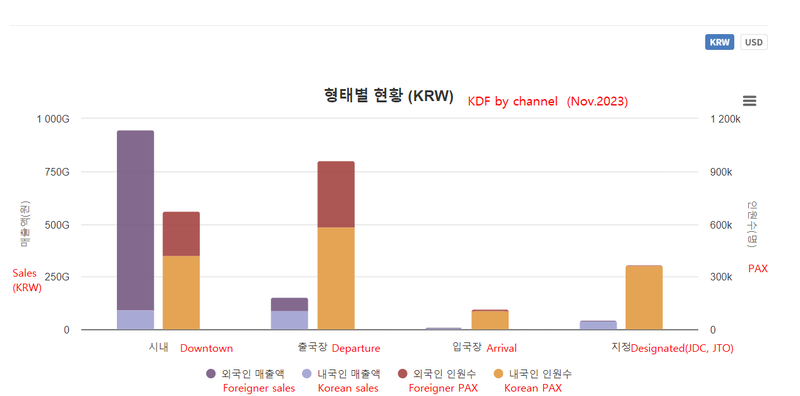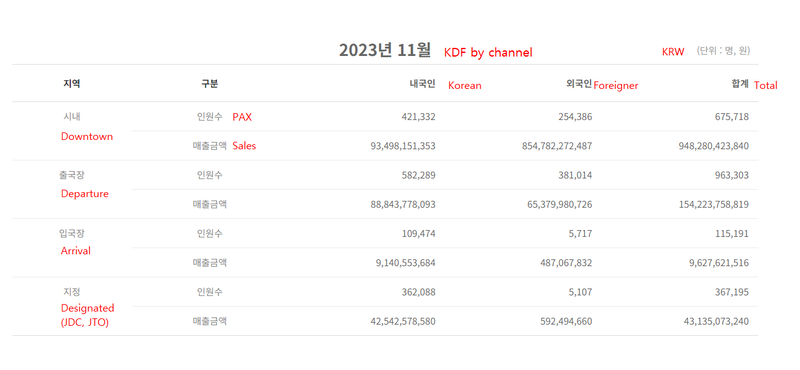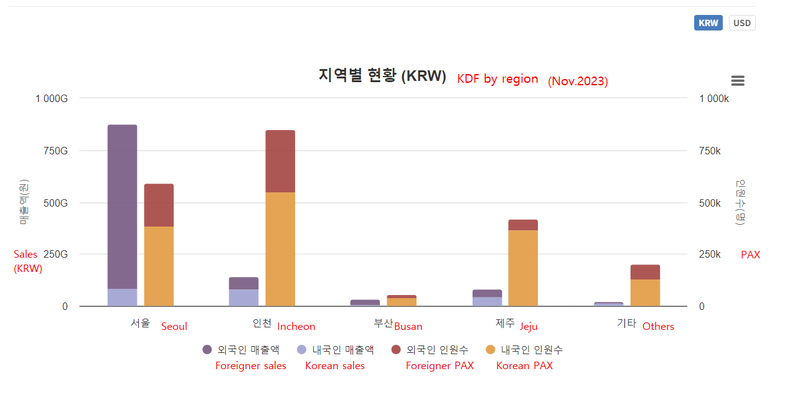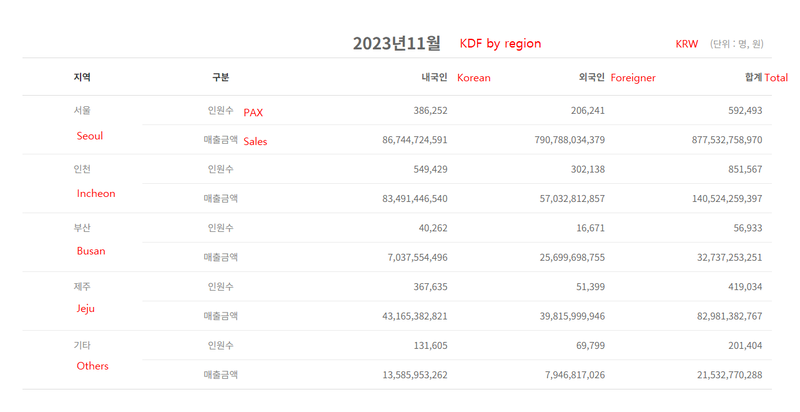


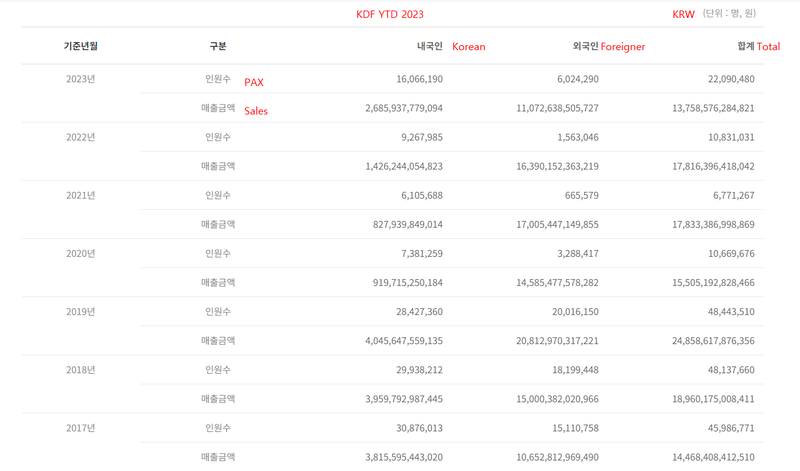
SOUTH KOREA. Duty free retail sales nationwide (excluding inflight retail) tumbled by -22.8% to KRW13.7 trillion (US$10.34 billion) last year according to the Korea Duty Free Association.
That came despite a +104% increase in customer numbers to 22,090,480, indicating a collapse in average transaction value, the result of the crackdown on daigou trading from early 2022.
That conclusion is underlined by the -32.4% year-on-year fall in sales to foreigners (mainly daigou business in 2022) despite a +285.4% increase in foreign customer numbers (see charts below).
Korean duty free shops, once known as the ‘goose that lays the golden eggs’, have been forced to worry about their survival due to a massive decline in sales and operating losses.
This is because the Chinese, who are the ‘big’ customers, are ignoring Korean duty free shops. Domestic duty free shops are trying to overcome the crisis by expanding overseas, but a dramatic turnaround is expected to be difficult for the time being. – Korea Economic Daily

How it has all gone badly wrong in the world’s biggest duty free market – The Korea Economic Daily
Source: The Korea Economic Daily |

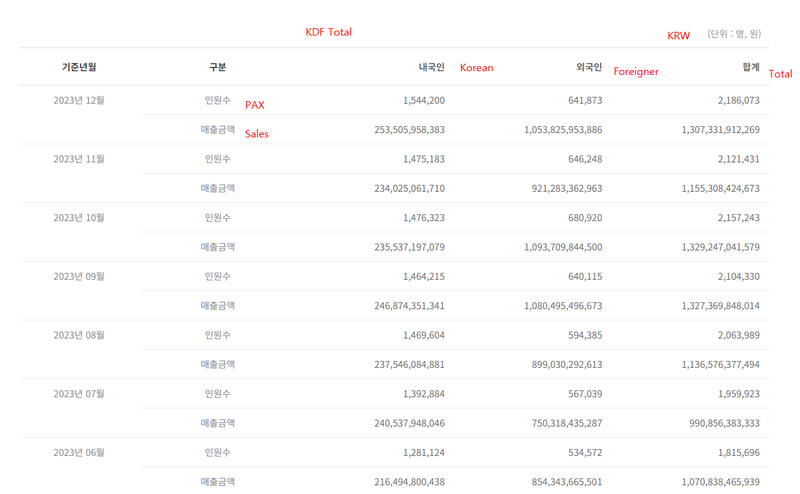
Sales rose +13.2% month-on-month in December (over the typically low month of November) to KRW1,307,331,912,269 (US$983 million) on a +3.1% increase in customer numbers to 2,186,073.
Sales to foreigners, who generated 80.6% of all revenues, rose +14.4% in December to KRW1,053,825,953,886 (US$792.4 million) despite a -0.7% decrease in customer numbers to 641,873.
“This year we will experience more erosion of daigou sales but the conducted tourists from China will begin to increase from the upcoming spring holidays,” a leading Korean travel retail executive told The Moodie Davitt Report.
“Generally, industry stakeholder are very pessimistic about the recovery of sales back to previous level. As you saw, The Shilla Duty Free posted an operating loss for the second half of 2023 after turning a profit in the first half. This means the quality of sales are aggravated and the daigou sector is becoming less and less profitable as the retailers struggle to keep it at previous levels.
“It is also apparent that both the supply from brands and the demands from customers are getting less and less in terms of daigou and even for the individual [FIT] sales, spending per head by Chinese is currently much less than 2019 levels and the number of Chinese customers is still quite low.”

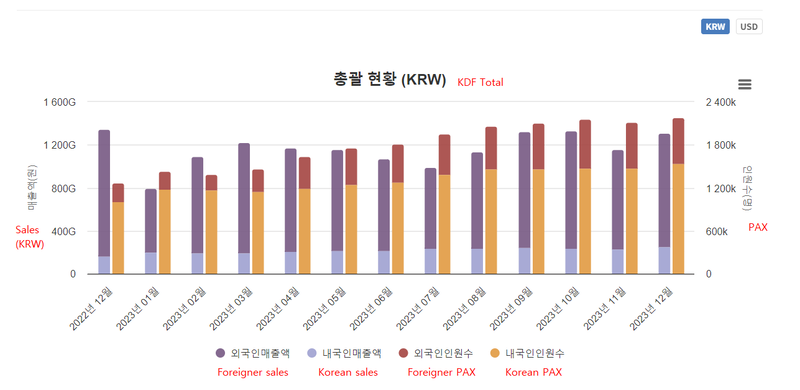
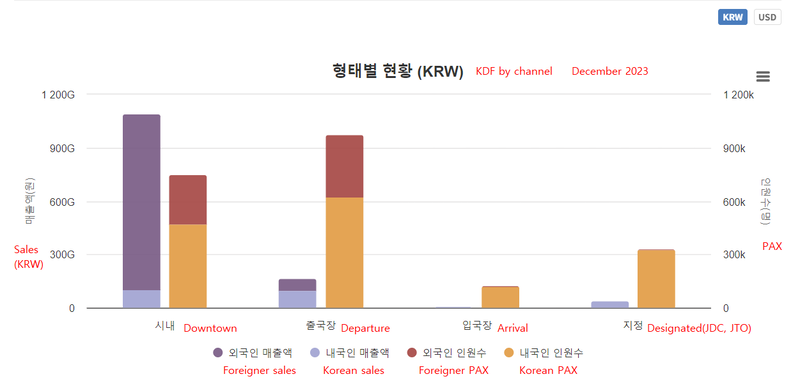
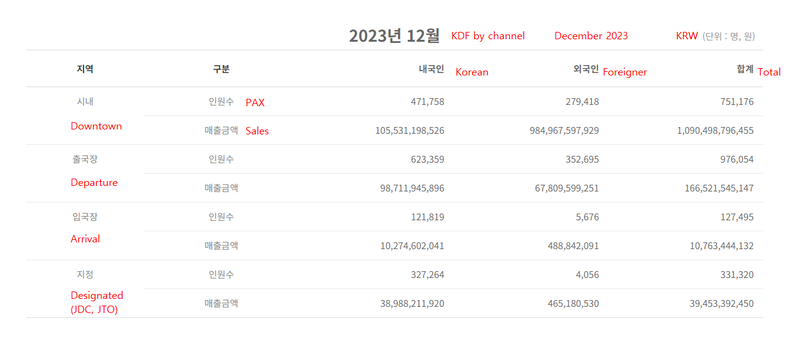
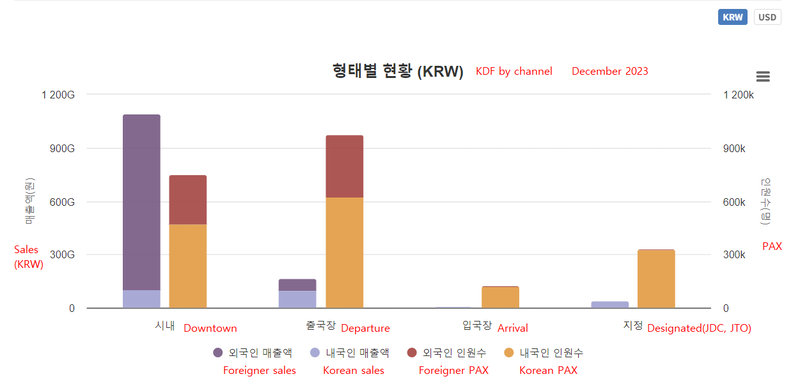
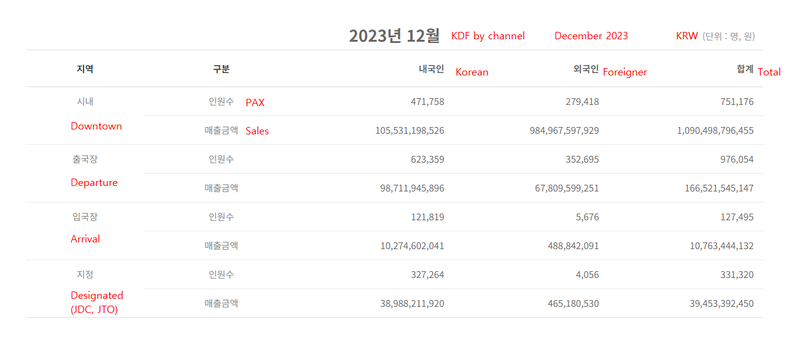
Sales to Koreans were similar month-on-month due to the muted Korean economy and Korean Thanksgiving holidays having spilled over to early October, he noted.
Incheon International Airport sales are expected to show a more normalised recovery pattern in early 2024 in tandem with the post-construction opening of major stores under the new tenders awarded earlier this year. ✈