



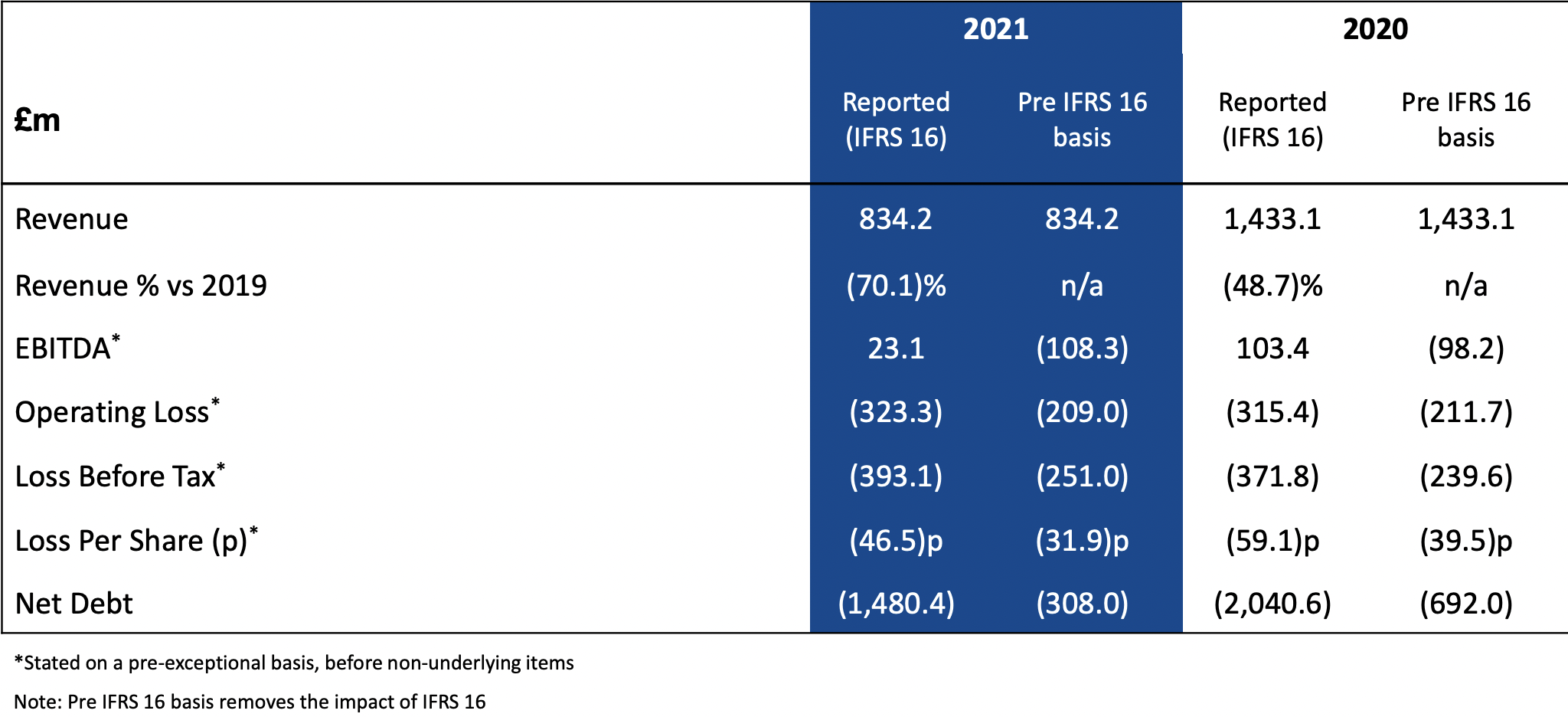
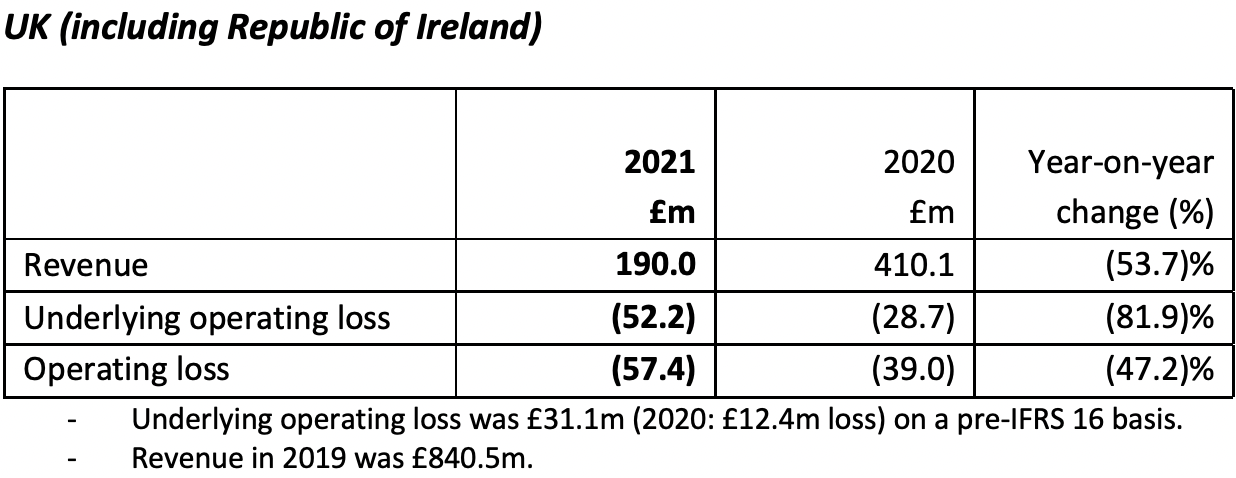
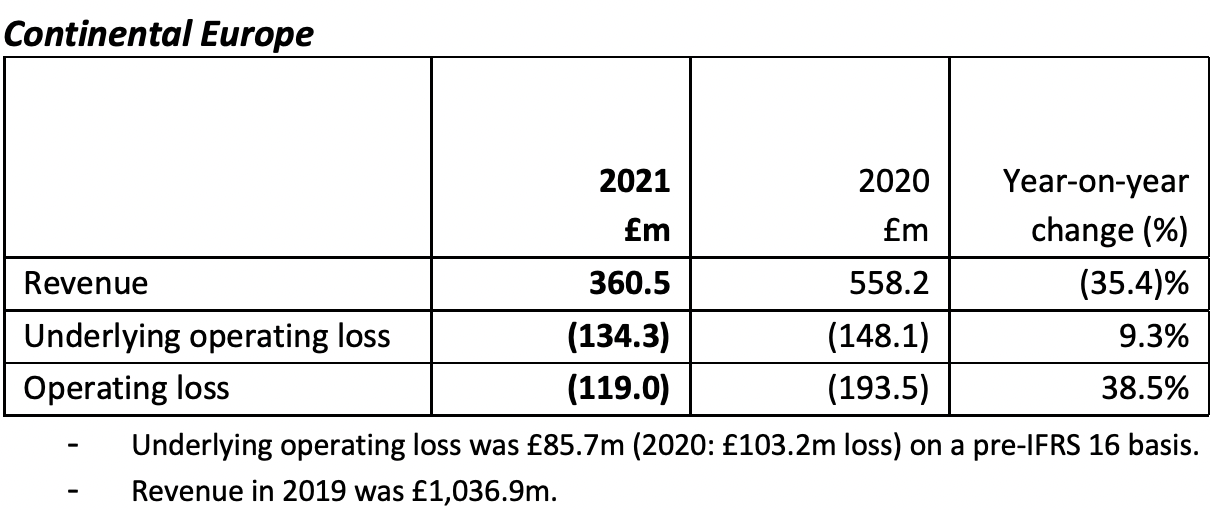
UK/INTERNATIONAL. Travel food specialist SSP Group has reported full-year revenue of £834.2 million for the year ended 30 September, down by -41.8% year-on-year on 2020 and -70.1% compared to 2019.
SSP reported “steadily improving” revenue trends over the Summer and Autumn as travel increased in key markets. Revenue averaged 66% of 2019 in the first nine weeks of the new financial year. A further 800 units reopened since the beginning of June 2021 as demand returned, taking the total to around 1,950 units or about 72% of the estate.
The company had an operating loss of £309.2 million on a reported basis (under accounting standard IFRS 16), compared to £363.9 million a year earlier. Pre-tax losses were £411.2 million on a reported basis compared to a £425.8 million loss a year ago. Net debt was £1,480.4 million, which includes lease liabilities of £1,172.8 million (in 2020 net debt was £2,040.6 million, including lease liabilities of £1,349.3 million).
SSP said its liquidity position was strong, with cash and undrawn committed facilities of around £935 million at the end of September 2021 (including £300 million from the UK Covid Corporate Financing Facility due to be repaid in February 2022).
Commenting on the results, SSP Group said it had delivered “a resilient performance in a very challenging market, materially strengthening its balance sheet and continuing to demonstrate tight control over its operating costs and cash usage”. It said it was “in a strong position to benefit from the expected recovery of the travel market over the medium term”.

Business highlights
SSP highlighted a strong second-half performance, with revenue recovering from 21% of 2019 levels at the end of H1 to 53% of 2019 by the end of H2, led by a recovery in domestic and short-haul leisure traffic.
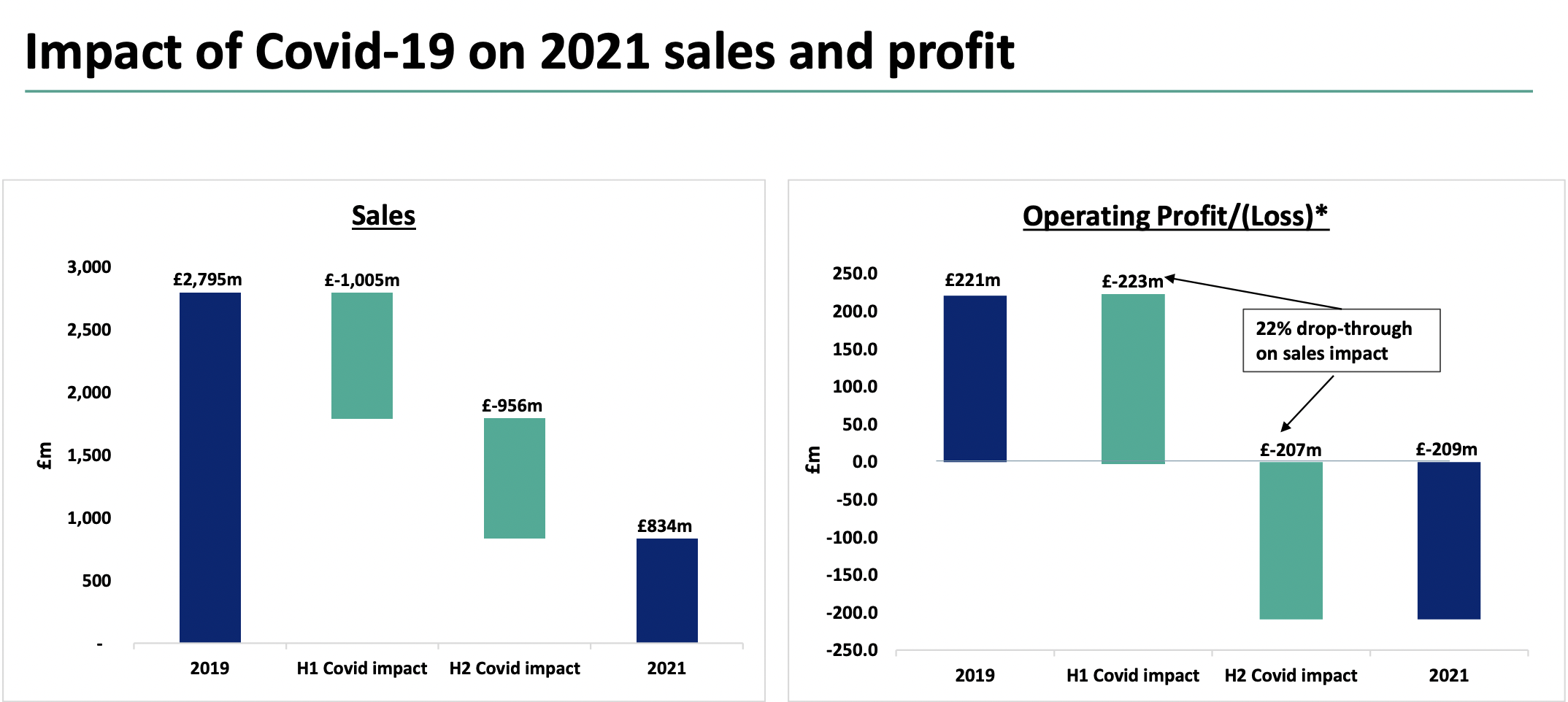
SSP reported positive underlying EBITDA (on a pre-IFRS 16 basis) of £2 million and free cash flow of £82.8 million generated in H2, compared with a free cash outflow of £140.9 million in H1. It had underlying operating profit conversion (on a pre-IFRS 16 basis) on the reduced sales against 2019 of 22% for H2, in line with H1, and ahead of expectations at around 25% for H2.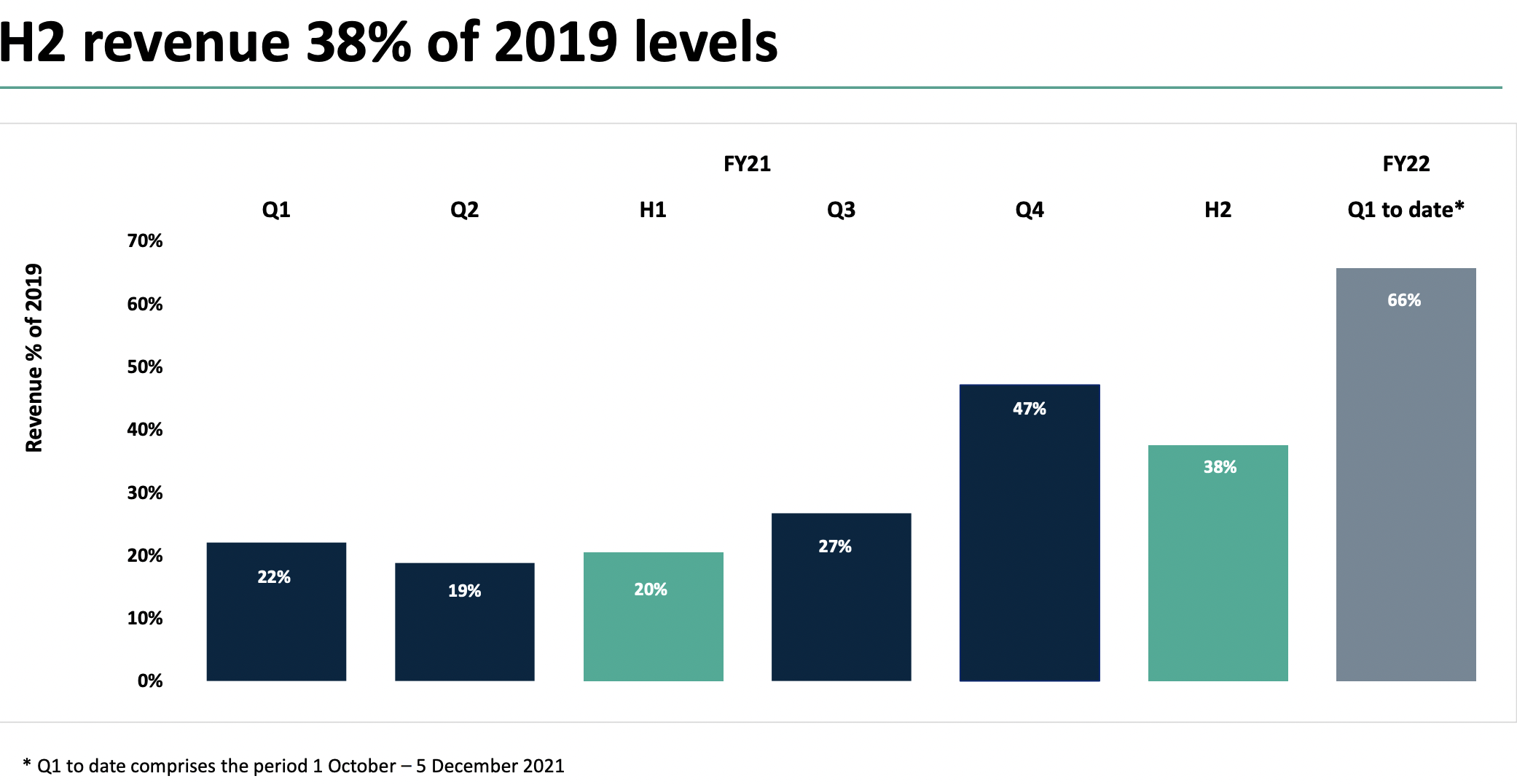
The company said it maintained expectations that like-for-like revenues and EBITDA margins (on a pre-IFRS 16 basis) are expected to return to around pre-Covid levels by 2024.
It noted the pipeline of new business, comprising approximately 200 units, which is expected to add a further 15% to revenue by 2024. Significant new business development gains include the recently announced joint venture with ADP for Paris Charles De Gaulle and Orly airports in France and Bangkok Suvarnabhumi Airport in Thailand, along with a new 29-outlet contract in Malaysia (a JV with Travel Food Services) covering Kuala Lumpur International and Kuching airports.
Sustainability is being further embedded into the business, with new and strengthened targets set, including commitments to achieve net zero carbon emissions by 2040. SSP also plans to publish interim Science Based Targets in line with a 1.5 degree scenario for reduction of scope 1, 2 and 3 carbon emissions within 12 months.
In other developments, as reported, SSP named Patrick Coveney to the role of Group CEO, effective 31 March 2022, following the announcement that Simon Smith is to leave the business in December 2021. Jonathan Davies, in his role as Deputy CEO and CFO, will lead the Group Executive Committee and oversee day-to-day business before Coveney joins.
Recent trading and outlook
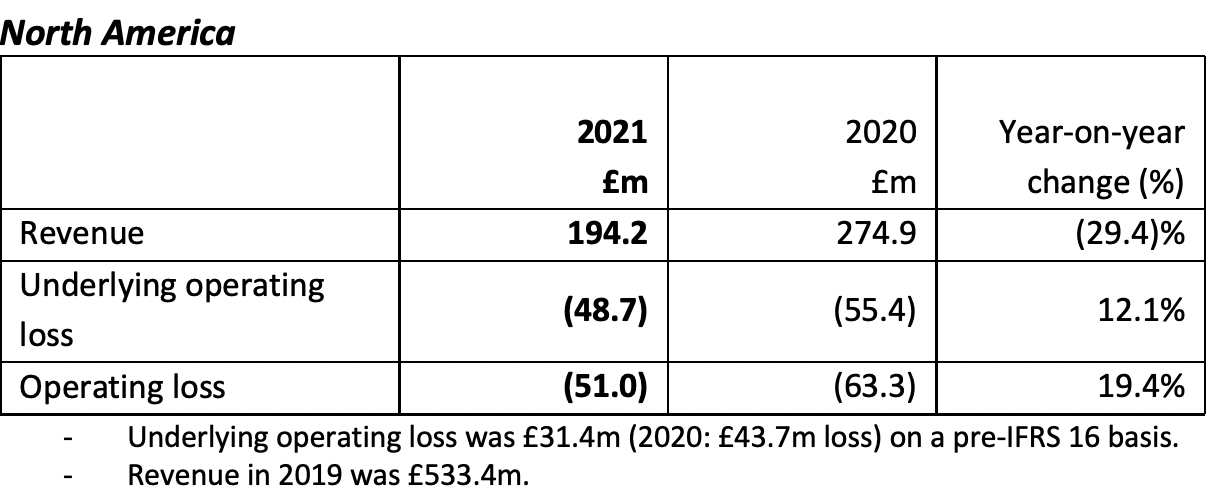
Passenger numbers increased steadily over the second half of the financial year, with sales strengthening from a very low level at the end of H1 (about 21% of 2019) to reach 53% of 2019 by the end of H2.
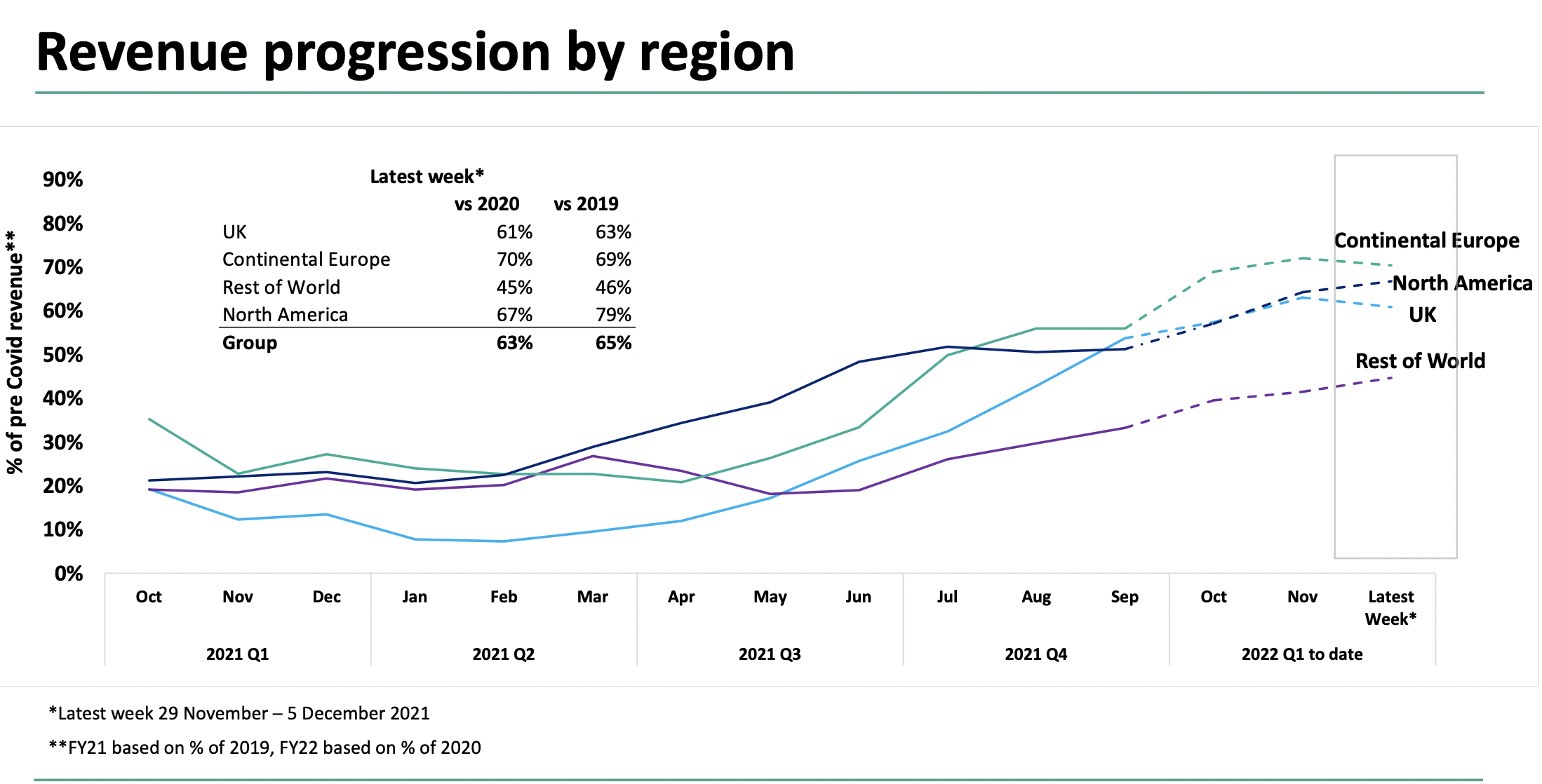
The improvement was led initially by North America, and more recently by Continental Europe and the UK, and was driven principally by increasing domestic and short-haul leisure travel. In Continental Europe, passenger numbers increased steadily over the Summer following the introduction of the EU Covid passport, and in the UK by the ending of lockdown restrictions from late July, followed by the government’s relaxation of testing and quarantine rules.
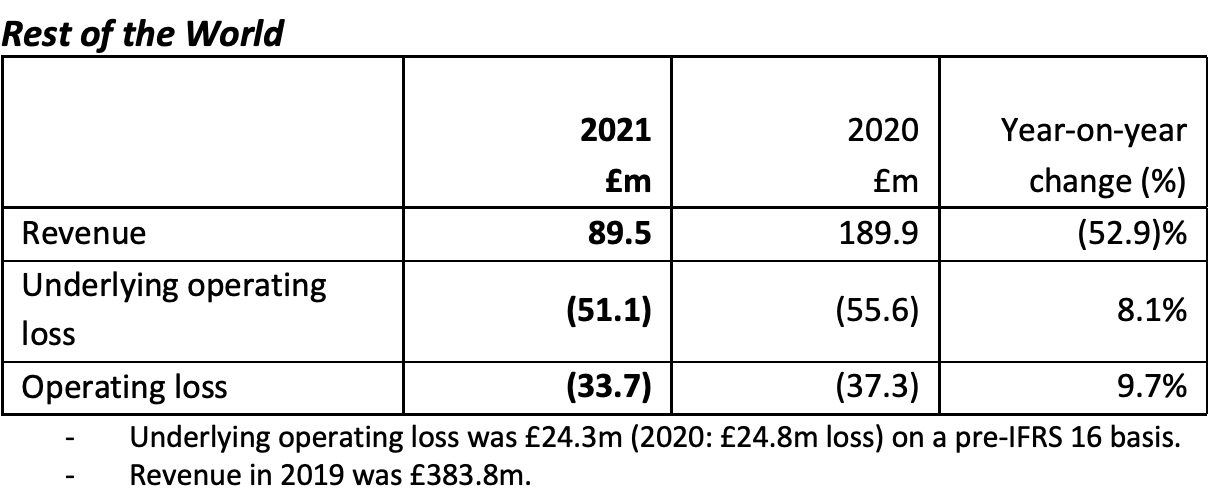
During the new financial year, sales trends have continued to improve, said SSP, with air passenger numbers in the UK and Continental Europe boosted by an extended European Summer holiday season, and rail passenger numbers continuing to benefit from commuters returning to offices in greater numbers. The recovery has been slower in the Asia Pacific region, principally due to the slower roll-out of vaccines, which has held back the return of domestic travel, and the loss of long-haul air travel.
Deputy CEO and CFO Jonathan Davies said: “Though still in the recovery phase, SSP has made strong progress, particularly during the second half of the year, when we delivered positive underlying EBITDA and strong free cash flow generation. The group has continued to re-open units in line with passenger demand, with 72% of units currently open, and has delivered revenues of 66% of 2019 levels in the first nine weeks of the new financial year.
“Against the backdrop of volatility and disruption in the travel sector, we’ve maintained strong operational controls and disciplined management of operating costs and cash flow, as has been evident from the financial performance of the business. In addition, as a result of the successful Rights Issue and the extension of our bank facilities completed in April 2021, we have a very strong balance sheet.
“Over the past year, we’ve continued to re-invest in and strengthen important areas of the business which we believe will underpin our long-term growth, including our customer offer, our people strategy and our technology platforms, and we’ve made real progress in further embedding sustainability into our business.
“Looking ahead, the medium-term outlook remains unchanged, which is for a return to broadly pre-Covid levels of like-for-like revenue and EBITDA margins by 2024. We are now starting to mobilise the pipeline of around 200 new outlets that have already been secured and we anticipate delivering approximately 15% of additional net contract gains over the medium term. Furthermore, we expect to utilise our significant financial capacity and competitive strength to accelerate our new business growth and to capitalise fully on the recovery in the travel sector.”