


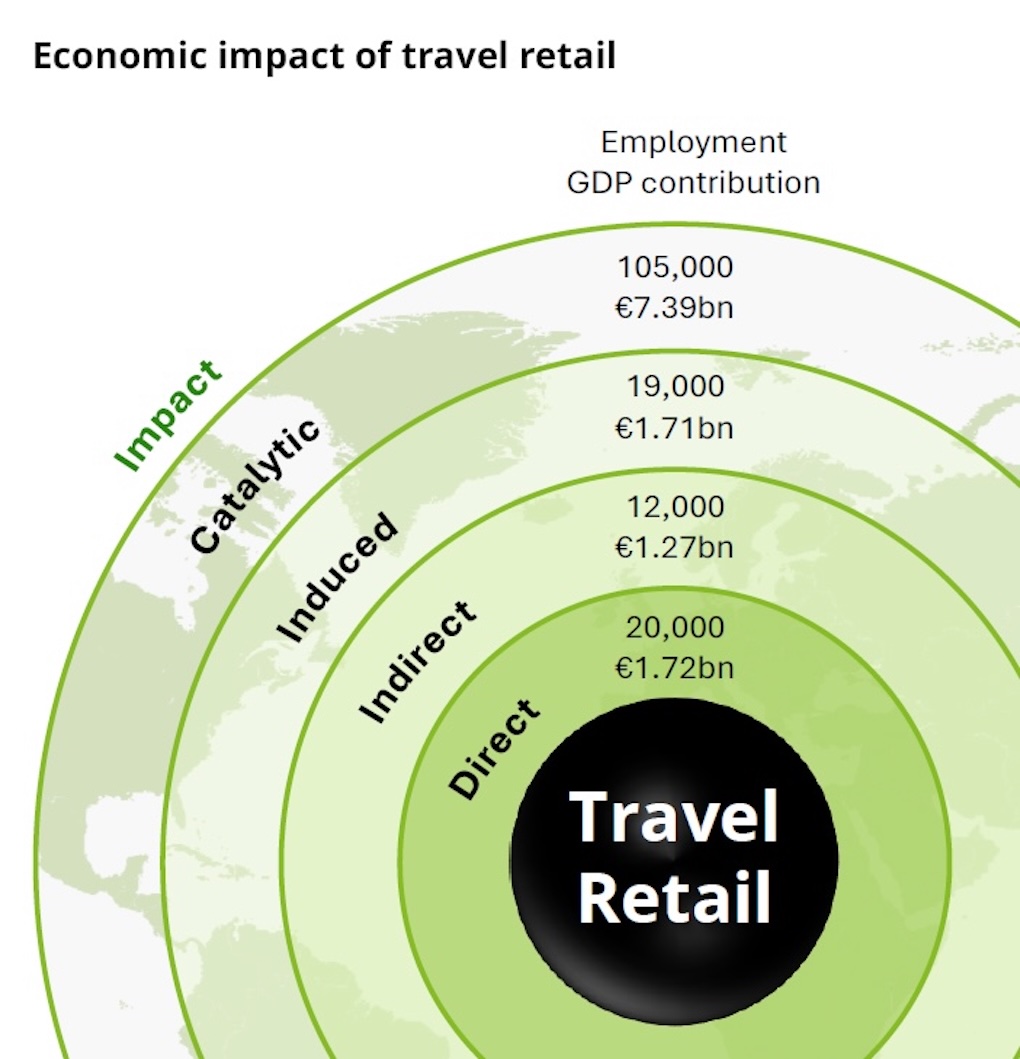
GERMANY. Germany’s travel retail sector is associated with an estimated €12.09 billion in economic value and 156,000 jobs when its wider economic effects are taken into account, according to a new study commissioned by the German Travel Retail Association (DTRV).
The Deloitte study, The Economic Impact of Travel Retail – How Germany Can Maximize Its Potential, puts the sector’s direct economic impact at approximately €1.72 billion (US$2 billion), supporting around 20,000 jobs.
The figures incorporate supply-chain, employee-spending and connectivity-related effects across the German economy.
Published on 8 September, the report also argues that Germany is failing to realise the full potential of travel retail and calls for regulatory reform to improve the sector’s competitiveness.
The German travel retail market is forecast to grow from approximately €1.72 billion in 2026 to €2.35 billion (US$2.735 billion) by 2030, according to the study.
However, that expansion is projected to lag the European average.
Deloitte and DTRV identify regulatory restrictions, lengthy approval processes and comparatively unfavourable fiscal policies among the factors holding back growth.
The report specifically highlights the EU residence principle, export-related restrictions and the €50 (US$58.19) de minimis threshold for airport VAT-free exports.
Airport revenues and investment
The study places particular emphasis on the role of travel retail and other commercial revenues in airport financing.
It says more than 30% of retail revenues generated by airport retailers flow directly back to airports, supporting investment in terminal infrastructure, customer experience, digitalisation, sustainability and operational efficiency.

The report argues that stronger commercial revenues can create a virtuous circle in which airports have greater capacity to invest, improving their attractiveness and connectivity, stimulating passenger growth and ultimately generating further commercial revenues.
German Travel Retail Association President (and Gebr. Heinemann Vice President Sales) Richard John Hoyer said: “Across the world’s leading aviation hubs, policymakers understand that a successful travel retail sector is an essential component of airport competitiveness.
“It drives investment, supports economic growth and helps ensure the sustainable financing of airport infrastructure.”
International showcase for German brands
The study also highlights the role of airports and travel retail as an international showcase for German brands and products.
It argues that the channel gives both international and domestic brands access to a diverse travelling consumer base, offering opportunities to build awareness, introduce innovations and gather consumer insights.
Deloitte and DTRV see particular potential for German regional and local products, with airports offering those brands exposure to international consumers while helping communicate German culture, innovation and quality.
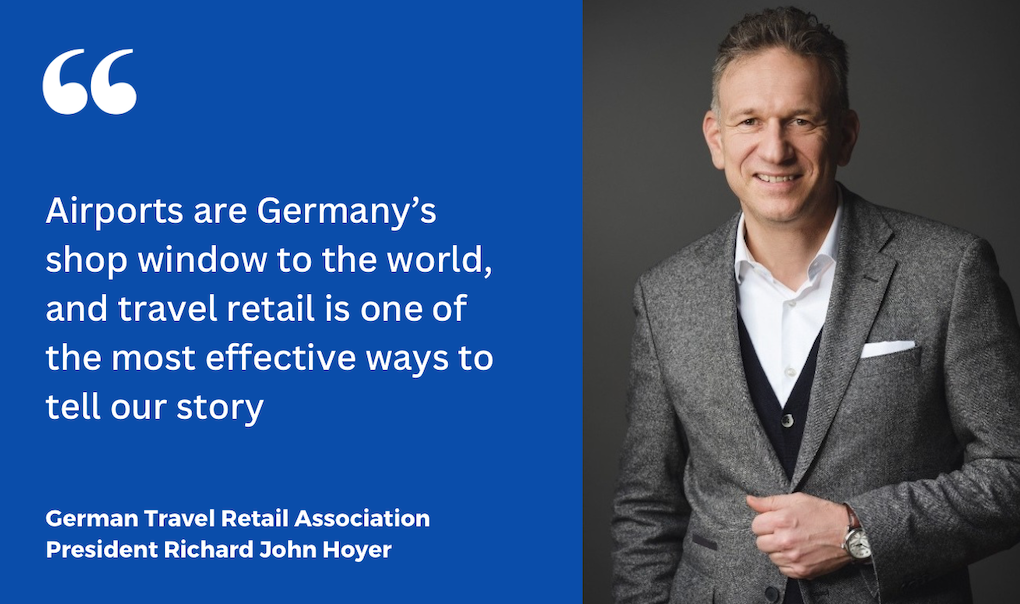
Hoyer commented: “Whether it is a global premium brand or a local producer from a German region, travel retail offers a unique opportunity to reach international consumers.
“Airports are Germany’s shop window to the world, and travel retail is one of the most effective ways to tell our story.”
DTRV calls for regulatory change
Against the backdrop of Germany’s projected below-average growth, DTRV is calling for a regulatory framework tailored more closely to the characteristics of the travel retail sector and competitive with those in other international markets.
The study identifies enhanced competitiveness, streamlined regulatory processes, improvements to the customer experience, investment in connectivity and stronger industry cooperation among the priorities for future development.
It says coordinated action involving policymakers, airports, airlines, retailers and brands will be required to capture the sector’s growth potential.
Deloitte retail expert and Partner Anna Krug said: “Our analysis shows that the travel retail sector brings economic benefits to Germany.
“Beyond direct sales and jobs, airports, regional value chains, and Germany’s position as an international business hub also benefit from this sector.
“The findings suggest that a coordinated collaboration among all stakeholders in the ecosystem could promote further growth, investment and connectivity.”
The report concludes that travel retail should be viewed as more than an airport commercial activity, pointing to its wider role in infrastructure financing, aviation connectivity and economic development as Germany seeks to strengthen its position as a leading European aviation market. ✈