
The Estée Lauder Companies President and CEO Fabrizio Freda has welcomed a recovery in the US beauty company’s North Asian travel retail business as key to a +5% year-on-year increase (+6% organic) in net sales to US$3.94 billion during the third quarter ended 31 March.
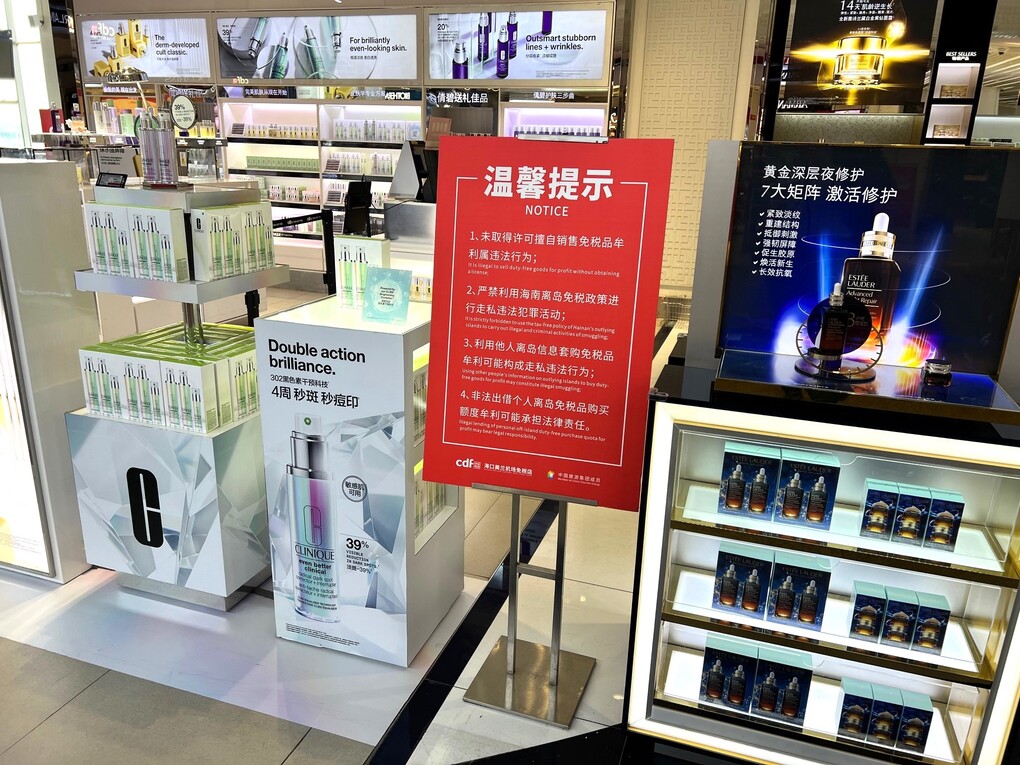
As reported, ELC’s Q3 growth in Asia Pacific travel retail was driven by higher shipments in line with enhanced sales and improved retail inventory levels following the well-documented issues relating to the 2023 crackdown on unstructured [i.e. Daigou -Ed] market activity in Hainan and South Korea.
Speaking on a post-results earnings call this week, Freda said, “We made progress in achieving targeted trade inventory levels in Asia travel retail. We are encouraged by the evolution of our Asia travel retail business this fiscal year as we execute our priority to reduce trade inventory in alignment with retailers and efforts by various local authorities to contain unstructured [i.e. daigou -Ed] market activity.
“Retail sales growth in Asia travel retail significantly improved sequentially, returning to growth in the third quarter. This improving sales trend in Asia travel retail complemented double-digit retail sales growth we continue to see in EMEA and the Americas travel retail.
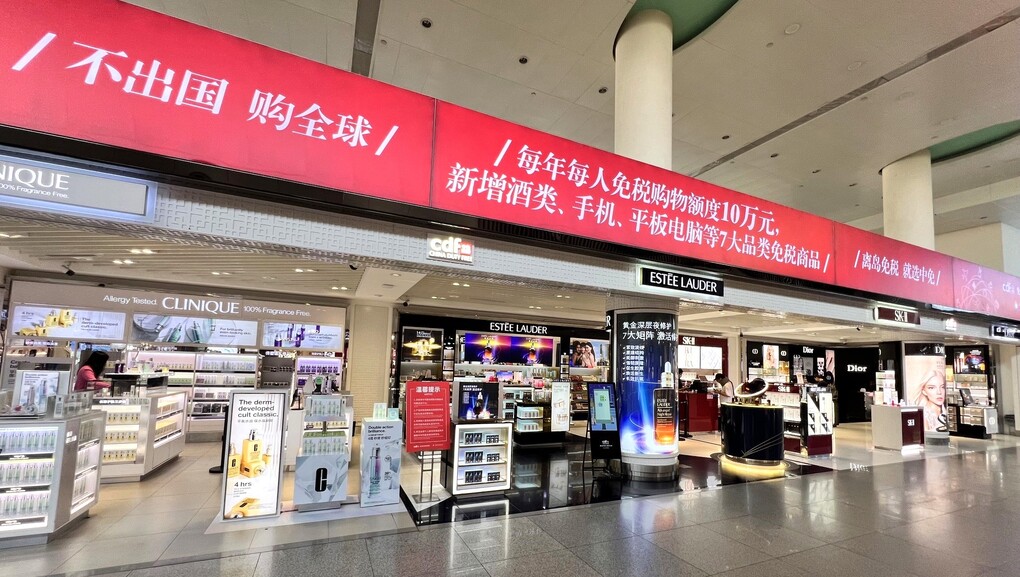
“So far this fiscal year, we also invested in the long-term growth opportunities of travelling consumers evidenced by our brands having moved within Hainan and the cdf Sanya International Duty Free shopping complex to the new Global Beauty Plaza.
“The larger elegant new stores expanded upon the high-touch services and experiences that we offered at the previous locations in the complex from the Estée Lauder Re-Nutriv new Skin Longevity Institute to the La Mer cabine offering bespoke spa services and a Kilian Paris juice and cocktail bar featuring fragrance-inspired cocktails.
Executive Vice President and Chief Financial Officer Tracey Travis added: “We are pleased with the progress we’ve made thus far in Asia travel retail, with reducing retailer inventory and the corresponding return to net sales growth. These achievements in the quarter were a bit earlier than expected and led to a partial shift in the expected timing of the resumption of replenishment orders from the fourth quarter to the third.”
That growth was partly offset, she said, by lower-than-expected net sales in Mainland China. This reflected ongoing softness in overall prestige beauty, in part due to subdued consumer confidence and softness during holiday and key shopping moments, Travis explained.
Travel retail’s performance was the key driver in a +12% year-on-year organic net sales increase in the Europe, Middle East and Africa region (which global travel retail is part of).
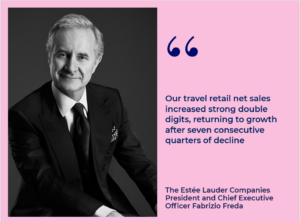
“Our travel retail net sales increased strong double digits, returning to growth after seven consecutive quarters of decline given the sequential acceleration of retail sales and shipments, as well as the anniversary of lower shipments last year, which were pressured by transitory headwinds in Hainan, in Korea, as well as limited international flights, visas and group tours from China to other markets last year,” Travis commented.
Travel retail’s rebound, alongside better performances in Hong Kong and Mainland China, helped propel a +9% year-on-year rise in the key skincare category.
Reduced inventory levels boost prospects
Travis said the company was pleased with the progress made in reducing inventory levels in Asia travel retail. This had prompted a resumption of replenishment shipments in the channel, accelerating innovation and selectively expanding the group’s consumer reach, she pointed out.
“These efforts have led to sequential improvements in both net sales and operating margin from the first half of the year, culminating in our return to profitable net sales growth this quarter,” she commented.
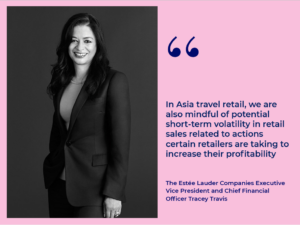
However, Travis added a note of caution, saying: “In Asia travel retail, we are also mindful of potential short-term volatility in retail sales related to actions certain retailers are taking to increase their profitability [by increasing retail prices in China -Ed.”
In the question and answer session, Freda added: “Global travel retail returned to growth driven by retail growth across all the regions… retail sales growth was very, very strong in EMEA, Americas, in many parts of APAC, and was single-digit in China TR,
“This is a very important progress versus the past and this for The Estée Lauder Companies brands is great news also for the future. The second thing that we are seeing is a very robust traffic recovery across the travel retail channel, which is driving sales to travellers.

“There is work to be done still on conversion, which is the area of improvement that we are still working on. But we had a lot of work in progress in this via retail activations – particularly in Hainan with a lot of activity. And these activations are working, and so we see progress also in this area.
“And then… because of all these elements, [we are seeing] strong improvement in the inventories of our retailers, and so reaching the targets in several retailers and in several SKUs were ahead of our regional communicated target. So… this created a very good growth which is based on retail growth and sell-in replenishment because of the decreased inventory levels versus the past. This combination is very solid, and we expect this to continue and to progress in line with our goals.”
Commenting on the wider China market – all channels – Freda said: “In this moment, the slowdown, the softness is the overall prestige market. That is softer than what we originally expected and that’s what is stuck in Mainland China.”
He continued: “We look at the Chinese consumers in total and not only the segmentation. So there is the Mainland China consumer and there is the Hong Kong SAR TR China consumer, which includes Hainan for example. And there are the international travelling consumers, the people who for tourism or business travel from China to Tokyo, Paris etc. So we see actually progress in the total Chinese consumer consumption on our brands and they are very solid.”

Freda said the group is encouraged by the rebound of Chinese travelling shoppers in destinations such as Japan and Paris. He said there was “clear progress” between quarter two and quarter three despite the softness in the Mainland with “|very interestingly positive” estimates for Q4.

The trends relating to Chinese consumers vary by channel, Freda with travel retail benefiting from consumers who tend to more high-end whereas the predominant softness in the marketplace is related to the middle class within China.
Enhanced Q4 sell-through
Freda said an anticipated further rebalancing of China’s structured and unstructured market is in line with the company’s goals and is the objective. “So it’s a positive long-term trend, which is happening,” he commented.
Later he added: ”I just want to make sure that we understand that despite the short-term softness of the market in Mainland China, the overall trend of Chinese consumers is positive and this trend is expected to accelerate in the future.”
Commenting on the faster than expected return to satisfactory inventory levels and therefore accelerated replenishment rates, Travis observed: “The reason we ended up doing a bit more from replenishment standpoint in the third quarter is because we actually reached those [inventory] levels a bit earlier than we had anticipated.
“We anticipated reaching them by April, which is the beginning of the fourth quarter, and we reached them within the third quarter.
“So, that is the reason why some of the shipments were a bit higher in the third quarter and we will expect the retail sell-through in the fourth quarter.” ✈