Erno Laszlo has one of the most fascinating histories of any international skincare brand. The label was founded in New York in 1927 by Hungarian immigrant Dr Erno Laszlo, who chose to specialise in dermatology after transforming the complexion of Princess Stephanie of Belgium.
By the late 1940s, the Erno Laszlo Institute in New York had an elite, strictly limited membership of 3,000 clients. In 1957 Dr Lazlo’s preparations were introduced to a wider audience at Saks Fifth Avenue, helping it build a reputation as a “problem-solving brand endorsed by Hollywood”.
Today, under a combination of personal and private equity ownership, Erno Laszlo is making its mark all over the world, notably in China. Travel retail, led until now by inflight, is playing a key role and one that is about to become even bigger, as Martin Moodie discovered at the recent TFWA Asia Pacific exhibition, where he spoke to Executive Chairman Charles Denton.
Martin Moodie: Charles how is the brand performing in Asia and what are your plans for the region?
Charles Denton: We launched successfully in Taiwan which was very good for us and that drove a large awareness amongst Asian consumers globally. It’s very interesting: in Holt Renfrew, a leading luxury department store in Canada, we are now ranked number five. 80% of our customers there are Asian and the awareness of our business in Canada has been driven by the success we’ve had in North Asia.
For us, Hong Kong led to Taiwan, Taiwan led to the PRC. We launched in the PRC 18 months ago with just 11 SKUs. Now all 55 SKUs are going into the market as we speak, so we’re very pleased. We have our own shop on [Chinese B2C e-commerce site] Tmall and our own 400sq ft department store counter in Jiu-Guang in Shanghai.
So the world’s your oyster in terms of potential growth?
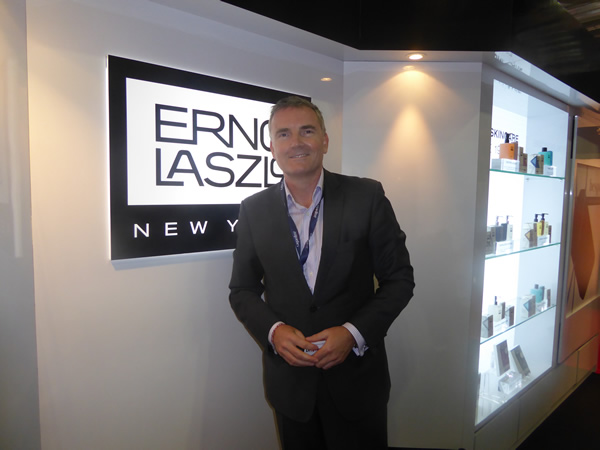
“Whichever way you look at what’s driving the markets, we sit perfectly placed to take advantage” – Charles Denton
I think so. Our Northern Asia strategy is to get China right and to make sure that [the downturn in] Hong Kong doesn’t undermine China. Korea becomes a very important market: it is a mirroring market. You build Korea off the back of your success and awareness in China, particularly in duty free, but your presence and visibility in Korea reinforces your success and awareness in China. So the two go hand-in-hand.
You can’t go into Korea without China really now and you cannot really succeed in China if you don’t look the part in the key markets that they’re visiting. That is why travel retail is fundamentally important to us.
How is the brand perceived in Asia?
We are perceived as a premium skincare brand out of New York and extending that, we’re also seen as a problem-solving brand endorsed by Hollywood.
How have you translated your domestic success to these new markets?
We took our domestic success and related it to whichever airlines hub out to those markets. Who’s hubbed out to Hong Kong, who’s hubbed out of Taiwan and China? That’s where we have focused our inflight retailing approach thus far.
What about airport or downtown duty free?
Up until now we’ve only been inflight, on 14 airlines [the brand is represented in Asian travel retail by Singapore-based Jonathan Holland & Associates -Ed]. Our first foray into the physical [ground] space will be happening in September next year in South Korea with Lotte and Shinsegae.
The operators know their business and what’s interesting is the numbers. Say if you do one dollar in domestic, you do four to five dollars in duty free on the same type of counter. So you’ve got this 4x -5x multiplier. You need domestic Korean awareness to support it, but what you really need is Chinese awareness.
What’s your marketing approach?
We plan to build the business through peer-to-peer review. Friends recommending friends. We are testing the product with 100,000 Korean consumers. On top of that we’ll layer key influencers and celebrity endorsement.
 Korean celebrities or Hollywood?
Korean. We are mimicking the Hollywood endorsement with the Korean endorsement. It’s the same culture if you like… but hotter! It’s about finding people who really love the brand and want to talk about it.
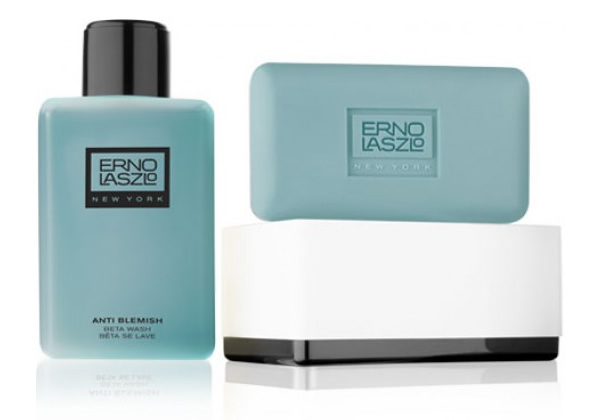
In North America some of our greatest awareness has been driven by Kim Kardashian who loves our black soap and oil and cites it as the reason for her flawless skin. Her make-up artist recommended it, she likes it, she talks about it – this is Millennial marketing right? Brands today have to reflect the attitude and personality of their users more than ever. Then the users are happy to talk about your brand because it reinforces their brand.
Going back to travel retail, how would you define your strategy?
When people say to me, “Oh, travel retail is all about exclusives.” It’s not. It’s about leisure. It’s about discovery. It’s about entertainment. You don’t have to have a logical argument that says: “This is available here and not elsewhere” and yes, people like a good price, but that only goes so far.
All the best operators have introduced entertainment and made it a leisure experience. If travel retail isn’t about entertainment and leisure, what is?
Travel retail is already 10% of my business and I’m forecasting it to be 30% within the next five years. That’s how important it is to me. We are having conversations now about going into airport shops.
As things stand, what is the mix of business by channel?
30% of my business is online already and when you look at that you can see what’s happened to our brand. We began as a department store brand in North America. We’ve shifted the presentation of the product so that we can survive in multi-brand environments with trained consultants representing us rather than standing behind a counter.
We’ve moved into online space so that people can use online not just for replenishment but for recruitment. The same dynamics that apply in multi-brand and online apply in travel retail. In travel retail we don’t want to be just about replenishment, we want to be about recruitment. That’s why I see it as such an important channel. To me it is the most important recruitment channel of all. We don’t actually do any other advertising except inflight. That’s where we spend our advertising money.
Korean Air certainly does a very nice job for you…
… Yes, they are great. All of the airlines have been very supportive. We’ve been re-listed in every single one so that’s a good sign.
 Would your ideal mix for the company be a roughly equal three-way split between travel retail, online and multi-brand speciality stores?
We have five channels that we focus on: stand-alones, department stores, multi-brand stores, speciality stores and online.
People do like to come to our stand-alones because we have treatments there and it’s where they can get the full experience, the top of the triangle if you like. The second tier would perhaps be the department stores where they have a great consultation experience.
“We’re open to conversations. I think it’s a beautiful brand, a unique brand. All the other brands that we compete with are owned by large conglomerates. When I look at my ranking of number five in Holt Renfrew; that’s against all the big players. So if we can do that in that market, what can we do in all these other markets?”
– Charles Denton
In China, for example, a customer who is new to skincare will prefer to go to a department store to get good advice before they start flirting with products in, say, Sephora. So department stores have a role to play. The question is, will they continue to go back to the department store? That is less likely now with online and speciality stores. In some markets we are not even looking at department stores. In other markets, like Taiwan, we are only in department stores.
Here in Singapore you’ve been showing the new packaging. What’s driven that?
Our packaging now is designed to pop off the shelf and it has a colour coding so that it’s easy to navigate. Whatever skincare concern you may have: sensitive skin, detox, anti-pollution, hydration… whatever it is, you can identify your concern, navigate and buy. Our new packaging works on the page better, on the shelf better, online better.
Some brands try to introduce the customer to the brand through serums and then say, “Well, if you really want the serum to work, you need a moisturiser to seal it in”. For us, we recognise that our heritage is cleansing and our DNA is the black soap and the oil. So we’re focusing entirely on winning our customers through those products and the benefit is that the pricing is much more attractive.
You’re involved in the ownership. Tell us how that came about.
We are owned by private equity backers, myself and the management. I came in when I bought the business in 2011. I identified the opportunity to buy the brand and approached two different private equity firms who could support the vision. They both said “Yes” but one said “Yes, yes, really yes!”
Well you had a proven track record with Molton Brown.
Yes, we bought the company Molton Brown for £400,000 out of receivership. We sold it for £172 million.
What do you see as the next phase for your company?
We will be looking to seek investment for the next phase. That might be our private equity moving us from one fund to another and capitalising on what we’ve achieved or it may be that we bring a new round of investors depending on strategy.
The big thing is understanding that our business model relies on continuing our success in North America and really blowing out North Asia. It’s important to me to find an investor who can leverage expertise in those markets or support us in some way.
So, if you’re well-established in North Asia and you happen to be an investor in our business, that’s going to open up a lot of doors because we’re going to need to be talking to landlords and department stores etc. etc.
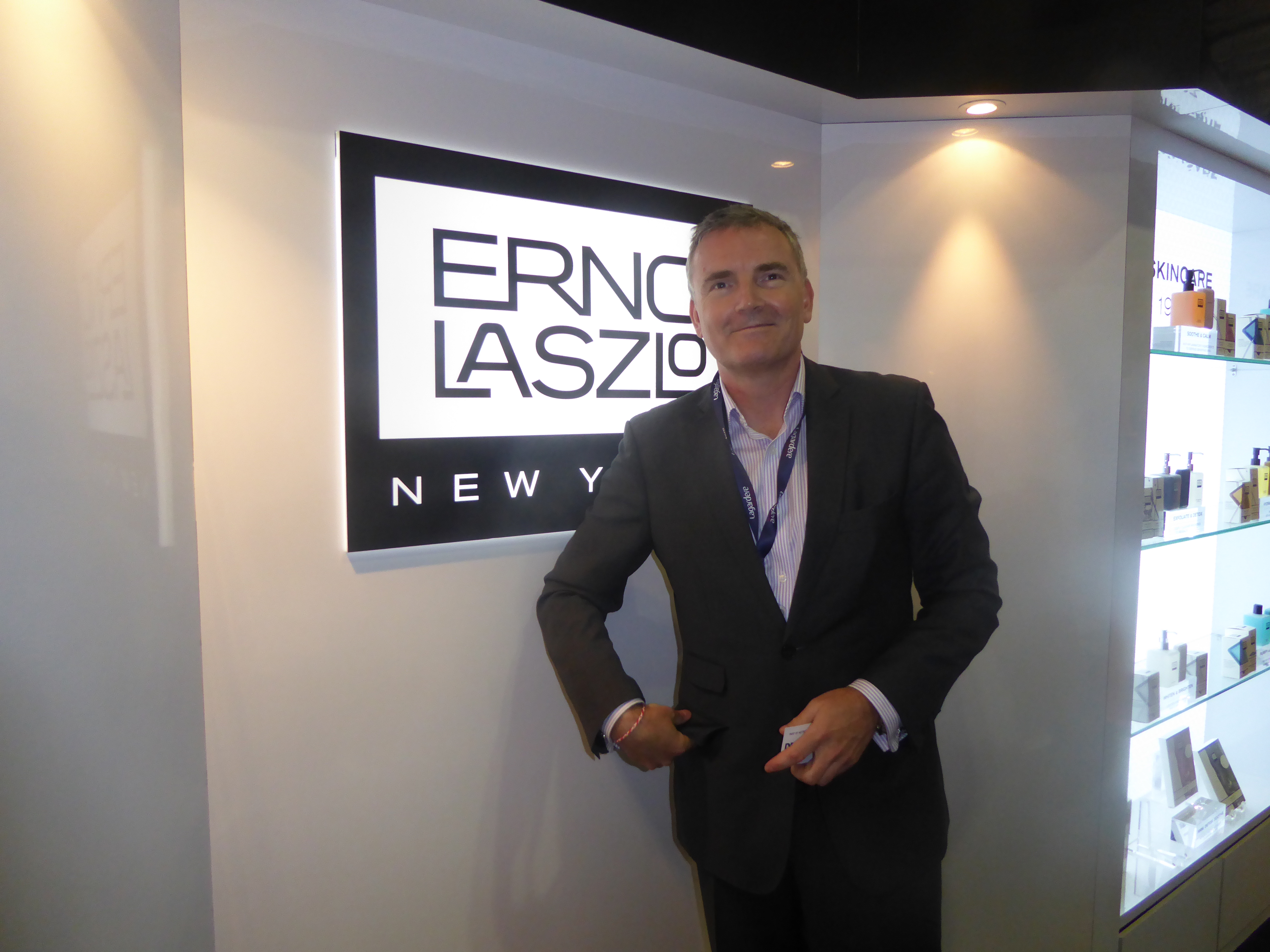
What about a trade investor? Lots of knocks on your door?
We’re open to conversations. I think it’s a beautiful brand, a unique brand. All the other brands that we compete with are owned by large conglomerates. When I look at my ranking of number five in Holt Renfrew; that’s against all the big players. So if we can do that in that market, what can we do in all these other markets? There is a slight siege mentality amongst my team about “us” and “them” but it’s great. It’s healthy competition!
We’ve trebled in size since we bought the business. We’ve gone from a loss-making business to a profitable business
If you look at the trend right now for bespoke, personalised products: we are a custom skincare brand. So we’re bang on that trend. If you look at the multi-cleansing trends coming out of Japan and Korea, we’re bang on that trend. If you look at heritage brands and vintage glamour, we’re bang on that trend. If you look at premium skincare which is the growing sector in the emerging market, we’re bang on that trend.
Whichever way you look at what’s driving the markets we sit perfectly placed to take advantage. The great thing about us is that we’re not steeped in rigid history. We can evolve and change and be playful, fun, engaging and entertaining in a way that some of these other brands can’t be. We can reinvent ourselves almost yearly.