


Prologue: Asia Pacific may have been the last region to emerge from the COVID-19 crisis but its travel sector, both in terms of local and international passenger, has gained encouragingly rapid traction over the past year.
That dynamic, allied to an array of tender, partnership and acquisitional opportunities augurs well for food services powerhouse SSP in a region that historically has lagged behind the group’s market strongholds.
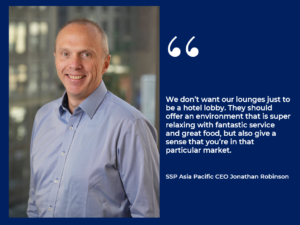
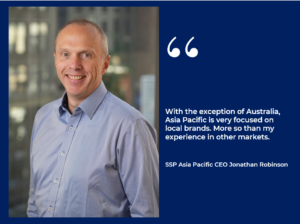
Throw in a series of powerful alliances and a growing convergence between different airport hospitality sectors and it’s a case of ‘Watch this space’, says SSP Asia Pacific CEO Jonathan Robinson (pictured right).
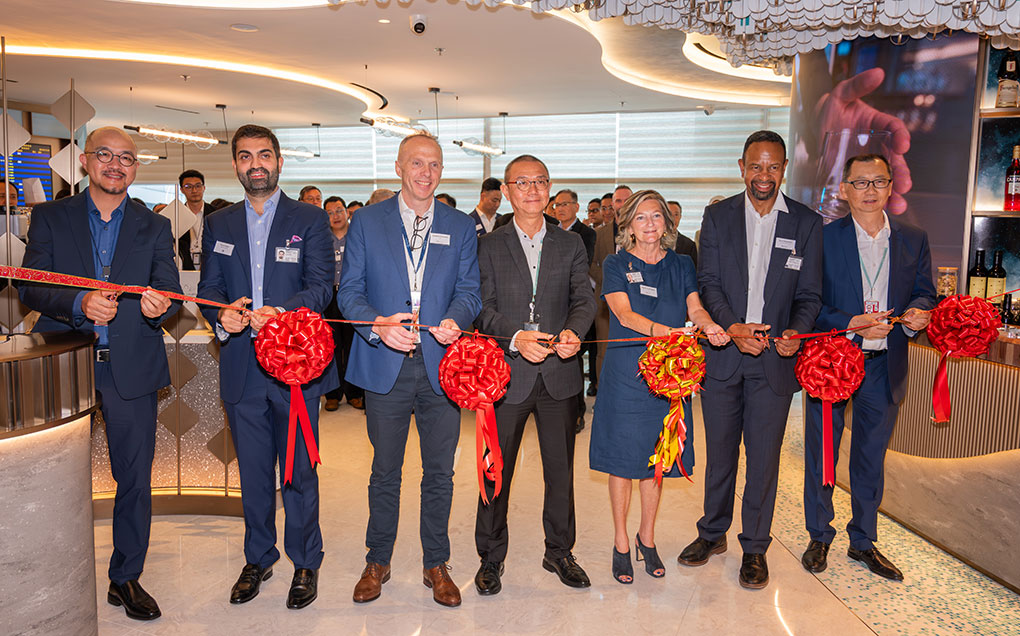
On the day the impressive Kyra Lounge opened at Hong Kong International Airport in a triple alliance with SSP’s India (and other selected markets) partner, Mumbai-based Travel Food Services and Collinson Group-owned lounge and loyalty programme specialist Airport Dimensions, Robinson told The Moodie Davitt Report Founder & Chairman Martin Moodie why he is bullish about the company’s future across the vast Asia Pacific region.
The Moodie Davitt Report: Jonathan, let’s start with your state of the nation perspective of Asia Pacific. While we talk about it as a region, it’s in fact many individual markets so I know it’s hard to give a generalised overview. But 2022 saw the beginning of the post-COVID recovery, 2023 accelerated it and 2024 is stronger still. But it’s still very much a mixed bag around the region, right?
Yes, it is still mixed with recovery stronger in certain countries than others. Overall, though, it is good and getting stronger. For example, we’re seeing a sort of back to normal in Australia. Hong Kong has been slower than I think most people expected – more what I’d call slow and steady. The other markets are somewhere in between Australia and Hong Kong.
But I’m confident that over the course of the next 12 months, we will be back to 2019 levels and growing beyond that. So overall, a mixed bag by country, but we’re seeing steady and good recovery.
That’s with traffic but of course passenger numbers and consumer behaviour are not always close siblings, as we’re witnessing in many duty-free operations. How are you seeing spending behaviour on food & beverage?
Actually it’s positive. On a spend per pax basis, we’re seeing things as good as 2019, if not better – also taking into consideration inflation. So we’re not seeing suppressed spend on a per pax basis at all. In fact, in many cases as a result of the mix – with more leisure travel – we’re seeing increased spend per pax.
How wide is your geographic remit?
I run Asia Pacific, except for India, which is a separate region run by TFS (Travel Food Services). Across the region, last financial year we served more than 50 million customers with more than 150 brands across over 300 outlets. Currently, we have seven going on eight markets, which are Hong Kong, Thailand, Singapore, Philippines, Malaysia, Australia and New Zealand.
And the eighth?
That’s Indonesia, where as you know we recently announced the signing of a deal subject to completion linked to various approvals [in May SSP revealed the establishment of a joint venture, 60% controlled by SSP, with much-respected Indonesian food & beverage business PT Taurus Gemilang -Ed]
That’s a vast geographical footprint.
Yes and that is what makes the region so interesting – just how diverse it is. I always talk about this to the teams. It is hugely diverse in terms of food types, geography, cultures and people. And also in terms of client requirements and the way that we operate with them.
There are very different motivations with regard to what they’re looking for and also in some cases how they operate. Some will be very happy to consider a master concession and other airports will have an unwritten rule on how much share a partner can take.
So we need to have a very nuanced approach to how we run the Asia Pacific region. It is a collection of very different countries – that is how we should and do treat it.
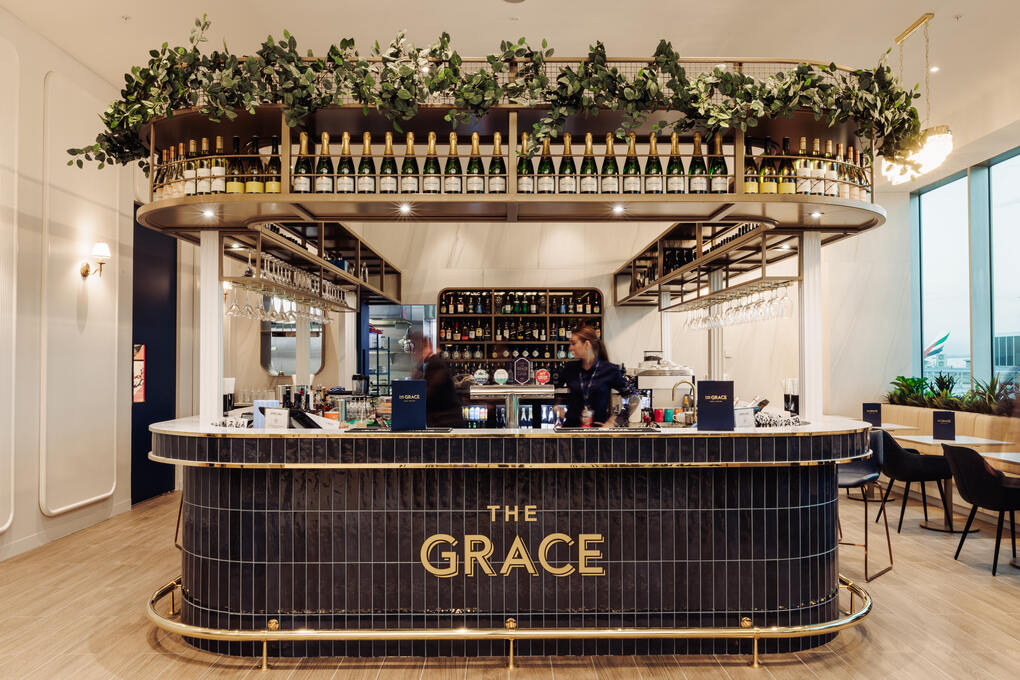
We see a lot of opportunity for growth to better represent the size of the Asia Pacific market and our current share of sales within it. That’s why Patrick [Coveney], our Group CEO, has said we need to invest heavily in this region because the potential for growth is huge.
So while the region’s recovery has been slow and behind the rest of the world, I and we believe that not only will the region recover to where it was, it will actually start to outstrip and outgrow the rest of the world.
All the indicators and the industry analysts recognise Asia Pacific as being one of the biggest growth areas. So as a result, we’re investing heavily in this region.

That’s reflected in the sheer number of projects you have either completed over recent months or are coming up across this vast region. Talk us through the highlights.
Obviously the big one was the acquisition of ARE (Airport Retail Enterprises) in Australia [in February, SSP announced it had struck an agreement to buy 100% of the acclaimed independent business founded by entrepreneur Peter Butts in 1971 – Ed]
That was a big acquisition and a really complementary business for us in Australia. While there is some crossover, we now have about 100 units across Australia
It’s complementary in terms of being very focused on the areas that are very important in Australia to make a successful business, i.e. bars, cafés and a growing number of QSRs.
We already had a strong bar business as part of our original portfolio and that was enhanced by the acquisition of Red Rock in 2019 [landing SSP 14 food & beverage units at Perth and Melbourne airports -Ed].
So bringing together our original SSP core business, Red Rock and then overlaying ARE in 2024 has meant we’re very strong across Australia – clearly the leading player, but particularly within the key categories of bars, cafés and QSR.
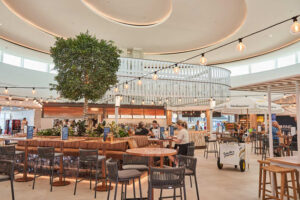
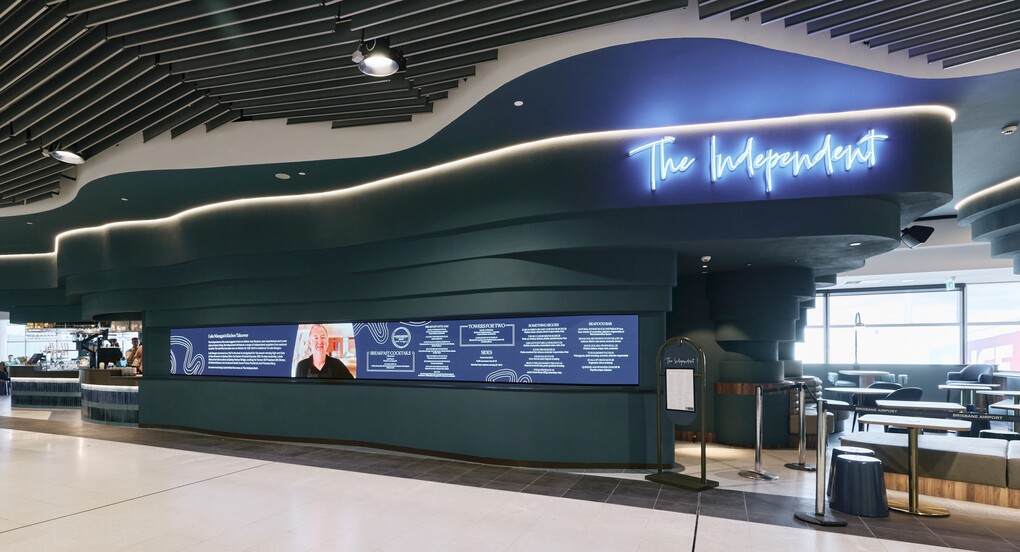
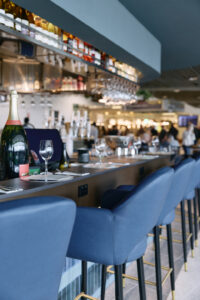
In addition, we’ve got some great casual dining restaurants that are chef-led offers, such as a new domestic terminal bar/restaurant at Brisbane Airport, called The Independent as part of the ARE acquisition with a rotating Chef headline [a high-class eatery opened in July].
 Scale in Australia is important. It’s a high-cost market, especially in terms of labour. And scale provides us with synergies across different aspects of the business, including maximising our workforce and also making sure we can effectively work with suppliers and brands. You need that in Australia.
We tend to talk a lot about international business but you have a lot of domestic terminal business in Australia that’s also very important.
Yes, we’re heavily weighted towards domestic and it’s a great market. Unlike other countries, there’s not such a stark difference of offer between domestic and international in Australia, so this allows us to flex the offers between the two.
So you’re right, we have a big domestic market but I see it as one sector, domestic and international.
How is the ARE integration bedding down?
It’s a big business – twice the size of our [pre-acquisition] base business there. So far, really good. The team have been genuinely really enthusiastic and really excited.
ARE have been interested to learn what SSP do well, and vice versa for SSP about what ARE does. At the risk of sounding like I’m saying it for the sake of it, it has been a really interesting exercise and so far really good.
ARE have some fantastic operations that we can learn a lot from. And SSP has some awesome people and great systems and processes that ARE will benefit from. And that’s exactly why we did the deal. We said how can we maximise the best of both worlds here?

I guess the perennial challenge with acquiring entrepreneurial companies is that while you bring disciplines and scale you’ve also got to find a way to keep that entrepreneurial spark that made them attractive in the first place.
Absolutely right. We talked about this in terms of the ‘secret sauce’ that ARE has. What is it and how do we keep it? One of the elements is their speed of decision making. They have the market proximity to make those decisions and they have a deep understanding of their customers.
So if you put those three together, ARE has a real pulse on what the customer needs and an ability to adapt quickly. That’s very important. It’s something that big businesses could learn from, particularly in an industry like ours – that we need to understand and respond to our customers super quick, in fact quicker than we generally do as an industry. Because consumer needs and tastes change. ARE is a master of that.
That combined in-market presence must make a huge difference. Especially now that you’ve crossed the Tasman into New Zealand. So you have a very big regional base now.
Yes. While I don’t like to compare markets, I’d say the Australia and American dynamics in terms of our mix of offers and the way that businesses operate, are quite similar.
While they’re a long way away from each other, there’s a lot that the Australian and New Zealand businesses can learn from the way the SSP American businesses run. It’s one large continent, with a common language, a lot of focus on bars and similar food types across a big geography.
So there are some real learnings. This is one of the great things about SSP, that we can take best practice from one side of the world and apply it somewhere else, particularly when you’ve got similarities between markets.
You recently opened in my home town at Christchurch Airport in New Zealand. How’s progress?
We started at the beginning of June and we will have seven units. We’re trading well and in line with expectations.
We took over the existing sites, and we’re in the process of converting them into a combination of our own brands and some franchise brands such as Hungry Jack’s over the course of the next six months, including two sites in international.
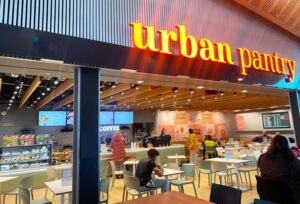
It’s been a great collaborative approach with the airport as it should be, but also the incumbent [HMSHost] in terms of the handover process, which I think is a testimony to the collaborative nature of peers in our industry. We know we can work well together, even when we are moving into each other’s territory.
We are clearly looking at New Zealand to ask what the other opportunities are. As you know, there’s currently a live tender happening in Wellington. And then Auckland in the future? Yes. So we’ll continue to explore opportunities.
Let’s talk about Malaysia, another ambitious development for SSP.
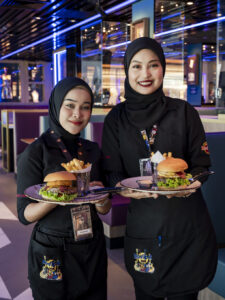
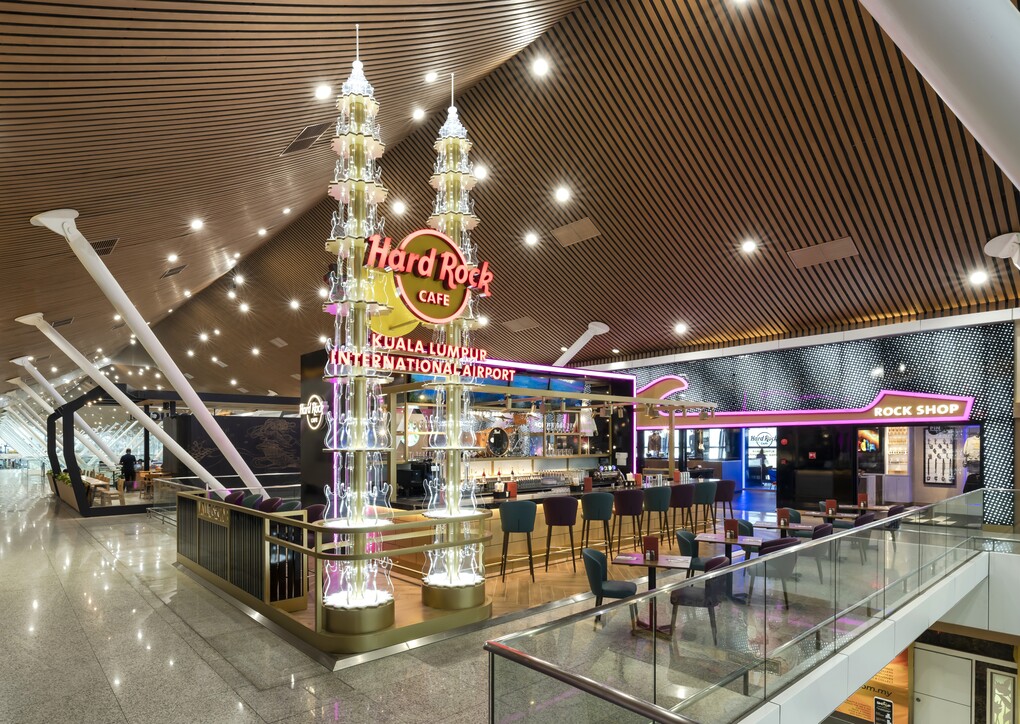
Malaysia has been a very exciting, interesting, and I’d say challenging journey for us, because we mobilised some 35 restaurants and lounges over the course of the COVID period but mostly within the last 12 to 18 months. They range from small cafés to large casual dining units.
With the exception of one lounge, we’ve now effectively come to the end of phase one with a large number of units.
Our Malaysia business for both lounges and F&B is a joint venture with TFS. So it’s effectively a JV within a JV because in turn our India business is a JV with our SSP Hong Kong (i.e. SSP Asia Pacific) business.
It has been a successful and very smooth mobilisation in a deeply challenging market. It’s predominantly franchise [F&B] and owned brand lounges with a focus on local offers, such as OldTown White Coffee, The Coffee Bean & Tea Leaf and what will be eight lounges across KLIA 1, KLIA 2, Kuching and Kota Kinabalu.
We have some very high-quality lounges, catering for all sectors from walk-ins through to the premium airlines.
We’ll talk more about that convergence of channels later. But just to understand the historical concept before the TFS relationship began. You weren’t in lounges before were you?
As a company we have operated lounges for some time. In fact, we have been one of the leading lounge operators for many years, with a big focus in the Nordics. Prior to COVID, we had around 50 shared-used lounge, plus a number of lounges in Asia Pacific, including China, which were predominantly airline lounges where we provided the catering services.
So we have always been a lounge operator. But our approach to lounges has changed as we’ve come out of COVID, in terms of being much more targeted and working in partnership with our lounge experts TFS. And our intention, particularly in this region, is to continue to develop that relationship with TFS in the lounge space.
They are very good at it.
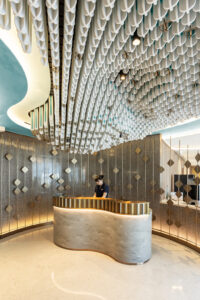
They are superb, they understand the model extremely well. They are very focused on service. So today we are soft opening our Kyra lounge at Hong Kong International, which is a partnership between TFS, Airport Dimensions and SSP.
 TFS have been particularly instrumental on the training side of things. So for the last two weeks solid we’ve had the TFS trainers onboard, doing classroom, in-unit, out-of-unit, theoretical and practical training, all focused on customer service – everything from the quality of the food to grooming to welcoming customers.
TFS is very strong in customer service. You feel it when you go into our Malaysia lounges and when you go into their lounges in India. So it’s a good collaboration between us and TFS in Malaysia for F&B and lounges but here with TFS we have segued into a partnership with Airport Dimensions to open our first lounge at Hong Kong Airport.
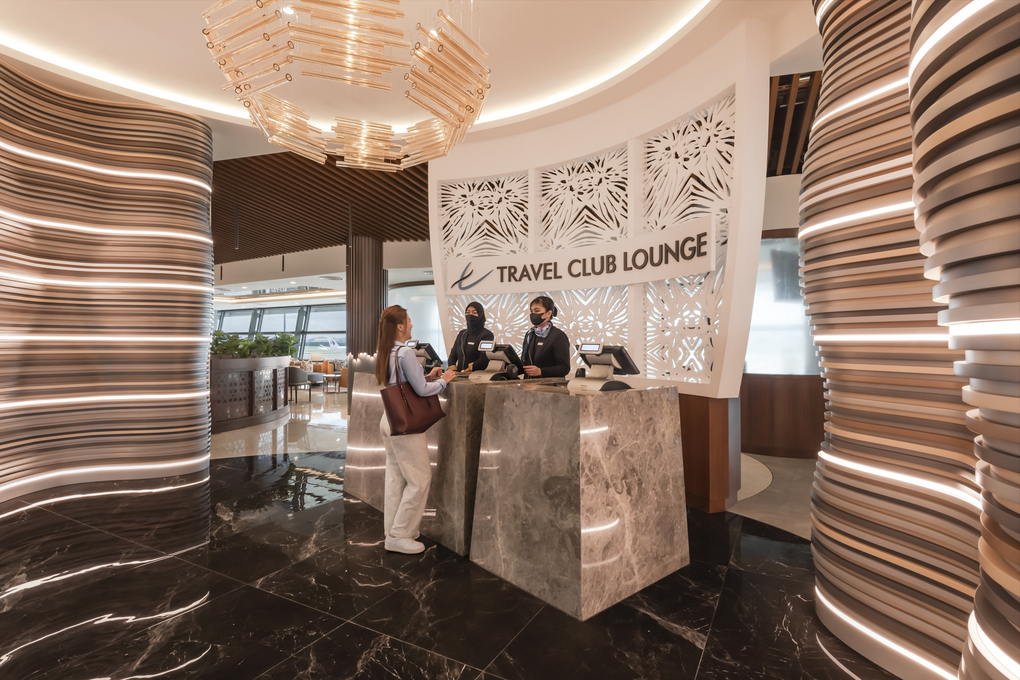
It is a shared-use lounge rather than an airline lounge, except for loyalty schemes and walk-ins. That’s subject to discussions that we will hold with airlines as well.
It’s a great looking lounge, which I think sets the bar for lounges in Hong Kong Airport. Whilst consistency of our brand is important, it’s also important our lounges reflect the environment and country they’re in and, at risk of using a well-worn phrase, a sense of place.
We don’t want our lounges just to be a hotel lobby. They should offer an environment that is super relaxing with fantastic service and great food, but also give a sense that you’re in that particular market.
In our Hong Kong lounge we’ve not only got a menu that reflects local tastes but also a digital artwork display from a local artist. It’s very important to me that we always talk to the environment that we’re in, both in our F&B and our lounge space.
How did the joint venture between SSP, TFS and Airport Dimensions come about and evolve?
We’ve been talking to Airport Dimensions for many years. We have a relationship through the Priority Pass business that the Collinson Group [Airport Dimensions’ parent company] has.
We see it as a good fit in terms of the different attributes, skills and experience that the three parties bring to the table.


Whilst there is crossover, we also have different areas of specialisation. Particularly so with SSP and its food & beverage expertise and also being on site already [at Hong Kong International Airport]. That was a real advantage in terms of being able to leverage our existing footprint.
TFS offers their lounge experience, service standards and knowledge of the industry. And Airport Dimensions has a deep understanding of the lounge space and the loyalty environment. They also have a global footprint of lounges and a very good understanding of the customer base. So it’s a unique combination.
Anything else coming down the line you can talk about at this stage?
What’s super important for us over the next 12 to 24 months is to ensure that we really deliver for our customers and the businesses that we have built up. Therefore our focus will be more on making sure what we’ve got performs extremely well. And also organic growth in existing markets.
There’s also a lot to go after. So whilst we’re waiting for the completion of our deal in Indonesia, we’ve also got lots of growth opportunities in the likes of the Philippines, where we’re currently just in Cebu.
Manila Airport [Ninoy Aquino International] is going through a semi-privatisation process acquisitions. And so there’s a question mark over the timing of opportunities there. But as the industry has recovered, the regional airports are starting to resurface in terms of opportunity.
So we have a real focus on growth in the Philippines.
And, again, you have a joint venture there.
Yes, we have a three-way JV in Mactan Cebu International Airport with Chim [Esteban, Founder & Chairman of Regent Travel Retail Group] and a company called Aboitiz.
So we effectively have the majority share, almost a master concession, in international and a large part of the domestic business.
It’s very well run by a self-sufficient team. Once again it’s a combination of international brands and local offers, including [fast food brand] Jollibee, which for large airports in the Philippines is a must have.
For the rest of the Philippines, we are also in a JV with Chim.
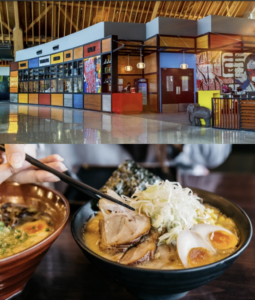
Elsewhere, we will also consolidate our positioning in Malaysia. There are 15 airports in Malaysia that are viable opportunities subject to the timing of the tenders.
And despite our large presence already in Australia, there are live opportunities that you know about from Brisbane Airport [on 14 June Brisbane Airport released a wide-ranging Request for Proposals, inviting top-tier food & beverage providers and retailers to bid for over 32 premier opportunities within the International Terminal -Ed].
In Thailand we have a big presence with around 100 units through one of our longest and most successful JVs [with Minor Food].
We’re really proud of how that works and the great partnership it represents. They have great expertise downtown and deep knowledge of brands, including some of their own brands for which they have master concessions. We have great airport expertise so it’s a very synergistic relationship.
I think there are lots of growth options in Thailand as the pax continue to recover. It’s been slightly impacted by the Chinese market as well. But the regional airports are starting to see good recovery, particularly in Phuket and Chiang Mai.
And as we get to some sort of normality in terms of passenger numbers in Hong Kong, there will be a number of opportunities coming up.
You and I have seen Hong Kong International Airport during the height of COVID as a sort of combination between a ghost town and a semi-military hospital. You could almost sense the tumbleweed blowing through. It’s great to see it reaching back towards normality, isn’t it?
Yes it’s fantastic. It has been challenging. But last weekend was one of the busiest of the year. Good or bad, actually I’ve seen long queues trying to get through security for the first time I think in four years. So it is super exciting to see it coming back.
What can you tell us about the Indonesia agreement with PT Taurus Gemilang?
Over the next ten years Indonesia is going to be the fourth-largest aviation market in the world. As our deal is subject to various approvals, the timing is still to be determined.
But subject to those approvals we will be in Bali and Surabaya and looking to grow our presence across Indonesia in the course of the next few years [SSP will initially operate 13 outlets, 12 of which are located at Bali’s I Gusti Ngurah Rai International Airport and one at Juanda International Airport in Surabaya -Ed].
It’s super exciting and the quality of the offer as part of our acquisition in Bali is superb. Taurus Gemilang has been in Indonesia for many years [its business started in Surabaya in 1989 -Ed] running a very good business with a combination of their own brands and some iconic local brands.
They’ve got a brand called Revolver which is a very stylish local, artisan café during the day, bar and dining concept at night. They’ve got one in domestic and one in international. It’s a café/bar that really appeals both to the local Indonesians and the large number of tourists, notably the Australians.
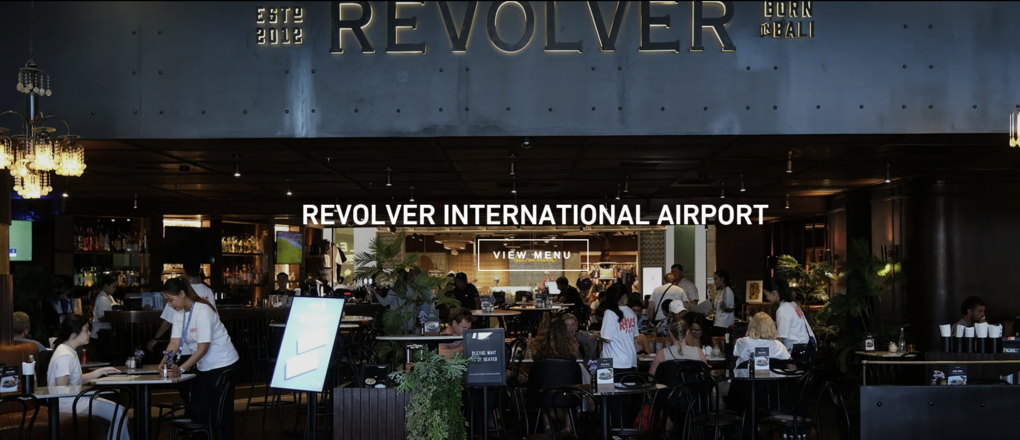
What’s great about the Indonesia offer is the quality of the food that you get, particularly in Bali. It combines the best of Indonesian food with a real twist of Australian quality and taste that is present in some of the airport offers. And that’s combined with the very pure local market offers like Made’s Warung.
Back to the subject of convergence. We see a growing integration of F&B and travel essentials among other examples. How do you view that dynamic?
SSP has been operating convenience retail stores forever and a day within a combination of airports and (within the UK) rail.
This is an extension of Point, our own brand convenience retail offer, which has been operating in Scandinavia for a number of years. So we’ve exported it, modernised it and adapted it for the local market. We’ve opened seven of them in Suvarnabhumi Airport, Bangkok called Point Convenience.
What’s great about this is that we were given a very, very small footprint, in fact, eight meters by one metre. We looked at it and asked how are we going to make this work?
But we’ve built this space that I think works really well. It’s perfect for grab ‘n’ go convenience. And the positioning of it in Suvarnabhumi is excellent because it’s inbetween the main concourse where all the F&B is and the gates. So it’s en route for customers who are about to jump on their flights to get a last-minute grab ‘n’ go.
One of the differences with Point versus other convenience retail is we are very focused on fresh food made on site. We leverage our existing kitchens rather than using bought-in products.
It’s very important for us to make sure that we leverage our existing base to ensure we have a fresh food offer. My background was with WHSmith, so I know the retail sector very well and the convenience retail space in airports is predominantly food – pre-packaged snacks, crisps or fresh or bought-in sandwiches.
Talking about convergence again, we have seen with other sector players the coming together of duty free, travel essentials and food & beverage. There seems also to be an increasing convergence between food & beverage and lounges.
Yes, although I think that lounges is a sector that was always running in parallel to the F&B business. What’s happened in the lounge space is that there is more industry interest and more understanding of the sector by various operators. The opportunity in the lounge space for large operators like SSP is to leverage the food & beverage operations with the lounge business.
The convenience sector is where there is most crossover because of the mix of offer within the airport.
I’m less of an advocate of the convergence of duty free and food & beverage. Now you would expect me to say that, wouldn’t you? But I think the synergies between the two are less obvious, because they are very different operations with very different mindsets. And therefore, it is not as apparent to me to where there are obvious synergies.
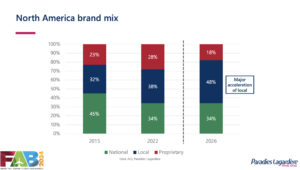
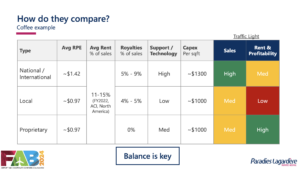
At our FAB Conference in Ontario recently, there was a great presentation from Paradies Lagardère Executive Vice President David Bisset. He showed two very interesting slides (below) about national, local and proprietary brands. He said there’s a big move towards local from national and definitely away from proprietary where the best margins lie.
With the rush of RFPs coming up in America, he said his company had to look at all the opportunities and say if the push towards local accelerates, where are they going to make any money? How do you see that dynamic taking shape in your region?
That’s really interesting. With the exception of Australia, Asia Pacific is very focused on local brands. More so than my experience in other markets
In Australia we see a heavy weighting towards proprietary because of the predominance of bars – as there is not really a global international bar.
But outside of Australia, we have a very heavy mix of local, third-party franchise brands. In Malaysia with the exception of one unit and our lounges, they are all local franchises. So effectively 99%. Why is that? And what does it mean for us as operators?
We need to respond to two things. Firstly, what does the customer want? And what does the client want? Sometimes they’re not 100% aligned. And that’s a tension that we need to manage. Then how do we balance those two dynamics to ensure we make some money?
So ultimately, what we need to deliver is what the customer wants. What I’m seeing in Asia Pacific is that a predominantly local offer is required.
In Asia, I would say it needs to be uber local or big and global. So let’s take OldTown White Coffee and Burger King. These two ends of the spectrum work really well. And sometimes in the middle there might be an own brand or a bar.
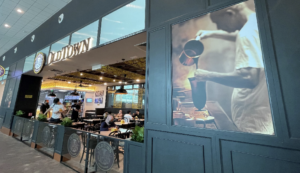
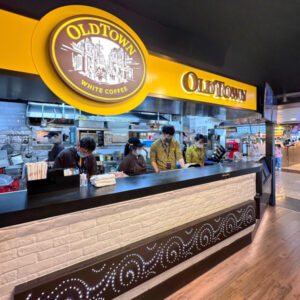
The challenge is that both of those are third party brands, which come with franchise fees. I think our role is in helping our [airport] clients understand that it comes with additional cost.
If that’s what the customer wants, then we need to work with our client to say there needs to be some adjustment in the commercial terms to take into account a much higher cost of operating a third-party brand.
How about developing proprietary local brands?
That is very challenging. If there’s a tried and tested local brand that the locals know, and which has heritage, quality and standards, then I would move towards that rather than trying to develop our own.
There is a middle ground which is potentially the coffee and the bar space, and some grab ‘n’ go like Point but trying to develop a very localised offer is a deeply challenging proposition.
Clearly it’s been a challenging time in terms of hiring as we come out of the COVID crisis. Attracting and retaining staff has always been an industry challenge so how acute is your focus in this area?
I’d say it has gotten easier in the last six months though that doesn’t mean we’re any less focused on delivering for our people. I say to our team that every business is a people business but nowhere more so than in hospitality. Therefore recruiting, training and retaining the right people is absolutely fundamental to our business.
We need to be a frontline-focused business first and foremost. Our support centres need to support our teams on the frontline serving coffees and dishes.
The competition for good people is always there. How do we go about ensuring that we recruit and retain the right people in Asia Pacific and across the world? From a group perspective, we’ve got a very comprehensive people strategy, which will look at all aspects of recruitment, development, training, etc.
At a local level, we will take elements of that and overlay it with what we think is important for a particular market.
Because we’re so nuanced and have so many markets, we can’t have a one size fits all different markets. So we will cascade some of the principles we’ve got around recruitment, training standards etc. to the local markets, and they will adapt it according to what they need in each location.
In addition, to bring the region together more cohesively we have a scheme called Fly, Learn, Grow, which any individual at any level across Asia Pacific can apply to join.
It gives them the option to spend one month in another country. We fly them over and they stay for between two and four weeks. And they’ll work depending on their role in the office or in the store and learn about that market.
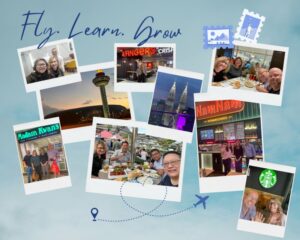
They will create friends, build networks and understand what’s going on there. They will take their learnings from their home market and bring it to the one they are visiting, where they’ll have a buddy with them. We had around 20 people on the scheme last year and 20 people this year. So it’s been highly successful.
In addition, we support people’s other training needs… bespoke training that may be specific to F&B or something more general.
COVID resulted in us having to focus back on the centre of the business as a result of the challenges we were going through. Now we need to pivot back to say “Alright, what is needed in the outlets to deliver the best for our customer.”
That’s a strong note to finish on. Any additional final message to the industry?
Watch this space. The Asia Pacific region is coming back. And we’ll overtake the rest of the world. 

Note: The Moodie Davitt Report publishes the FAB Newsletter, which features highlights of openings, events and campaigns from around the world of airport and travel dining.
Please email Kristyn@MoodieDavittReport.com for your complimentary subscription.