
Introduction: Hybrid retail formats are gaining attention across the airport ecosystem as operators look to combine retail, food & beverage and experience-led concepts within a single footprint.
Altavia Travel Retail has released an exclusive whitepaper assessing their potential as a growth driver in travel retail. This guest article explores performance and concession models, typical formats and industry best practices.
Why hybrid matters now?

For years, airport commercial journeys have been structured around clearly defined categories: core duty-free stores, retail boutiques, food & beverage outlets, lounges and other passenger services. But today, those boundaries are becoming more fluid.
To investigate this shift, we engaged with leading airport operators, duty-free retailers and international brands.
“Hybrid concepts respond to several traveller needs at once: convenience, experience, local identity, gifting, speed and quality,” remarked Areas Marketing & Business Development Director Mireia Martí Isern.
“They also improve conversion and help capture a higher share of spend within a single point-of-sale.”
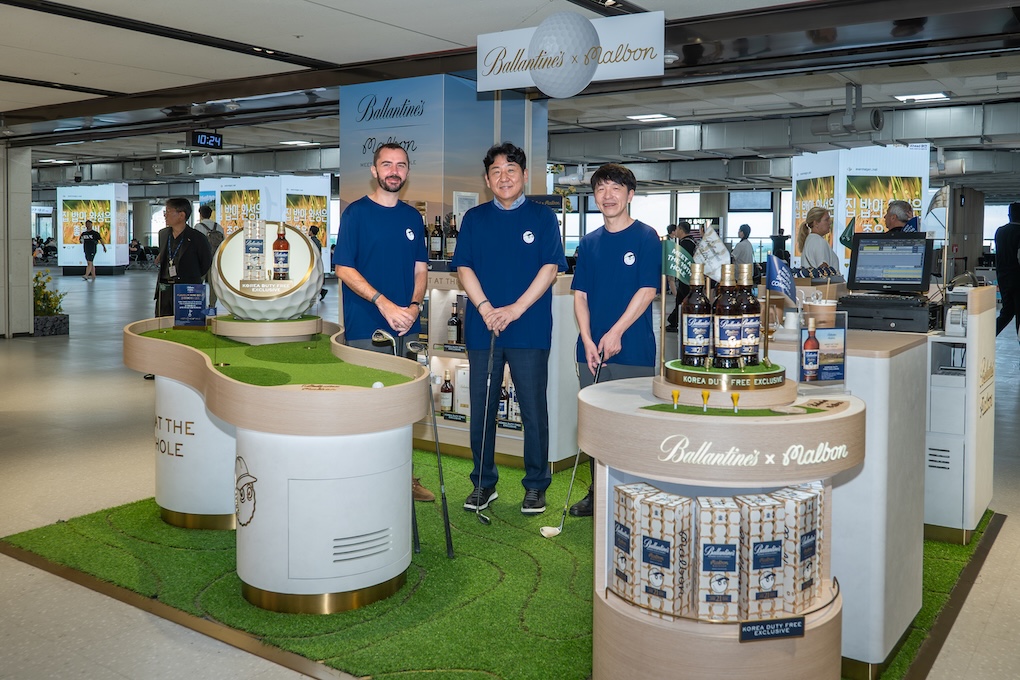
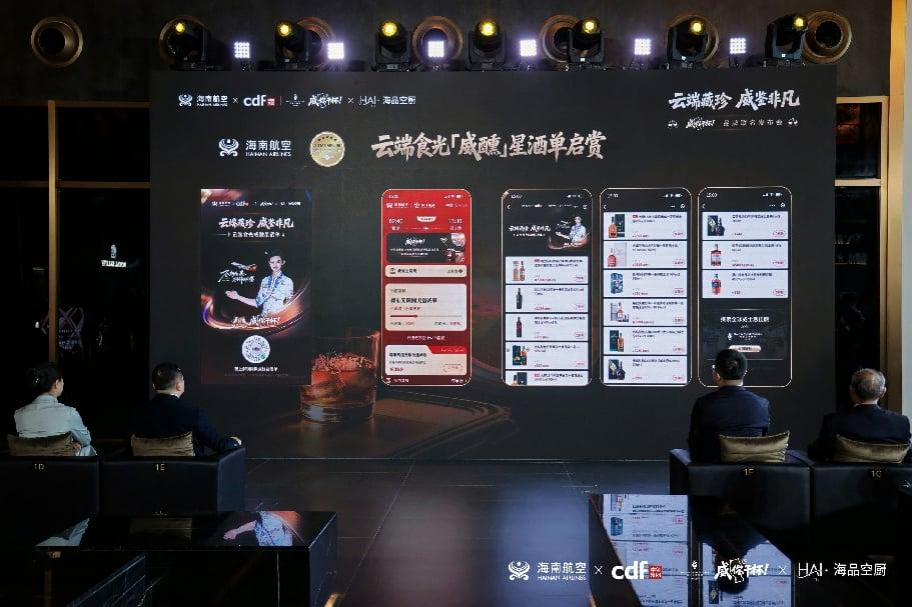
Hybrid formats bring two or more activities together within a single concept, combining elements such as retail, food & beverage, entertainment, services, lounges, advertising and brand activation into an integrated passenger experience.
Lagardère Travel Retail’s 2024 Travel Experience Voices report identified hybrid concepts as one of the key themes shaping travel retail and dining, with 76% of surveyed airports considering them a long-term trend.
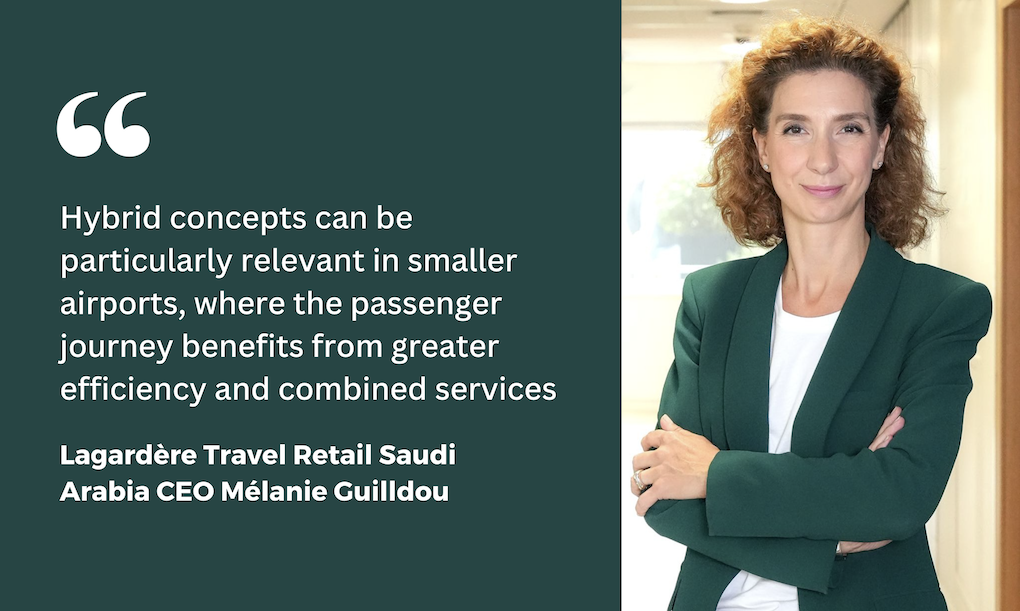
“I do not believe hybrid concepts will remain anecdotal. More airports and railway stations will increasingly explore these formats,” said Lagardère Travel Retail Saudi Arabia CEO Mélanie Guilldou.
Why airports are the natural testbed for hybrid formats

Airports are not conventional retail locations.
A passenger may have 20 minutes before boarding and need coffee, gifts and a phone charger. Another may have a long layover and want a place to sit, eat, work or browse. A family may be looking for convenience and comfort. A premium traveller may spend most of their dwell time inside a lounge, away from the main retail floor.
Hybrid stores respond to this diversity by bringing several needs together in one proposition.
Nestlé International Travel Retail General Manager Frédéric Porchet said, “These integrated formats create immersive, one-stop experiences that can increase dwell time, encourage cross-category spending and open new opportunities for brands, operators and landlords.”
For airports, this can make commercial areas feel less generic and more aligned with the passenger journey. For operators, it creates additional occasions to capture spend. For brands, it offers a richer platform for storytelling.
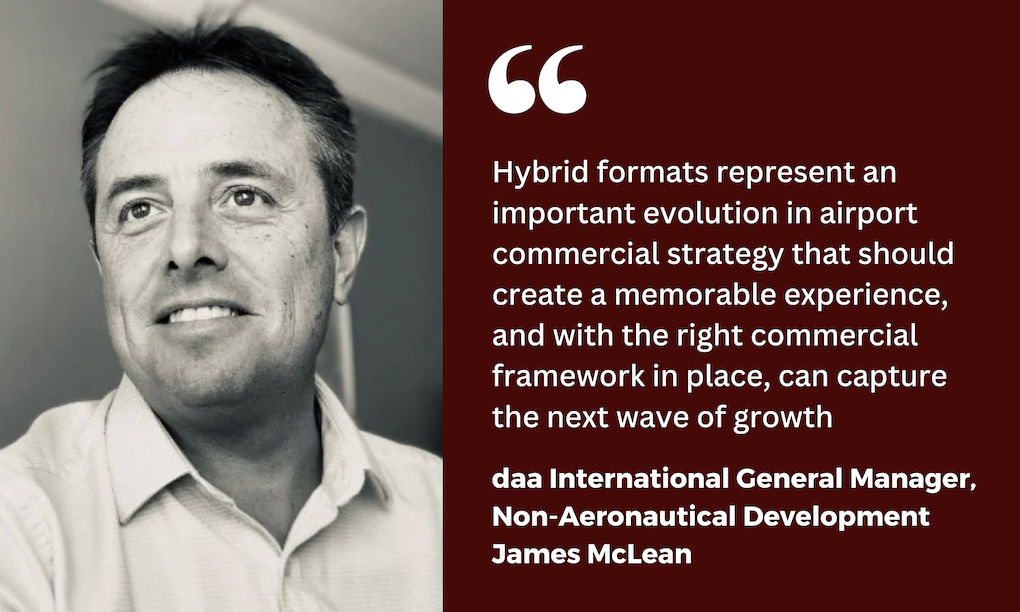
“Combining retail with F&B or integrating brand activations within lounges, for example, allows operators to move beyond purely transactional models toward more experiential propositions,” said daa International General Manager, Non-Aeronautical Development James McLean.
“In turn, this can drive higher spend per passenger and provide brands alternative promotional platforms.”
This is also where the first major challenge appears: airport space is expensive, limited and politically sensitive. A hybrid concept must justify every square metre.
Choose the role: functional or aspirational
Rather than relying on a single model, hybrid formats should be assessed by the role they play in the passenger journey: solving practical needs, creating branded moments, extending dwell time or opening new commercial occasions.
Isern added, “We see hybrid concepts becoming a normal and expected format, particularly in high-traffic departure areas and locations close to boarding gates, where passengers are looking for speed, convenience and quality.”
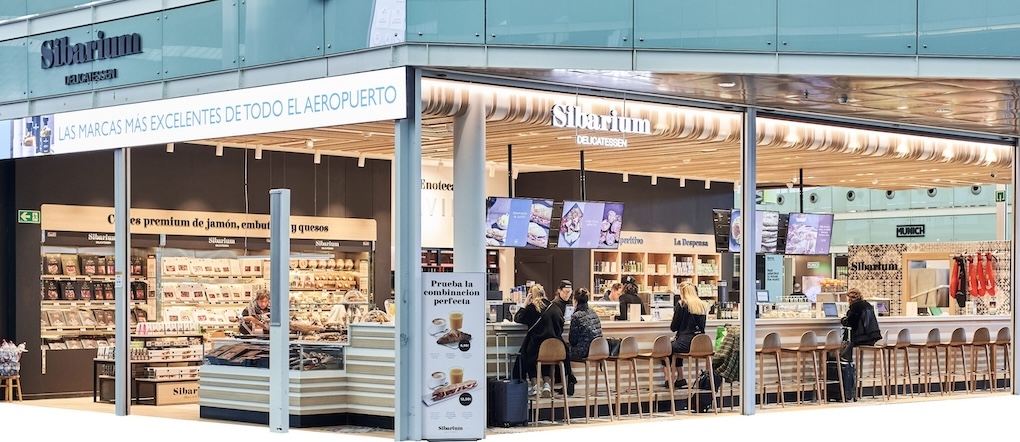
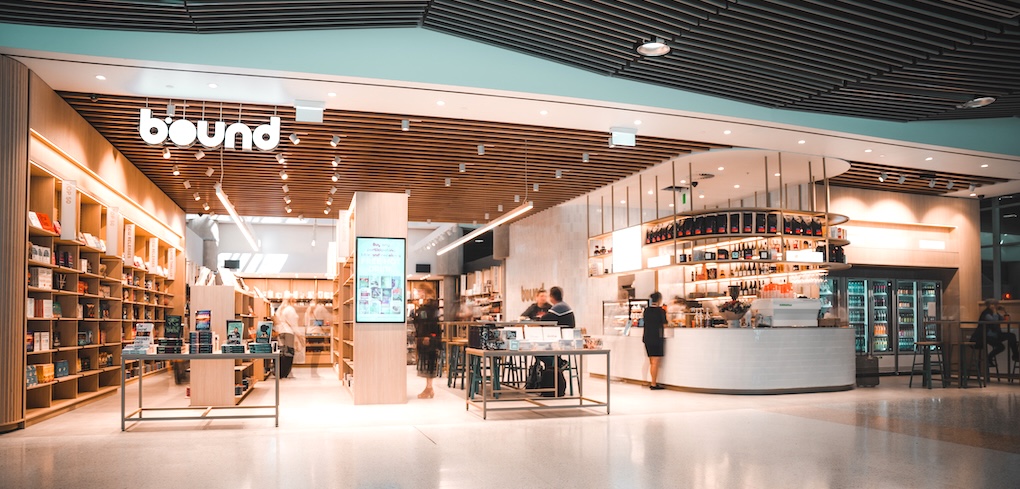
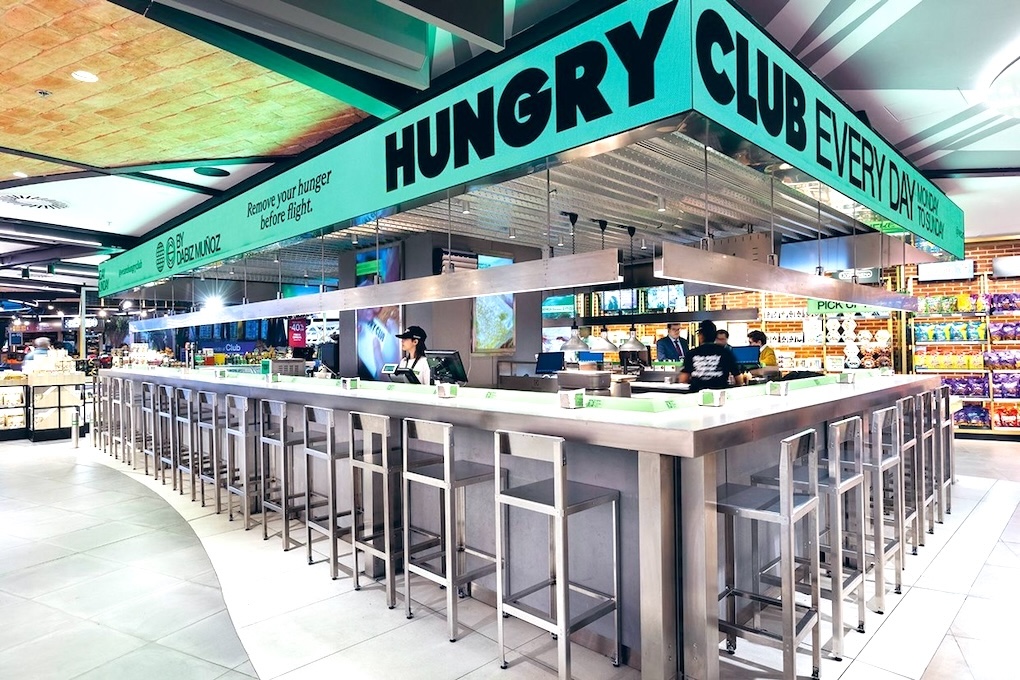
A hybrid format therefore needs a clear role. It can be functional, built around speed, convenience and problem-solving, for example a café and travel essentials offer that helps passengers refuel, recharge and restock in one place.
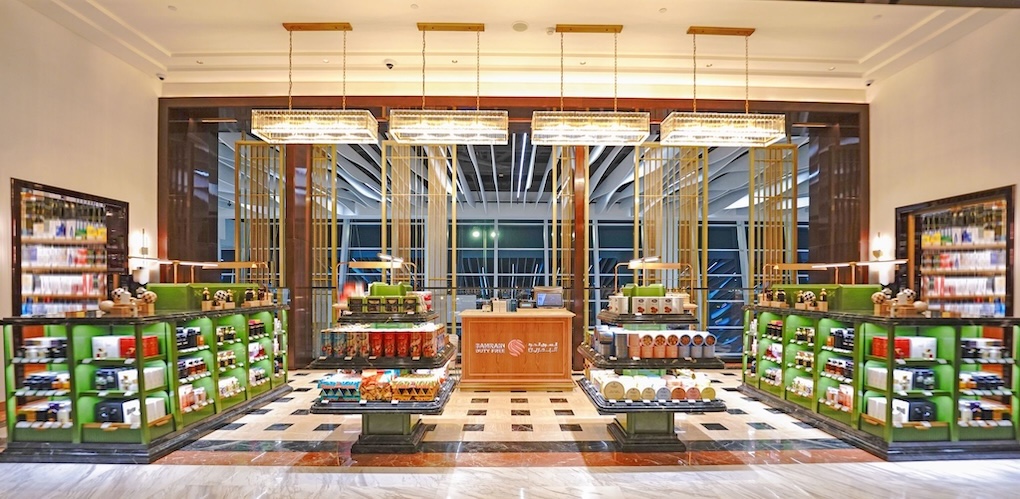
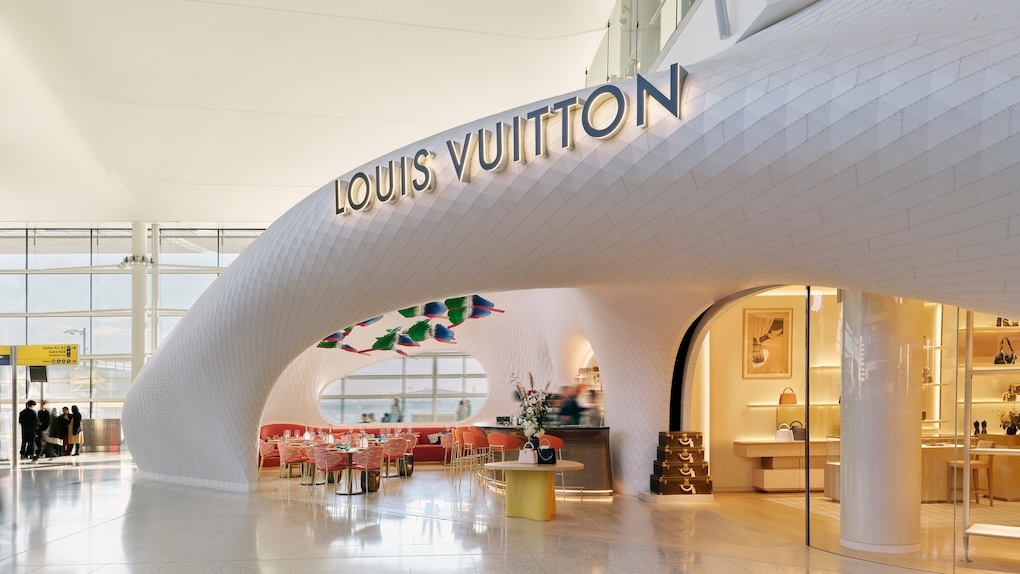
Or it can be aspirational, built around hospitality, brand immersion and emotional engagement, such as a luxury boutique where a café turns the store into a destination.
“One of the key learnings is that hybrid concepts create additional purchase occasions. In Sibarium, around one-third of customers combine bar consumption with shop purchases,” highlighted Isern.
Successful hybrids should be judged first by clarity. In an airport, passengers need to understand the concept quickly.
‘Travel essentials and café’, ‘beauty and gastronomy’, ‘luxury boutique and hospitality’, ‘gourmet dining and sense of place’, and ‘lounge and curated retail discovery’ are clear ideas, as each one explains both the function and the experience.
The second condition is relevance. The hybrid layer must make sense for the brand and the passenger. A beauty café can work if taste, scent and ritual support the category.
And the third condition is economic honesty – hybrid should not be used as a buzzword to justify lower productivity. It should be used where the combined format solves a real passenger need and creates incremental value.
The lounge question: opportunity versus threat

The hybrid conversation should not be limited to stores. Airport lounges are becoming one of the most important frontiers because they concentrate time, comfort and higher-value passengers.
This is an opportunity, but also a threat to the traditional duty-free model. As passengers spend a growing share of their dwell time inside lounges, they are spending more time away from the primary retail areas.
SAVE Group Head of Marketing and Non-Aviation Ilaria Grandin said, “When retail blends with F&B, lounges or even light entertainment, the terminal becomes a place to dwell in rather than simply pass through.”
The risk is that lounges are valued precisely because they are not sales floors. Retail integration must therefore feel curated, discreet and relevant. It should behave like a service, discovery or privilege, not like a commercial interruption.
The business model is also complex. A hybrid lounge may involve the lounge operator, airport, duty-free retailer, brand, airline, bank or card programme.
Each party may have different expectations on revenue share, staffing, data, product ownership, passenger targeting, visibility and service standards.
“The contractual framework for such hybrid concepts is a complex challenge,” added McLean.
“Such hybrid formats require a flexible approach that can accommodate multiple revenue streams with different cost profiles, different operators and shared operational responsibilities within a single footprint.”
Hybrid formats must increase space productivity
The rise of hybrid formats connects to a broader issue: how airports use space.
Airport commercial areas are under pressure. They need to generate revenue, manage passenger flow, reduce crowding, support comfort and create memorable experiences.
“Hybrid concepts can be particularly relevant in smaller airports, where the passenger journey benefits from greater efficiency and combined services,” said Guilldou.
Grandin added, “Across the airports of SAVE Group – Venice, Verona and Treviso – we actively embrace this approach, working closely with our retail, food & beverage partners and airlines to experiment with new formats.”
But the space argument is not one-sided. Duty-free retail can be one of the most productive uses of airport commercial space.
The real opportunity is not to replace high-performing duty-free square metres with softer experience-led concepts.
It is to identify where hybrid formats increase total commercial productivity by capturing passengers who would not otherwise shop, supporting conversion, improving brand recall or lifting spend across categories.
“For airports like ours, these concepts represent a real opportunity to enhance passenger satisfaction and dwell time, while carefully balancing operational complexity and space constraints,” said Grandin.
The commercial challenge
The first challenge is contractual. Retail, F&B and lounges often operate under different concessions, rent structures, minimum guarantees, revenue-share mechanisms, exclusivity rights, staffing rules and brand agreements.
A concept that blends them can create immediate questions: who owns the sale, who books the revenue, who controls the customer data, who carries the inventory, who staffs the space and who is accountable if the concept underperforms?
“Most airport tenders remain surprisingly siloed,” said Guilldou.
“The financial and operational models are often very different and combining them may not always allow an airport to meet its expected financial performance.”
This is one of the reasons hybrid formats often move more slowly than the industry conversation around them. They require commercial frameworks that can recognise blended value without losing financial accountability.
McLean added, “Questions around what type of business, ownership of the business, revenue reporting and concession fee structures need careful consideration.”
Another challenge is profitability. F&B may increase dwell time and improve the passenger experience, but duty-free revenue per square metre is often structurally higher than F&B revenue per square metre.
That does not mean hybrid formats are unattractive; it means they must be evaluated on total contribution.
“Their success depends on pragmatic planning: optimising limited terminal space, ensuring sustainable economics and carefully balancing the mix of partners, services and commercial objectives,” said Porchet.
Hybrid becomes a growth driver when experience meets economics
Hybrid stores and hybrid lounges reflect a deeper evolution in travel retail. The airport is no longer only a place where passengers shop before they fly. It is becoming a destination where they expect to be hosted, inspired, served, entertained and understood.
But the winners will not be the most fashionable concepts. They will be the concepts that reconcile experience with economics: the right offer in the right place with the right partners, clear governance and a realistic view of space productivity.
“Ultimately, hybrid formats represent an important evolution in airport commercial strategy that should create a memorable experience, and with the right commercial framework in place, can capture the next wave of growth,” concluded McLean.
The future of travel retail will not be defined only by what passengers buy before they fly. It will be defined by how relevant, useful and memorable the airport experience becomes while they wait. ✈