

UK. ‘Resilience against a challenging backdrop’ is how London Heathrow Airport characterised its performance in the half-year to June in its messaging to the investment community. And despite the continuing impact of the Middle East conflict on passenger traffic – volumes to and from that region were down -20% in September – that’s the language used by Retail Director Fraser Brown in assessing the big picture when we meet at TFWA World Exhibition in Cannes.
As a barometer of that resilience, he points to the projected full-year traffic level of 83.6 million passengers (June Investor Report), which would represent a -1% dip compared to 2025, even with a -25% fall in Middle East numbers. Non-aeronautical revenue is expected to grow +5.4% year-on-year in 2026 though within this retail will be broadly flat.
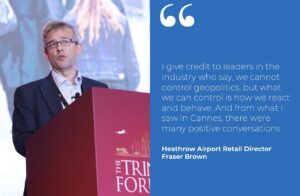
Brown says, “Because of the nature of Heathrow, we find ourselves in a naturally good position, due to the geographic diversity of the flights, the continued attraction of London and the UK for visitors.
“The vast majority of the traffic lost to the Middle East because of the geopolitical situation has effectively been rerouted, and that is great testament to my colleagues who work with our airline customers at Heathrow to make those changes happen. Traffic has been much more robust than the casual observer might assume.”

While Heathrow’s status as the dominant UK hub is undisputed, its place in the global aviation landscape has changed amid competition from other markets. Istanbul, which has gained business as a connector between east and west through the recent Gulf crisis, was recently named the world’s most connected airport for the first time, overtaking Heathrow in the OAG Megahubs 2026 rankings.
Brown says: “Istanbul will probably be the largest international airport by passenger numbers at the end of this year, and Heathrow will be number two. And equally, credit to Istanbul, they have just been voted the most connected airport in the world by OAG, a status Heathrow held for the past three years.
“That in turn shows that other airports are powering ahead, and the UK is falling behind, and it’s another reminder that Heathrow is capacity-constrained.”
The airport company has a firm plan to reach 95 million passengers a year even under those constraints and with its current two-runway structure.
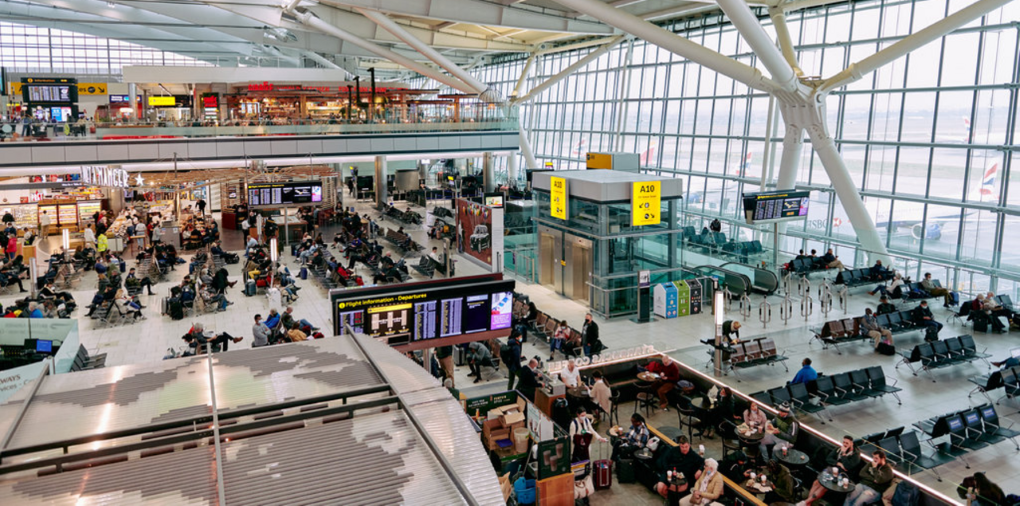
Brown says, “We have had some exciting conversations in Cannes about how we create opportunity for our partners though it is difficult and means squeezing more out of the space we have.”
The long-term plan – approved in 2025 by government – is to add a third runway at Heathrow, with UK Prime Minister Andy Burnham recently telling the BBC the expansion was “a matter for London and Londoners”. Amid continuing parliamentary hearings on the matter, Heathrow Airport CEO Thomas Woldbye said on 14 October that not building the third runway would be a “huge missed opportunity”.
Brown says, “We have been very clear all along that we believe there is an absolutely clear economic case to expand the airport, unlock capacity and the benefits that this brings.
“Also, the policy of the ruling Labour Party, made very clear in January 2025, has not changed: that a third runway at Heathrow can unlock capacity and growth for the UK. And it is a UK question, not just one for London. Heathrow matters to businesses up and down the country.
“It is about UK economic growth, and we will continue to make that point to the government and to other stakeholders. We are in a position where our six shareholders are invested in the success of the current business and are prepared to invest in an expanded Heathrow.
“That is a huge financial commitment and a show of confidence in the UK. And what we are asking government for is to create the right planning conditions and economic conditions to allow those investors to make what will be billions of pounds worth of investment, and the benefits are clear in terms of GDP growth, additional jobs and the employment that Heathrow – really a city in its own right – supplies to the communities it serves.”
Terminal investment
Against this backdrop the Heathrow retail team continues to press ahead with a strong modernisation programme across terminals, with T4 high on the agenda for the year ahead.
Brown says, “We are completely relaying the main duty-free store with a multi-million-pound investment, for which we thank Avolta and the core-category brands.”
This is taking place because of a project to replace security equipment with new installations, which requires a fresh layout of space.
The Harrods offer in T4 is being flexed to focus on UK gifting as the main store closes, mirroring a development that has already taken place in T3. “Food, gifting and Britishness are all doing really well across our business,” Brown adds.
Meanwhile Heathrow retail management is also talking to other brands about entering T4, which will be transformed over the year ahead.
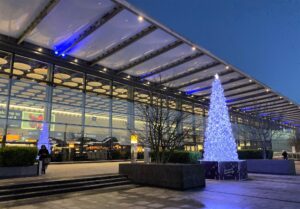
Brown says: “T4 may be our smallest terminal by passenger numbers, but it has some fantastic airline demographics from Qatar Airways, Saudia, Kuwait Airways, Etihad and Asian carriers like Vietnam and Malaysia Airlines. Those are really good demographics for retailers.
“T4 is also a very shoppable terminal because it’s all on a single level, and because it’s a bit smaller, it is easier for us, brands, retailers, and crucially for passengers to walk and to shop.”
Other eye-catching projects across Heathrow include a move in T2 to create three new retail units. This will come by moving the bank of airside transfer desks that one encounters coming from the transit zone.
Also in T2, Fortnum & Mason will return to an airside space in early November, in the same week as the UK brand takes over the island F&B Bar area in Terminal 3, opposite luxury brands such as Louis Vuitton, Chanel, Hermès, Gucci and Dior. Separately, Heathrow has extended its relationship with Fortnum & Mason in T5.

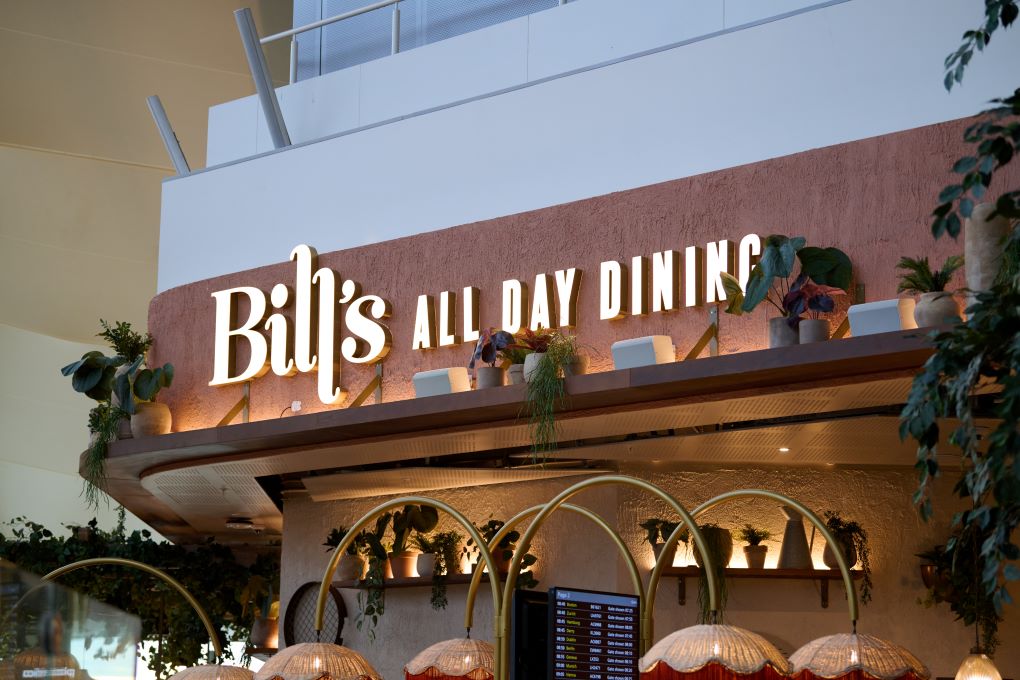
Those moves follow others in recent months, including a travel retail debut for British dining brand Bill’s in T2 in partnership with Avolta, marking the British dining brand’s travel retail debut. Plus Heathrow saw a new chapter opening in the travel essentials category with a first Relay store, also in T2.
Lagardère Travel Retail secured its first UK airport Relay contract at Heathrow last year as part of the airport’s plans to reshape its blended essentials retail proposition. The retailer partnered with Waitrose to strengthen the food-to-go offer within the concept.
Brown says: “Blending a one-stop shop with all the essentials makes sense in a space-constrained airport like Heathrow. We don’t duplicate categories, we don’t have one store next to another that is selling carbonated drinks, water from the fridge, crisps, sweet snacks, sandwiches or salads. Blending it together is the right thing to do, which is what prompted our T2 tender, won by Relay and which then debuted in the UK for the first time.

“That business is trading really well. They are learning and we are learning, and I have to pay credit to the whole Lagardère Travel Retail team, both in Paris from a category point, but also the local team led by Peter Newbould, who leads their UK and Ireland business. They have been super-responsive in learning, quickly tweaking and changing things.”
In T3, T4 and T5, Heathrow signed an extended relationship with WHSmith, an ever-present partner since Heathrow opened in 1946.
“In our 80th year as an airport we are super proud of that relationship with WHSmith and thank their team and my team for what they have delivered in their flagship blended essential stores across those terminals. Their portfolio includes the largest WHSmith store in the world at Terminal 5.

“Their Terminal 4 store obviously has had some impact from the Middle East situation, but it is beautiful and the store design, execution, category management, product choices and quality of the operation is an absolute credit to WHSmith.”
In T5, Heathrow Airport recently completed a new-look line-up of luxury fashion stores following a tender and resizing process over the past two years.
“Two years ago, we launched luxury store tenders for T5, and the final one of those stores (an expanded Hermès boutique) opened on 11 September as that process came full circle,” says Brown. “We welcomed Zegna’s debut at Heathrow, we welcomed heritage British brand Smythson back, we have got a larger Dior store and resized Prada and Bottega Veneta.
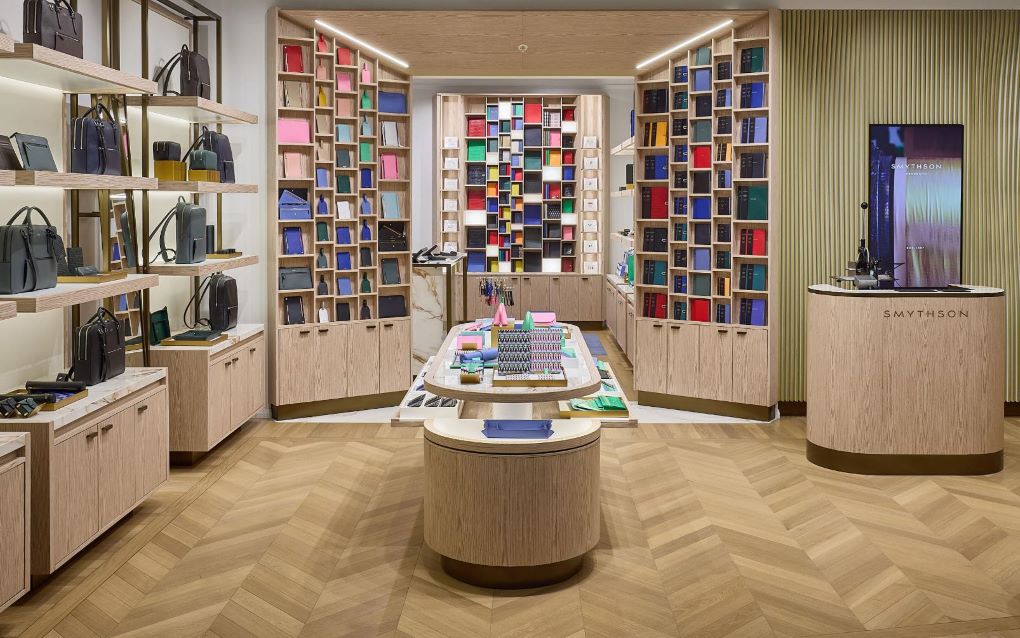
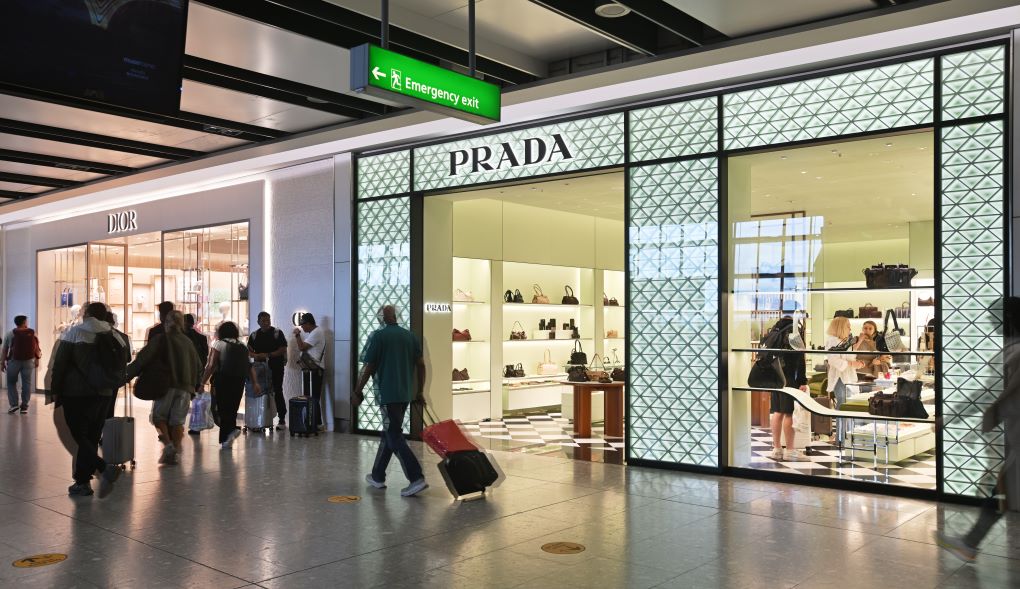
“That line-up shows Heathrow is still a great place for a brand to showcase on a global stage, even in a tougher trading environment.”
Since the UK removed the tax-free shopping benefit on luxury and other categories post-Brexit, the business remains a challenge.
“We don’t have the right economic conditions to be as successful as we could be due to the rules on tax-free shopping,” Brown reiterates. “We continue to make the case that the UK, and as the hub airport with the demographics that we have and the luxury brands that we have, are at a competitive disadvantage.
“The fact that a Burberry scarf costs more in an airport in the UK than it does in an airport pretty much anywhere else in the world, still feels perverse, and still has a significant negative impact. But we cannot directly control that.
“I am proud in these tough fiscal conditions, where we have to charge VAT, that the brands continue to innovate, the retailers continue to deliver great service, and although sales are significantly lower, we continue to have a luxury business.”
F&B as a commercial driver
Meanwhile, food & beverage continues to be a strong driver of commercial performance, with duty-free sales flat in the first half and luxury a challenge given the lack of a tax-free advantage today.
Variety plays a big part in satisfying and driving demand, with Waitrose at Relay and new quick-service offers from Pret A Manger for example expanding the choice to travellers.
The airport company last year signed a multi-year contract extension with Pret A Manger across its estate and introduced a flagship Pret shop in T5 arrivals this summer. The move brings Pret’s total presence at Heathrow to nine outlets and positions grab-and-go food more firmly as a core component of the airport’s commercial strategy.
Brown says: “The T5 store has a fantastic execution and some real innovation in the way they have laid out the seating. There are lots of single seats, so the professional driver can sit and wait for their client. Seats also face out so that they can have their coffee and look for their customer as they come off the arrivals catwalk.”
Recent additions in the full-service segment include Five Guys in T5 and Slim Chickens, a new quick-service restaurant and a UK airport first, in T3.
Brown says, “The key thing as we dip our toe into quick-service restaurants is about productivity and specifically how many people can we serve?
“In the Slim Chickens space we are serving significantly more people in the same space than when it was a full service. Why is that important? In all my space, I am struggling for capacity, and if we can serve more people from the same space, that means more happy passengers, people getting the food that they want conveniently and quickly, and that has a positive effect on their overall experience at the airport, and creates the time and the headspace to be able to shop as well.”

In casual dining, Gordon Ramsay Restaurants Global unveiled Gordon Ramsay Plane Food Market in T5 late last year, bringing new dining options from the famous celebrity chef. Meanwhile, a Wagamama restaurant in T3 transitioned to Giraffe and its clear proposition around breakfasts in particular.
“At the same time,” says Brown, “we stuck with Wagamama in T5 because it has a loyal following of regulars who understand that despite the name above the door, it does a cracking breakfast. And The Restaurant Group team have done a great job to continue to evolve that menu.
“Equally, Bill’s in T2 works really well because it has a menu for the whole day, which reaches again back to that productivity point.”
As quick-service becomes a more prominent part of the F&B mix in terminals 3 and 5, the team is examining the opportunities for this category in terminals 2 and 4.
More generally, as an airport company with constrained space, wise decisions need to be made on food destinations and choices.
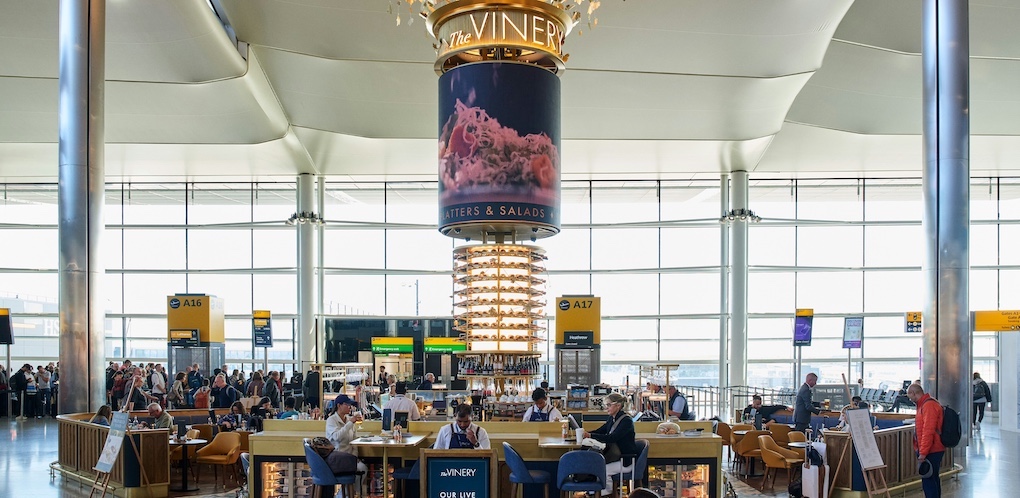
Brown says: “We have learned that consumers are quite conservative in terms of food choices. They tell us they want healthy food and want choice in salads, yet our most popular selling items are the iconic English breakfast, burgers and fish & chips.
“We are very respectful of dietary requirements, offering halal foods and other choices, and how some people are comfortable and some are not about being in an environment that serves alcohol.
“But beyond that we need to be mindful of how we offer choice. Our T5 landside Indian fine-dining destination with Michelin-starred chef Atul Kochhar didn’t work as well as we imagined it would, and our Asian concept Shan Shui in T2 has not been as successful as we’d like. So we reflect on those choices we make to appeal to our wide audience.”
One other F&B-related factor Brown raises as a talking point is the connection (or lack of it) to duty free.
“We are worried about flat to falling penetration in duty free,” he says. “Yet I have more and more customers engaging in F&B and penetration is rising.
“What nobody has done, and I’ve heard many of the statements about hybridisation from our partners, is really execute that cross-sell from F&B into duty free.
“It is a real opportunity for brand owners as well. If you’ve got a fantastic liquor brand, and that liquor is being served in an on-trade environment in a restaurant, and I’m enjoying a glass of a particular Champagne or a particular whisky, why is that not a call to action to buy a bottle? It is an opportunity, and I’d like to see the industry grasp that. How can we get that drive to store from the great penetration in F&B?”
That was one of many discussion points Brown had during the Cannes show, one he left with an upbeat feeling about the industry’s direction despite the tough trading conditions in many markets.
He concludes: “I was impressed with what I saw from leaders in the industry at Cannes. It would be easy to say passenger traffic is softer, consumer sentiment is challenging, and therefore numbers are not quite where we all collectively want them to be.
“But I give credit to leaders in the industry who say, we cannot control geopolitics, but what we can control is how we react and behave. And from what I saw in Cannes, there were many positive conversations.
“And that resonates with us at Heathrow. We could worry about the -1% decline in passengers and the geopolitics in 2026, or we could focus on how we grow to 95 million passengers and what that looks like from a retail and F&B point of view. And that is what we are doing.” ✈