
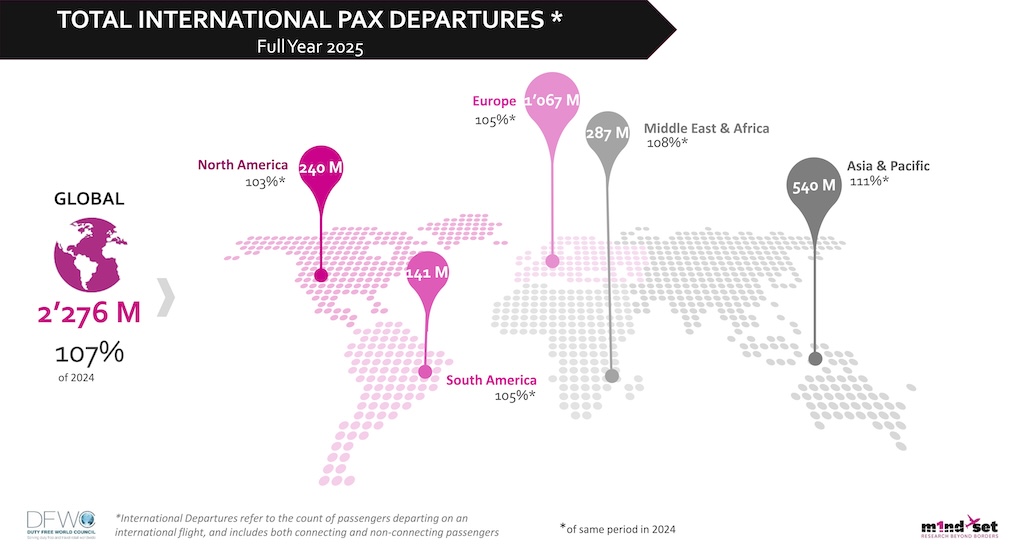
INTERNATIONAL. The travel retail industry recorded a strong recovery in 2025, supported by international passenger departures rising +7% year-on-year to reach 2.28 billion.
That is according to the Duty Free World Council’s (DFWC) Full Year 2025 Global Shopping Monitor, which is produced for the DFWC by Swiss research agency m1nd-set, drawing on data from its Business 1ntelligence Service (B1S) tracking survey.
The report also highlighted a shift in shopper behaviour, with rising impulse purchasing and sustained demand for travel retail-exclusives shaping the industry landscape.
In travel terms, Asia Pacific emerged as the primary growth engine, soaring to 111% of 2024 traffic volumes amid continued market recovery. The Middle East & Africa saw +8% growth, while Europe and South America each rose +5% and North America increased by +3%.
The full-year report is based on a sample of more than 24,500 international travellers and complements quarterly updates that track seasonal variations in travel and purchasing patterns.
DFWC President Sarah Branquinho said, “The Full Year 2025 results are a testament to our industry’s resilience.
“With global passenger numbers well over 2.2 billion, and a significant +11% growth in the Asia Pacific region, it is clear that the appetite for international travel is stronger than ever.”
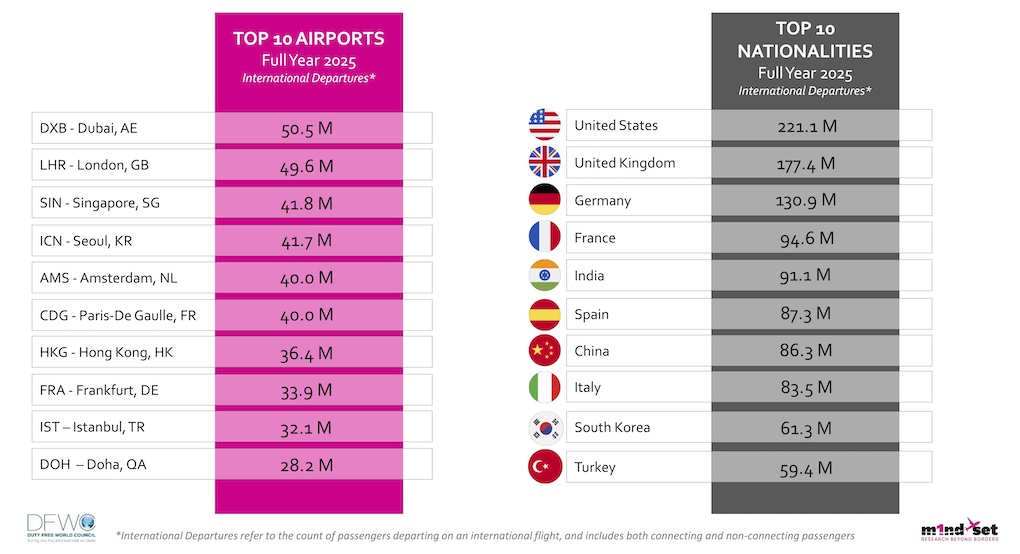

Strategic global hubs continued to anchor international traffic in 2025, led by Dubai with 50.5 million international departures. London Heathrow followed closely at 49.6 million, with Singapore Changi reaching 41.8 million.
Incheon International Airport and Amsterdam Airport Schiphol completed the top five, recording 41.7 million and 40 million departures respectively.
In terms of nationality, US travellers remained the most active outbound market, accounting for more than 221 million international departures.
The UK ranked second with 177.4 million, followed by Germany (131 million), France (just under 95 million) and India (91.1 million).
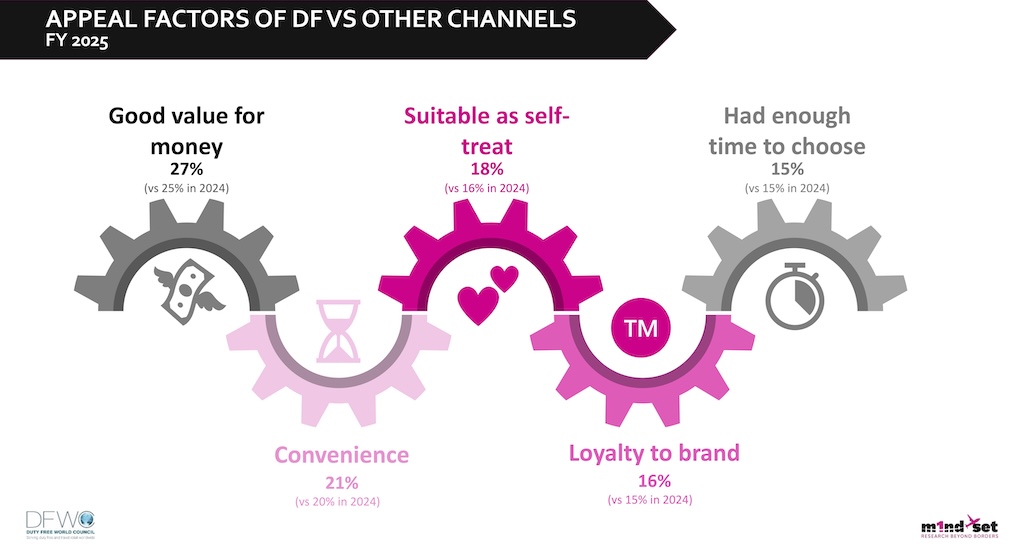
According to the DFWC monitor, value and convenience continue to underpin duty free’s appeal. ‘Good value for money’ remained the leading purchase driver, cited by 27% of shoppers, up from 25% a year earlier.
Convenience rose to 21%, while self-treat motivations increased to 18%, reflecting a strengthening emotional component in travel retail purchasing.
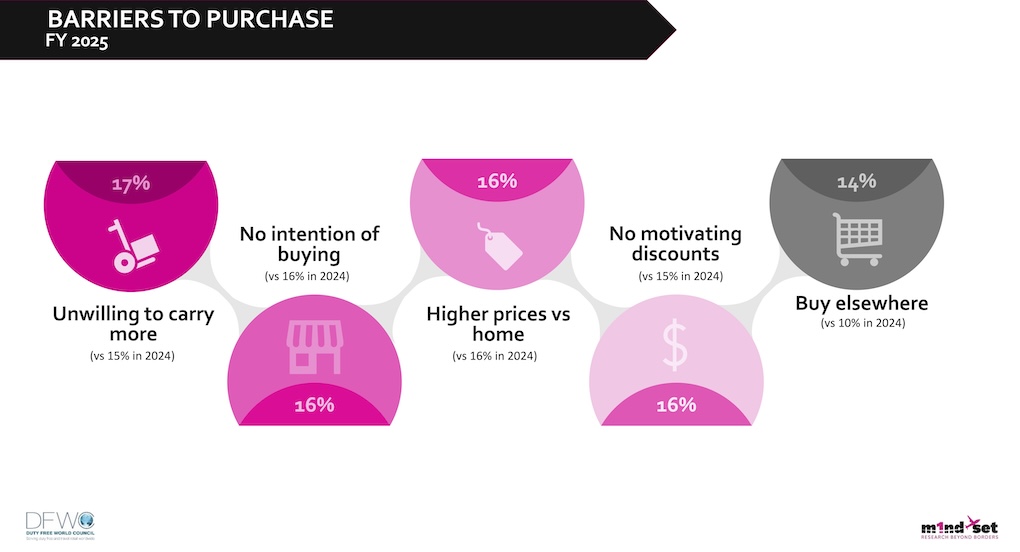
However, price perception remains a structural challenge. Some 16% of travellers cited ‘higher prices compared to home’ as a barrier to purchase, while ‘no motivating discounts’ edged up to 16%.
The proportion of travellers choosing to ‘buy elsewhere’ rose sharply from 10% to 14%, signalling intensifying competition from domestic retail and e-commerce channels.
Self-consumption strengthened its dominance as the primary purchase purpose, climbing three points year-on-year to 55%, while gifting declined from 25% to 23%.
The monitor also highlights a shift in shopper psychology. Impulse purchasing (as a share of shopper drivers) rose to 31%, up from 28% in 2024, as both specific and undecided pre-trip planning declined.
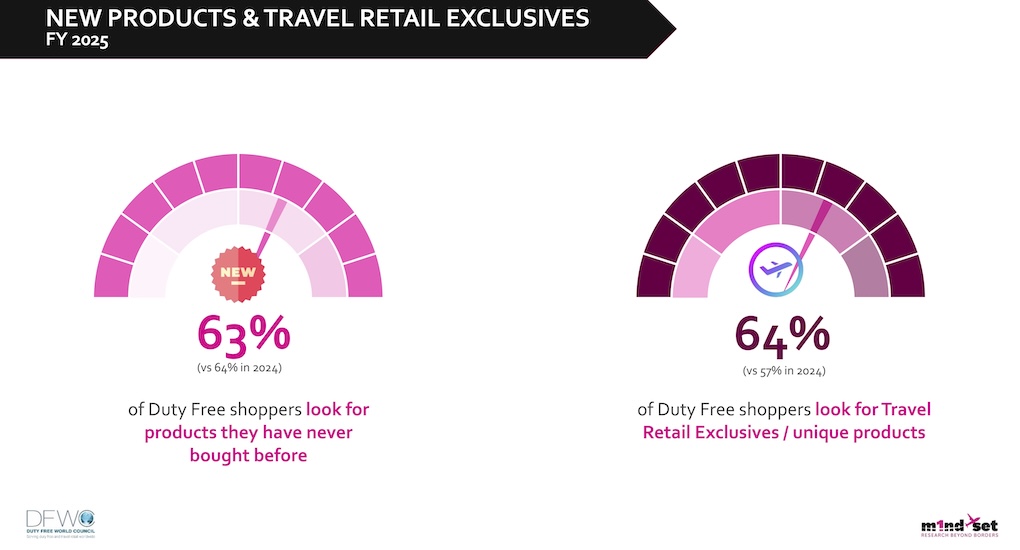
At the same time, demand for differentiation intensified, with 64% of shoppers actively seeking travel retail exclusives or unique products, compared to 57% the previous year.
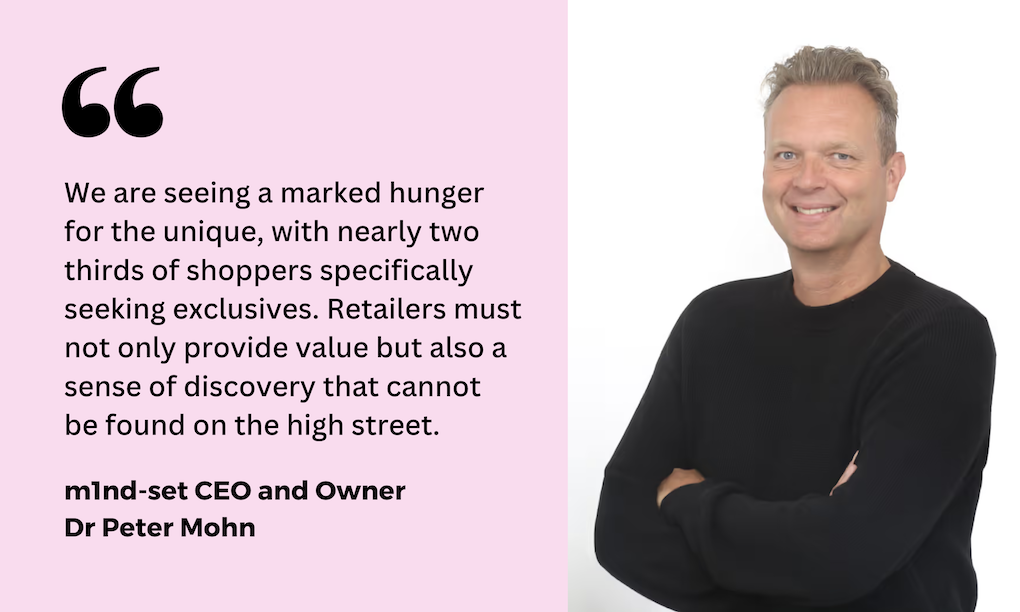
m1nd-set CEO and Owner Dr Peter Mohn remarked, “Our latest monitor highlights a significant shift toward more spontaneous behaviour, with impulse purchases now accounting for nearly a third of all duty-free purchases.
“We are seeing a marked hunger for the unique, with nearly two-thirds of shoppers specifically seeking exclusives. This emphasises that retailers must not only provide value but also a sense of discovery that cannot be found on the high street.”
While there is little variation between 2024 and 2025 in shopper engagement with pre-store communications touchpoints, the human touch is increasingly important, according to the DFWC monitor.
Shopper engagement before entering the store held steady, with 32% of passengers exposed to pre-store touchpoints in 2025, as in 2024. General internet searches were again the most common touch point, but social media influence was on the rise in 2025, increasing to 13%.
Branquinho added, “The human element remains an important catalyst for conversion. The interaction rate between travellers and sales staff rose four points to 53% in 2025, from 49% in 2024.
“It is crucial to acknowledge and act on the fact that the influence of these interactions is significant. 74% of shoppers stated they were positively influenced by staff advice, a figure that is aligned with the 2024 level.
“It underlines the huge importance our people play in converting browsers into buyers and highlights the positive impact a well-trained and highly skilled sales force can add.” ✈