

ASIA PACIFIC. The travails of the downtown duty-free sector continue to pile up as more retailers exit city locations amid softer traveller (especially Chinese) demand, rising operating costs and evolving consumer behaviour.
The latest body blow comes from Lotte Duty Free, which confirmed to The Moodie Davitt Report today (11 May) it is reviewing the potential closure of its Sydney downtown store, a 3,000sq m flagship emporium opened amid great expectations in May 2022 in the city’s central retail district.
What seemed such a heady opportunity just three years ago – Lotte Duty Free talked bullishly of generating sales of KRW1 trillion (US$790.3 million) over the first ten years of operation – has turned sour amid spiralling losses and no feasible commercial adaption route.
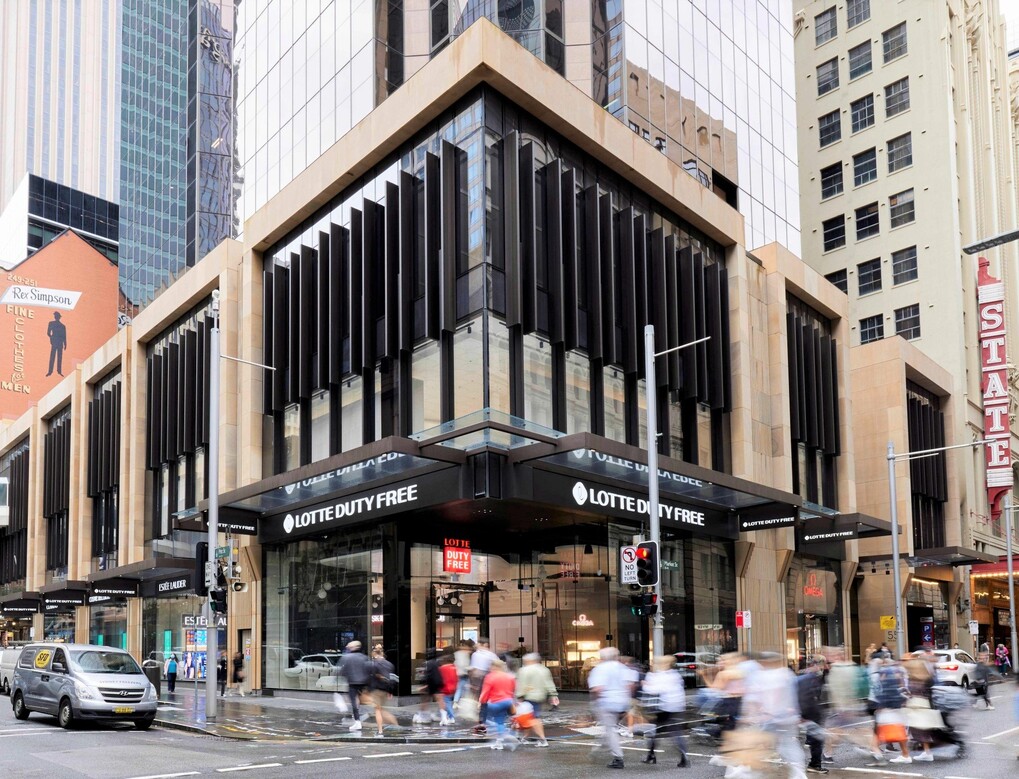
The company cited deteriorating trading conditions, including softer Chinese traveller spending, elevated rents and eroding price competitiveness linked to unfavourable exchange rates.
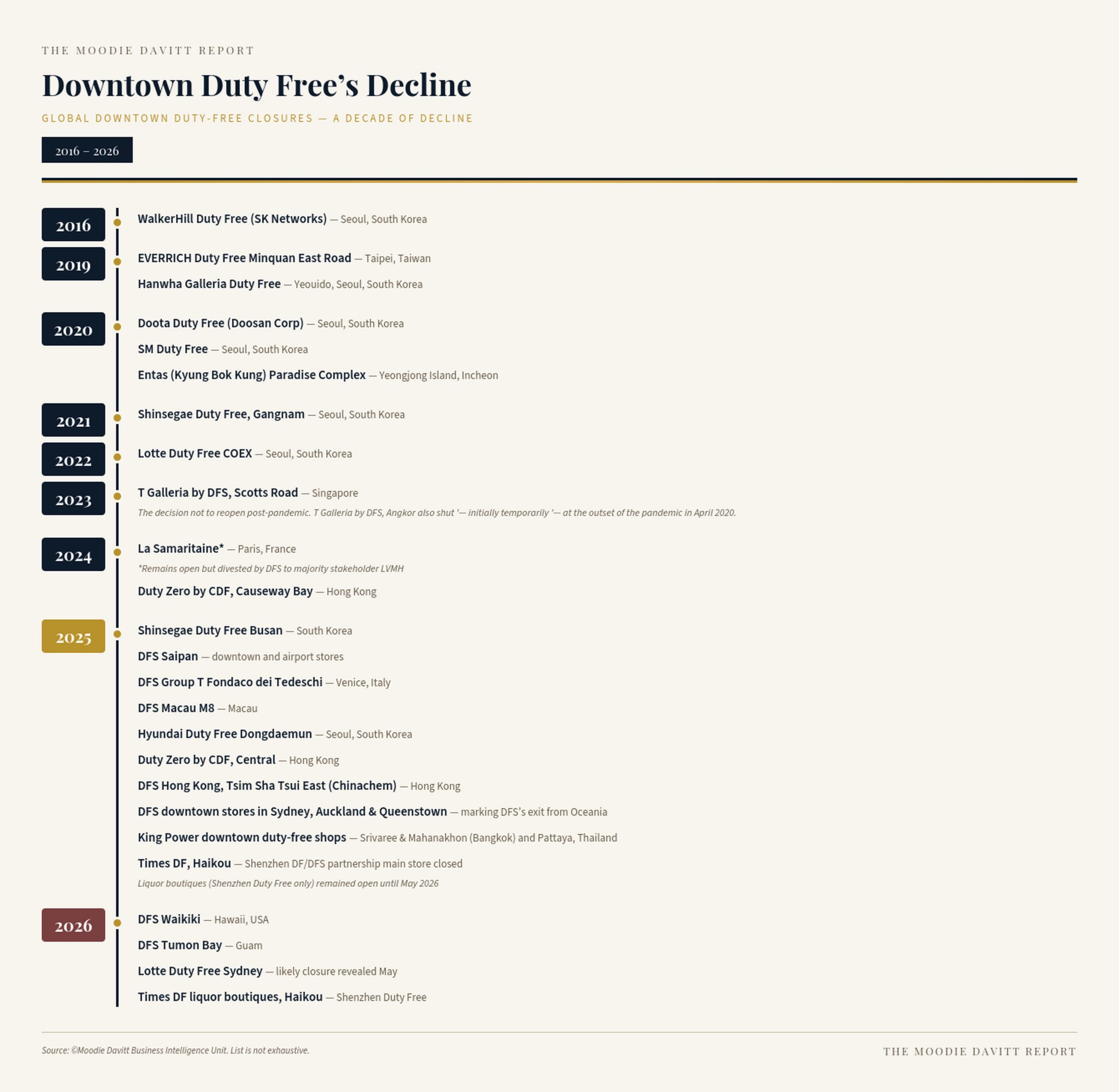
The move forms part of what Lotte describes as a broader “portfolio optimisation” strategy, consistent with earlier exits from downtown locations in Melbourne, Australia and Da Nang, Vietnam as well as at home in South Korea (see table below).

Lotte Duty Free’s almost certain Sydney exit mirrors a series of downtown duty-free closures across Asia Pacific and beyond over recent years, highlighting the growing challenges facing a business model once regarded as a pivotal travel retail growth driver.
The long-time cornerstone of North Asian travel retail (most notably in South Korea, Macau and Hong Kong), downtown duty-free has been devastated by a series of structural changes in recent years and what can only be considered ‘own goals’.
In 2019, just before the COVID-19 pandemic, Seoul laid dubious (and ultimately untenable) claim to having 13 downtown duty-free shops, while the Republic as a whole had 22, a frankly ridiculous over-proliferation.
By mid-2024 those numbers were down to eight and 16, respectively, and the attrition has continued.
{In the premiere episode of Moodie Davitt CHECK-IN, a quarterly video series produced by Moodie Davitt STUDIO in association with Hendrick’s Gin, The Moodie Davitt Report Founder & Chairman Martin Moodie takes viewers to South Korea and China, the two great North Asian travel retail heartlands, for a highly personalised take on the respective downtown duty-free market’s challenges}
The first retailer to be impacted was Hanwha Galleria Duty Free in 2019, followed by SM Duty Free and Doota Duty Free in 2020.
Weakened Chinese tourism in the aftermath of the THAAD anti-missile system dispute between South Korea and China in 2017, combined with intensifying downtown duty-free competition and rising daigou-related group commission costs, placed such businesses under unsustainable pressure. COVID was the final straw.
Among those subsequently affected after the pandemic were Shinsegae Duty Free, which shut its Gangnam, Seoul store in 2021, and Lotte Duty Free, which closed its COEX operation in 2022. Hyundai Duty Free’s Dongdaemun, Seoul store also closed in July 2025.

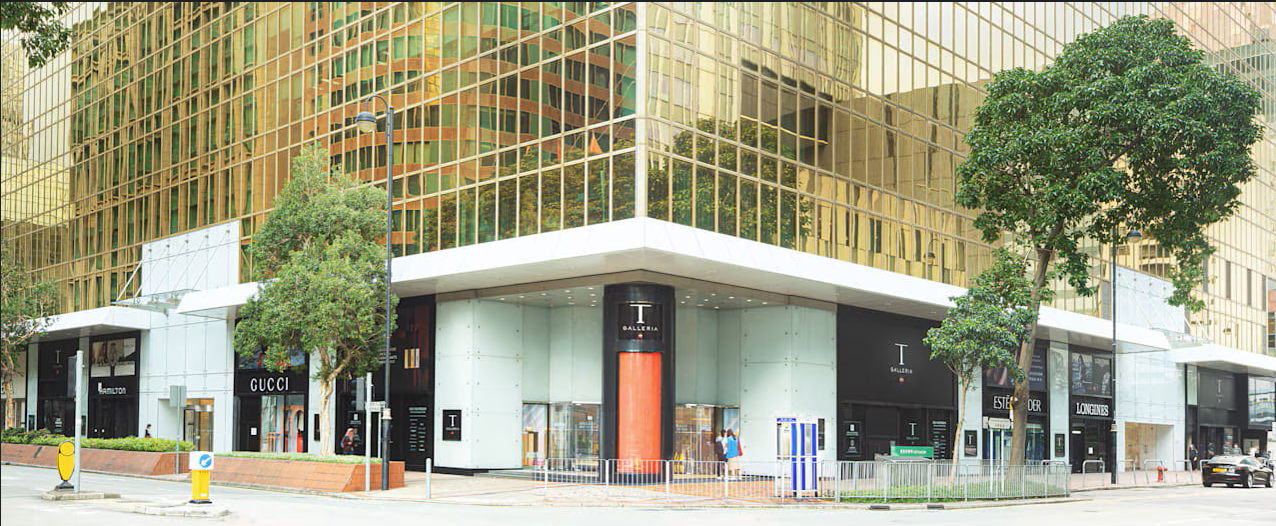
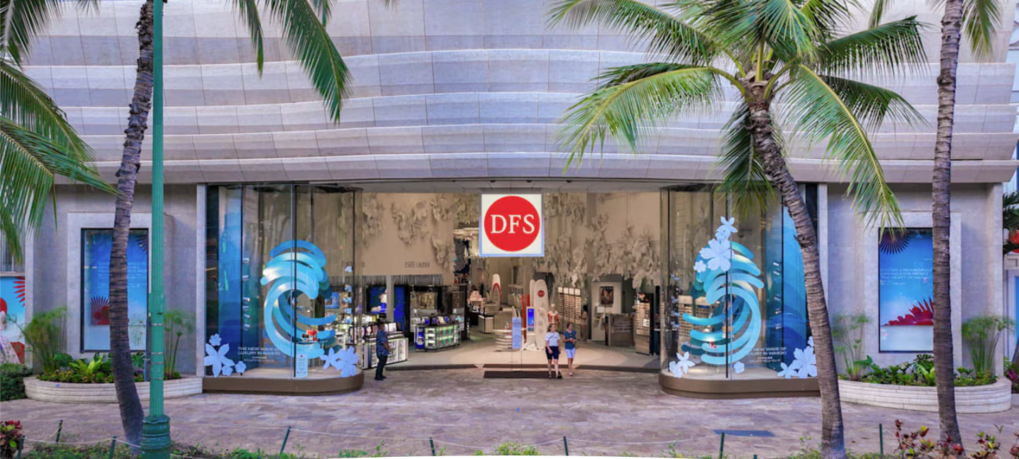
DFS Group, so synonymous with downtown duty-free, has progressively slashed its retail footprint over recent years, with high-profile closures or exits including Auckland, Saipan, Siem Reap (Cambodia), Singapore, Hawaii, Hong Kong, Macau, Paris*, Queenstown, Sydney, Venice and the Tumon Bay Galleria in Guam this March.
The retailer’s exits from Waikiki (and Hawaiian airports) marked an end to an illustrious 63-year history in Hawaii, when added to the Guam and Saipan closures, underlined the dramatic metamorphosis of a once untouchable retail empire.

In Thailand, King Power has also shut down several downtown duty-free stores at Srivaree and Mahanakhon in Bangkok, and Pattaya on a phased basis last September.

The list (see below) goes on and on. It is understood that Shenzhen Duty Free last Saturday (9 May) shut down the liquor boutiques that formed the only remaining part of the Times DF operation in Haikou (the balance, run in partnership with DFS, closed last year).
“For many brands today the tourist business in department stores is larger than in the downtown duty-free sector and I see this trend only accelerating as tourists want to enjoy a local experience not a manufactured tourist one,” LVMH North Asia Group President Michael Schriver told The Moodie Davitt Report.
“This evolution is unavoidable as consumer preferences and behaviours change. I think it is time the industry stops focusing on downtown duty-free and instead focuses on downtown travel retail and creating experiential tourist destinations with immersive retail experiences.
“The difference is that it is not a price game since price is no longer really THE reason to visit. We need to create a destination tourists want to be in.”
While China Duty Free Group is upbeat about its new Hong Kong and Macau estate, believing it can maximise the business through an acute understanding of the Chinese consumer, other global locations will continue to face fierce pressure, especially as big luxury brands decide to opt out of key downtown duty-free doors, notably in South Korea.
In the latest edition of The Moodie Davitt Magazine (below), now out in digital and print format, our cover story poses the question, “Life beyond reselling: Can Korean duty free reinvent itself?” Putting the reselling aspect aside, the balance of the question is apposite to the entire downtown duty-free sector worldwide. ✈

Also read: Guest editorial – The past, present and future of the South Korean duty-free industry