


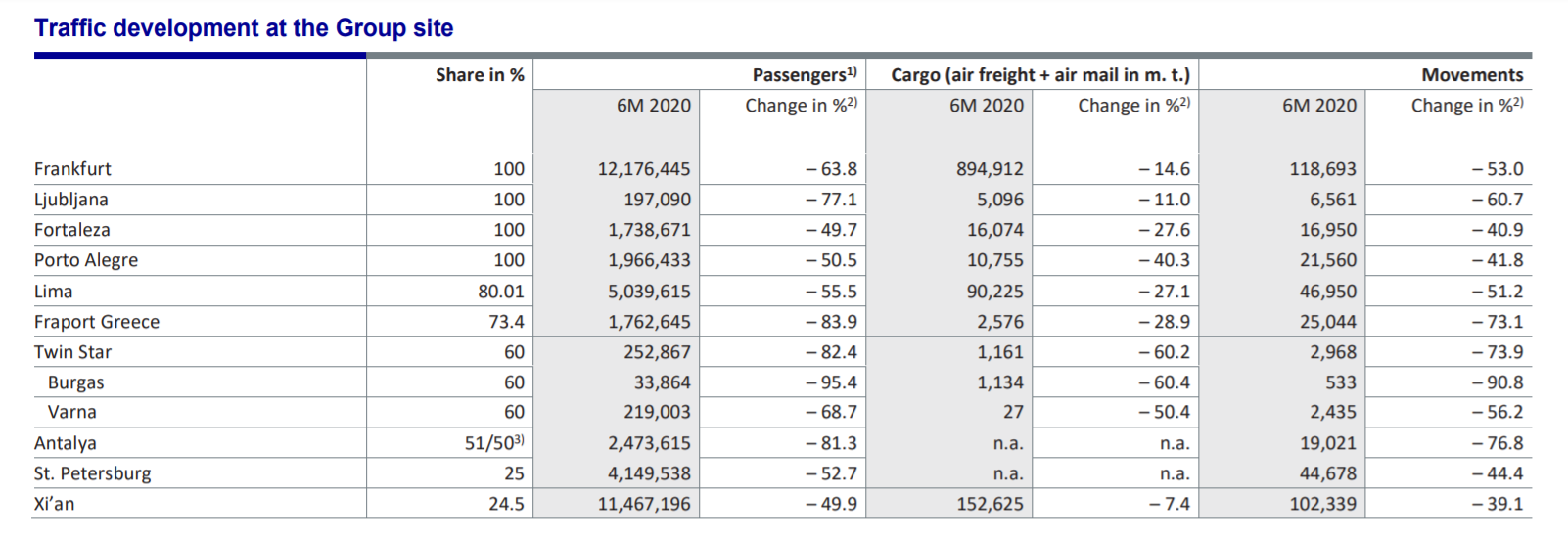
GERMANY. Spurred by a disastrous -94.4% passenger traffic collapse between April and June, Fraport Group posted a -48.9% slump in first-half revenues.
Retail revenues fell by -53.9% year-on-year. Net retail revenues were not reported due to them not being comparable in any way with the same period a year earlier.
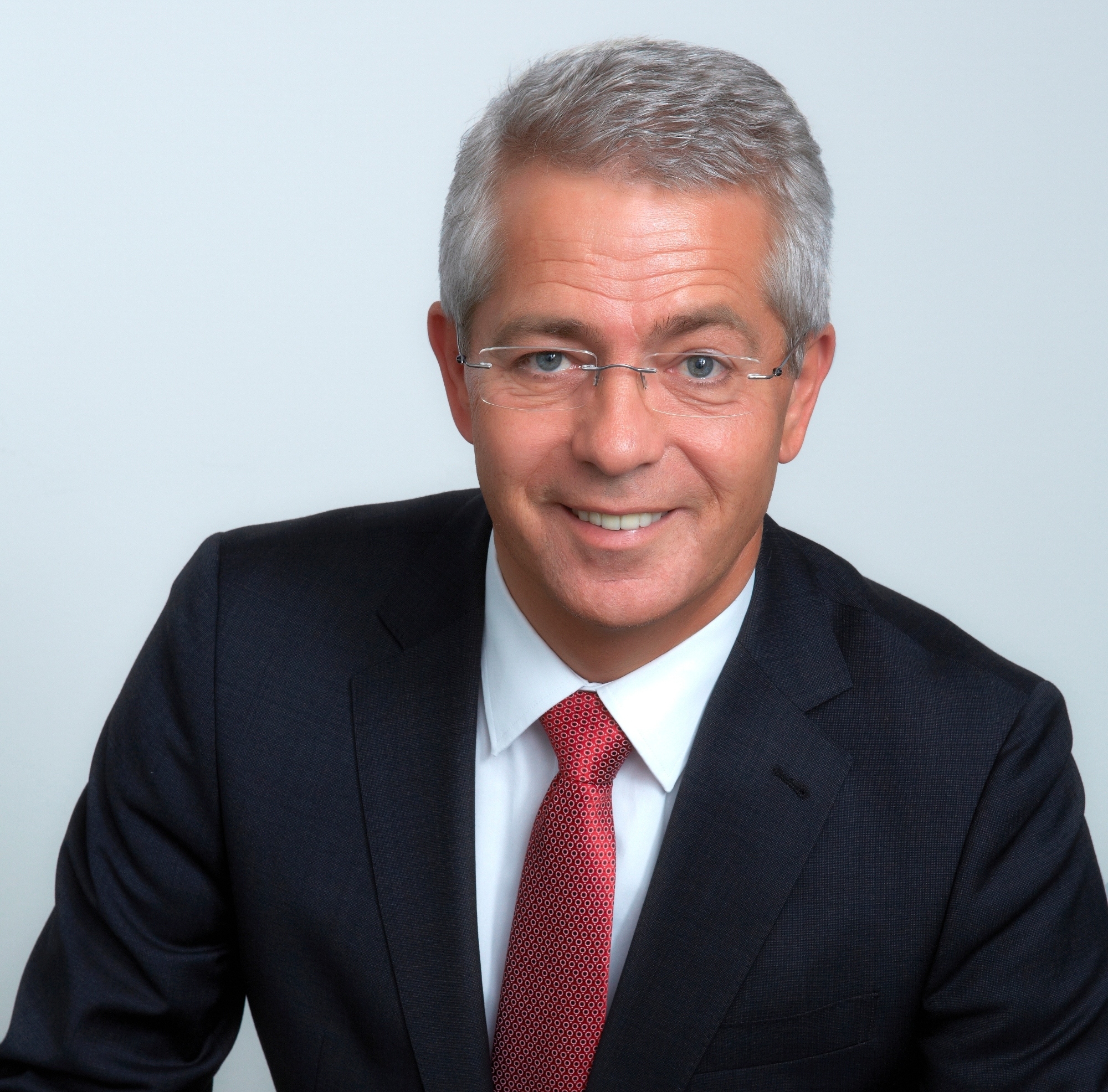
Traffic volumes reached “the bottom of the trough” in Q2, said Fraport AG Executive Board Chairman Dr Stefan Schulte, driving a -63.8% H1 fall. Passenger volumes at Fraport’s Group airports worldwide came to a virtual standstill in the second quarter, the company noted.
Group revenue fell to €910.6 million. Adjusting for revenue from construction relating to capacitive capital expenditure at Fraport’s subsidiaries worldwide, Group turnover decreased by -47.6% to €720.4 million. Group EBITDA crumbled by -95.6 percent to €22.6 million, while Group EBIT fell into a €210.2 million loss (first half 2019: €279.1 million).

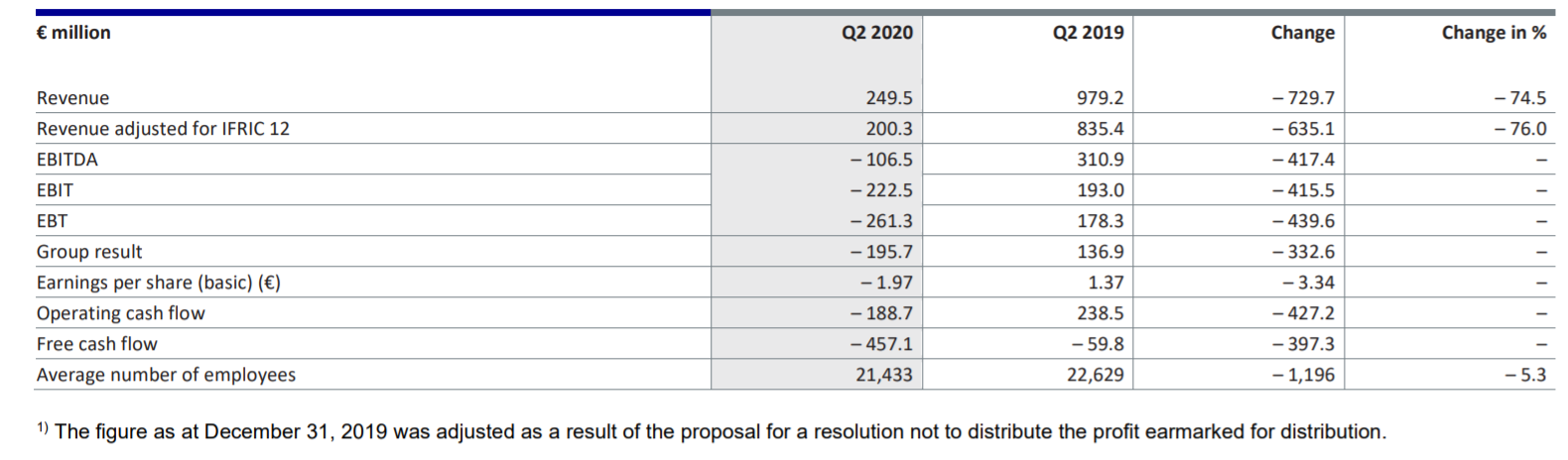
Group net profit dropped to minus €231.4 million (first half 2019: €164.9 million). With the exception of the Lima subsidiary, all Fraport’s international airport subsidiaries also made negative contributions to the Group.
“The rebound has begun, but at only a slow pace”
Schulte said: “After reaching the bottom of the trough, traffic started to recover with the partial lifting of travel restrictions since mid-June. Meanwhile, we are again offering numerous attractive destinations and connections via the Frankfurt Airport hub.
“However, passenger numbers are still increasing at a very slow pace. At our home base in Frankfurt, weekly passenger figures are currently still around 79 percent below the previous year’s level. Uncertainty in the aviation sector remains high due to ongoing travel restrictions and infection rates rising again in some places. This situation poses major challenges to our company and the entire industry.”

Further measures planned to reduce costs
Fraport responded to the COVID-19 crisis quickly by reducing costs and introducing short-time work. In the second quarter of 2020, more than 16,000 of the approximately 22,000 employees of the Fraport Group companies in Frankfurt were working short-time. On average, working hours were reduced by around 60 percent across the entire workforce.
“The economic effects of the pandemic will be felt well beyond the current year and permanently change our industry. We are therefore aligning our plans with the ‘new normal’ that we expect to reach by 2022/2023. From this new starting point, we expect moderate long-term growth again.”
Parts of the airport’s airside and landside infrastructure were also temporarily taken out of service to save costs. All expenditures not essential for operations were stopped, while planned investments were heavily reduced or postponed – with the exception of the Terminal 3 project.
Schulte: “We responded quickly and comprehensively to the crisis and were thus able to lower costs with immediate effect. But this will not be enough in the medium term. Even in 2022/2023, we still expect passenger volumes at Frankfurt Airport to be around 15 to 20 percent below the high of 2019. We must therefore streamline and downsize our company to make it even more efficient.”
The plan is to shed around 3,000 to 4,000 of the approximately 22,000 jobs across Fraport’s Group companies in Frankfurt.
High double-digit traffic reductions ahead
Fraport expects traffic at Frankfurt Airport and all of the Group’s airports to drop by a high double-digit percentage rate during the current year. In general, the executive board is maintaining its outlook for the full 2020 fiscal year. Group EBIT is expected to be negative and the Group result is also forecast to remain clearly negative.
Schulte concluded: “The economic effects of the pandemic will be felt well beyond the current year and permanently change our industry. We are therefore aligning our plans with the ‘new normal’ that we expect to reach by 2022/2023.
“From this new starting point, we expect moderate long-term growth again. This is why we are continuing the construction of Frankfurt Airport’s Terminal 3. We believe that people will continue to want to travel and explore the world. We are confident that aviation will rebound as a growing market in the future.”