


A seamless, joined-up offering lies at the heart of delivering travellers an enhanced airport experience, writes Airport Dimensions Chief Growth Officer Chris Gwilliam.
Compared to now, the airport business used to be simple. Build a terminal, lease out some stores, some restaurants, a bar or two, and sit back and collect the rent. It was a great model and for many years it worked well, with Global Non-Aeronautical Revenue (NAR) reaching a peak of US$81 billion in 2019*.
Then it changed. Global passenger traffic has recovered and now exceeds pre-pandemic levels. Our AX26 research, which surveyed more than 11,000 travellers across 17 countries, reveals that passengers are more satisfied than ever, reaching a historic high of 82%, driven by investments in improvements made by airports. However, the commercial benefits of this uplift are not yet fully unlocked.

Perceptions of value
Part of the spending challenge relates to perceptions of value. 20% of respondents feel that airports don’t offer value for money; travellers increasingly started looking for different and new paid-for experiences across the airport journey.
The siloed model – with each concession working independently and no one considering the joined-up experience – has not been able to respond to these changes in behaviour and demand. Passengers want a seamless experience, with 77% saying they would prefer a single app for all services across the airport, and 30% indicating that such an app would encourage them to spend more.
The stage is now set for a new generation of airports to differentiate and capture the loyalty of the modern, high-spending digital traveller.

The affluent leisure traveller
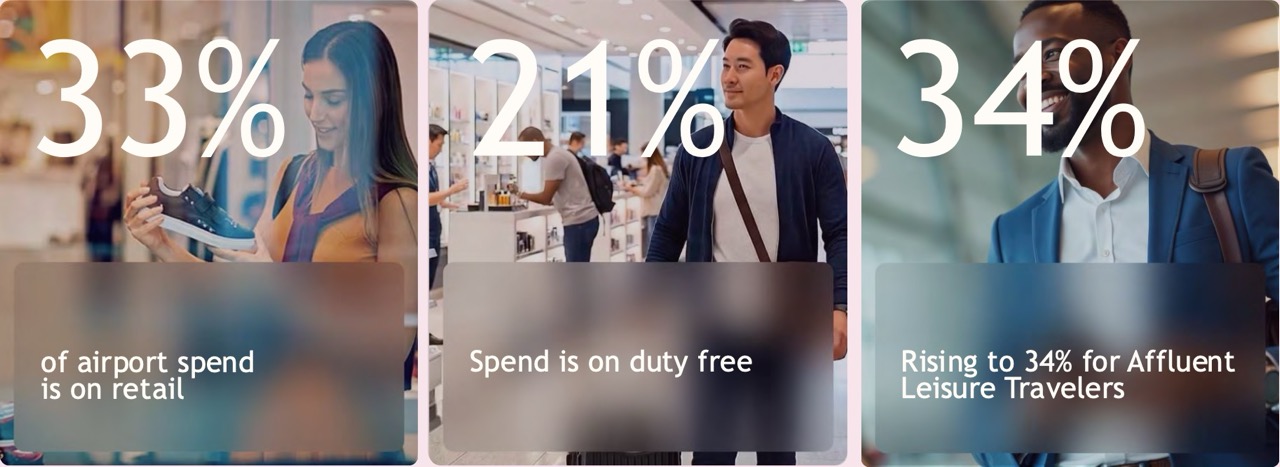
The affluent leisure traveller emerged from the pandemic as the economic force driving travel recovery and airport revenue. While making up only 26% of our researched travellers, they represent 57% of declared spend – with 28% of that spend on airport experiences.
They respond less well to the old linear airport traffic models and are digital natives, expecting to access experiential services from their phones, when and how they want them. They expect the airport experience to come to them on their terms.
Attempts at loyalty
Recognising the importance of engaging new audiences, many travel retailers and operators have invested in their own loyalty initiatives to connect directly with customers.
While these approaches can be effective in a high street context, the dynamics within an airport are fundamentally different. Here, standalone programmes often serve only a brand’s most frequent users and can inadvertently reinforce the silos that fragment the wider airport experience. For passengers already fatigued by a disjointed journey, another standalone loyalty programme often adds friction rather than value.

In contrast, an airport-led approach is a far more powerful driver of engagement. By creating a unified, airport-wide platform that supports and powers concession partners, airports can direct demand more effectively, increasing footfall to retailers while delivering a more seamless experience for passengers.
This model is not only more effective commercially but also unlocks significantly greater value through richer data insights and improved operational coordination. Rather than reinforcing silos, it enables airports to act as orchestrators of the entire journey, aligning partners around shared objectives and a single view of the passenger.
Ultimately, success lies in collaboration. When loyalty is approached at an ecosystem level, concessions are better positioned to attract and engage new customers at scale.
Our research supports this shift, showing that passengers do not see the airport as a collection of competing silos, but as a connected journey they want to shape for themselves. For example, 62% of lounge users express a desire to purchase retail and duty-free products while in the lounge, highlighting the untapped opportunity in bringing these experiences together.
Beyond the silo: A unified call to action
The foundation of a new growth strategy for the airport is the alignment of diverse stakeholder goals with needs and opportunities. We see successful examples like Bangalore’s BLR Pulse, which uses a comprehensive digital loyalty programme to reward customers for purchases across the entire journey.
Sharing insights to enhance the passenger journey is not a blunt ask for data, it is a strategy for mutual value creation. By unlocking journey context and opportunity, we improve timing, targeting and the measurement of incremental outcomes.

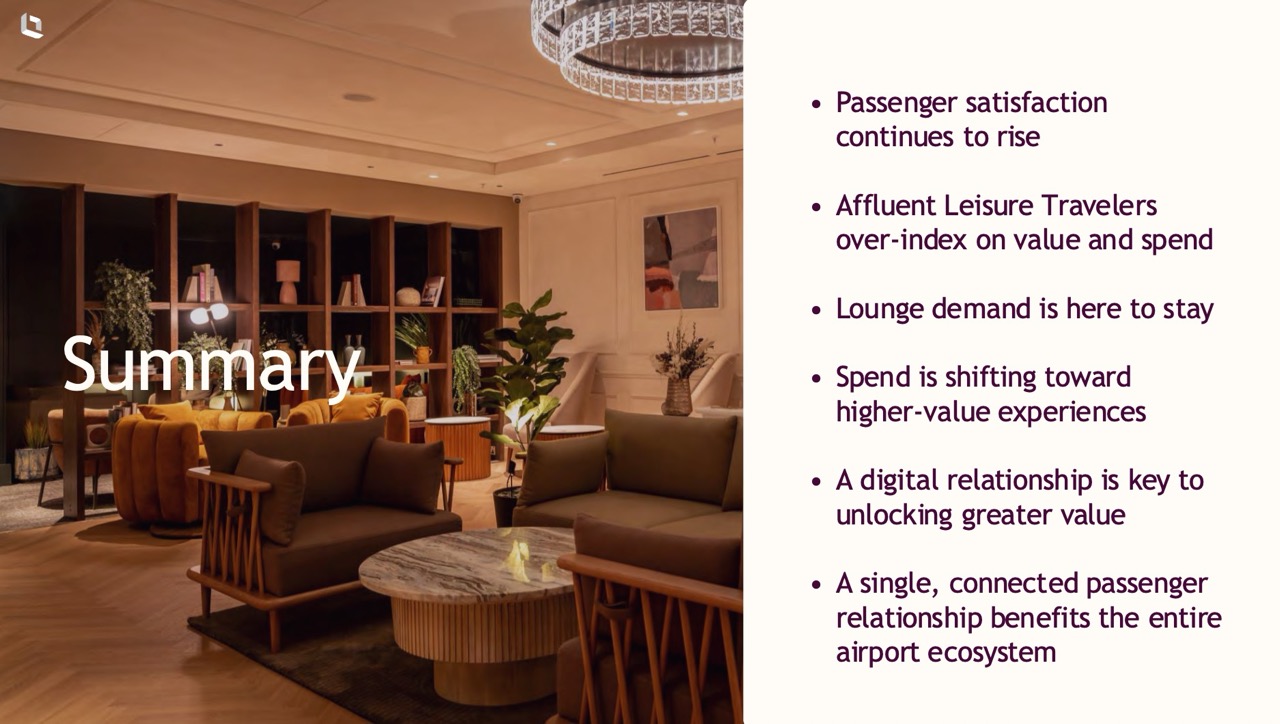
Ultimately, passenger satisfaction depends on a feeling of control. When we foster a culture of continuous improvement and airport-led collective orchestration, we ensure that by delivering an improved passenger experience, record-level satisfaction translates into record-level spend.
The time has come to stop operating in isolation and lean into delivering journeys that make the total opportunity bigger for everyone.
*Source: ACI World Airport Economics Database, February 2026
**Chris Gwilliam presented key findings from recent Airport Dimensions research at The Trinity Forum in Doha on 6 February, in a session titled ‘No place for airport silos any longer’. He appeared alongside JFK International Air Terminal Vice President Customer Experience & Commercial Belinda Jain; Lima Airport Partners Chief Commercial Officer Norbert Onkelbach; Travel Food Services Global Head of ARAYA Lounges Rajeev Panjwani and moderator, Concession Planning International Managing Partner Susan Gray. Click here for event highlights.
A special eZine dedicated to The Trinity Forum will appear shortly. ✈