

SOUTH KOREA. Duty free sales in South Korea climbed by +27.7% year-on-year in July as the market maintained its strong 2019 growth trajectory.
Sales hit KR₩2.01 trillion (US$1.71 billion), with sales to Koreans reaching KR₩350.1 billion (US$298.0 million) and to foreigners KR₩1.66 trillion (US$1.42 billion).
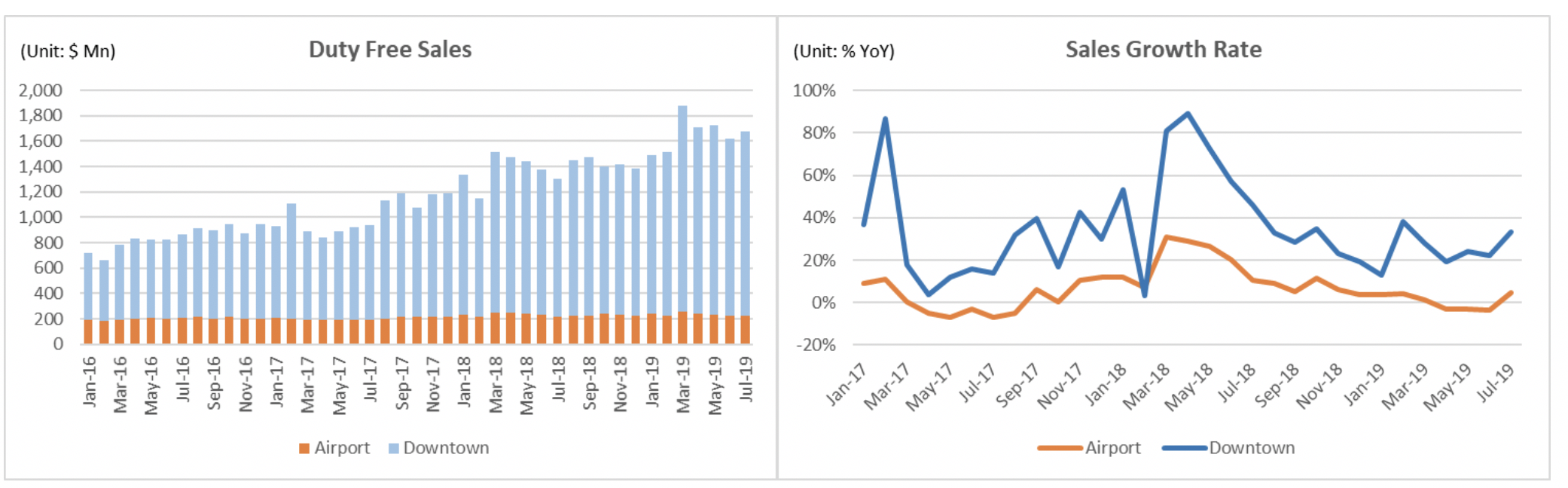
The figures underline the Korean travel retail market’s heavily dependence on international customers (mainly Chinese) in downtown duty free. The downtown sector accounted for 75.6% of Korea’s total duty free spending for the month, a sharp increase over the 65.1% in 2017 and 71.1% in 2018.
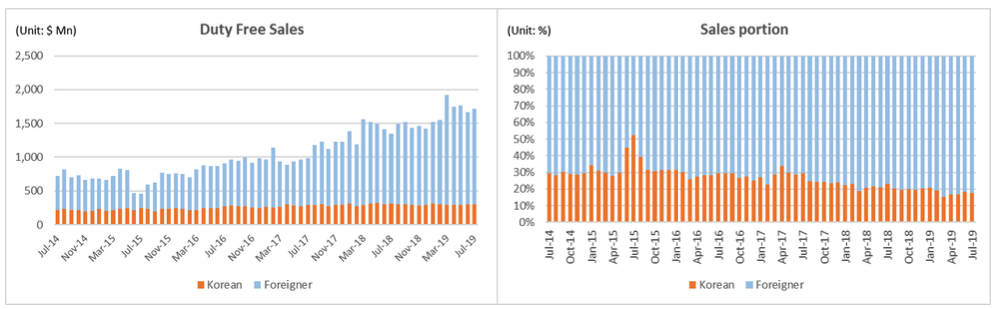
Sales to foreigners remained robust, growing +37.5% year-on-year in July, picking up pace from the recent spell of +20% level growth from March 2019.
Resellers (daigou traders) have shown little signs of slowing their spending on cosmetics in Korean duty free. China’s domestic cosmetics market, a key indicator for travel retail demand, continues to grow at a fast pace. The latest data published from China shows cosmetics remains one of the highest-growing categories in retail sales (China’s cosmetic sales grew +9.4% year-on-year in July, compared to total retail sales growth of +7.6%).
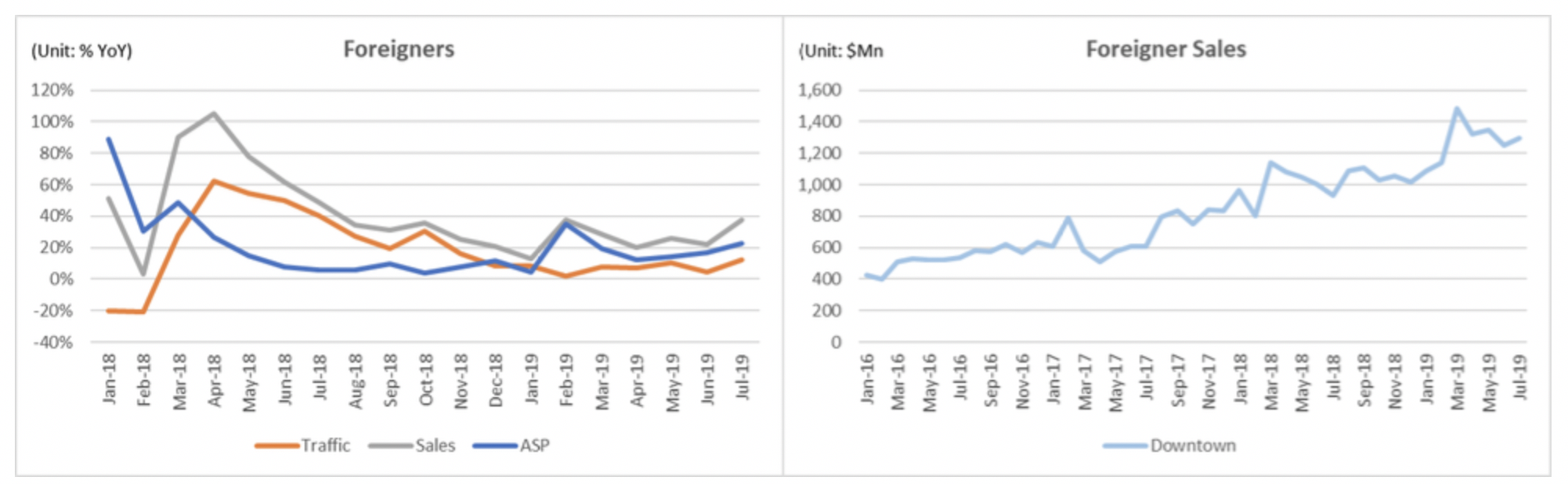
According to Euromonitor, China’s beauty and personal care sales have more than doubled between 2010 and 2018, growing by +9.6% CAGR.
Chinese resellers have become a hugely important source of supply for this growing market. With demand for premium cosmetics outgrowing mass-production lines, resellers who mostly source upscale products have benefited.
China’s premium cosmetics consumption is expected to continue rising as per-capita cosmetics spend remains low compared to other developed countries (2017 per-capita cosmetics spend in China was US$23.7, compared to US$181.4 in Japan, US$159.9 in South Korea and US$108.0 in the US) and an increase to the level of their neighbouring countries should see China’s cosmetics market continue to grow for many years ahead.
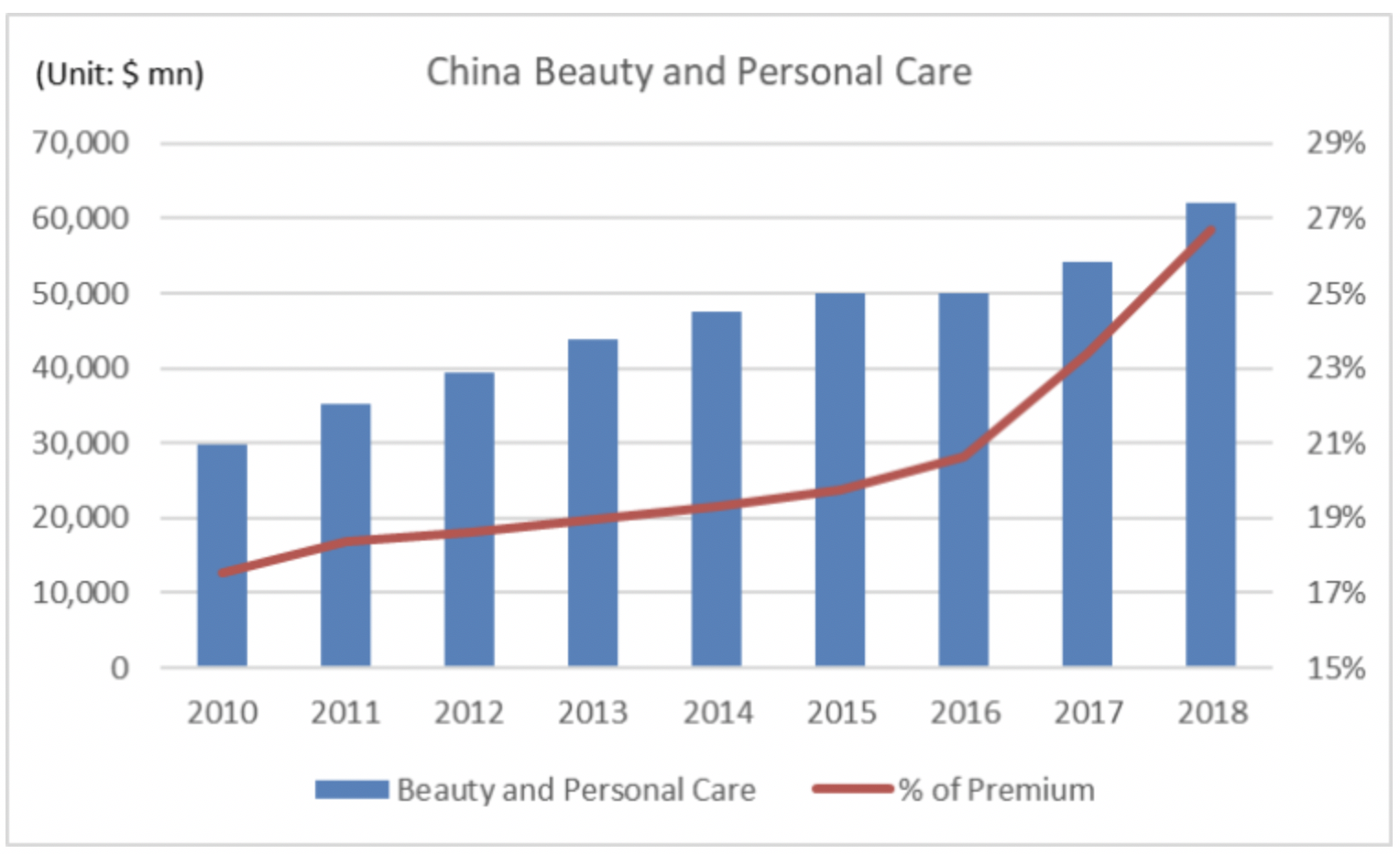
Several resellers The Moodie Davitt Report spoke to are concerned about potential regulatory changes that may restrict on-site pick-up of goods made in Korea. They also fear that in future they might have to report their purchases to the Korea Customs Service. However, while new legislation could result in changes to the market and daigou activity, past precedent has clearly shown that daigou resellers are quick to adapt to change.
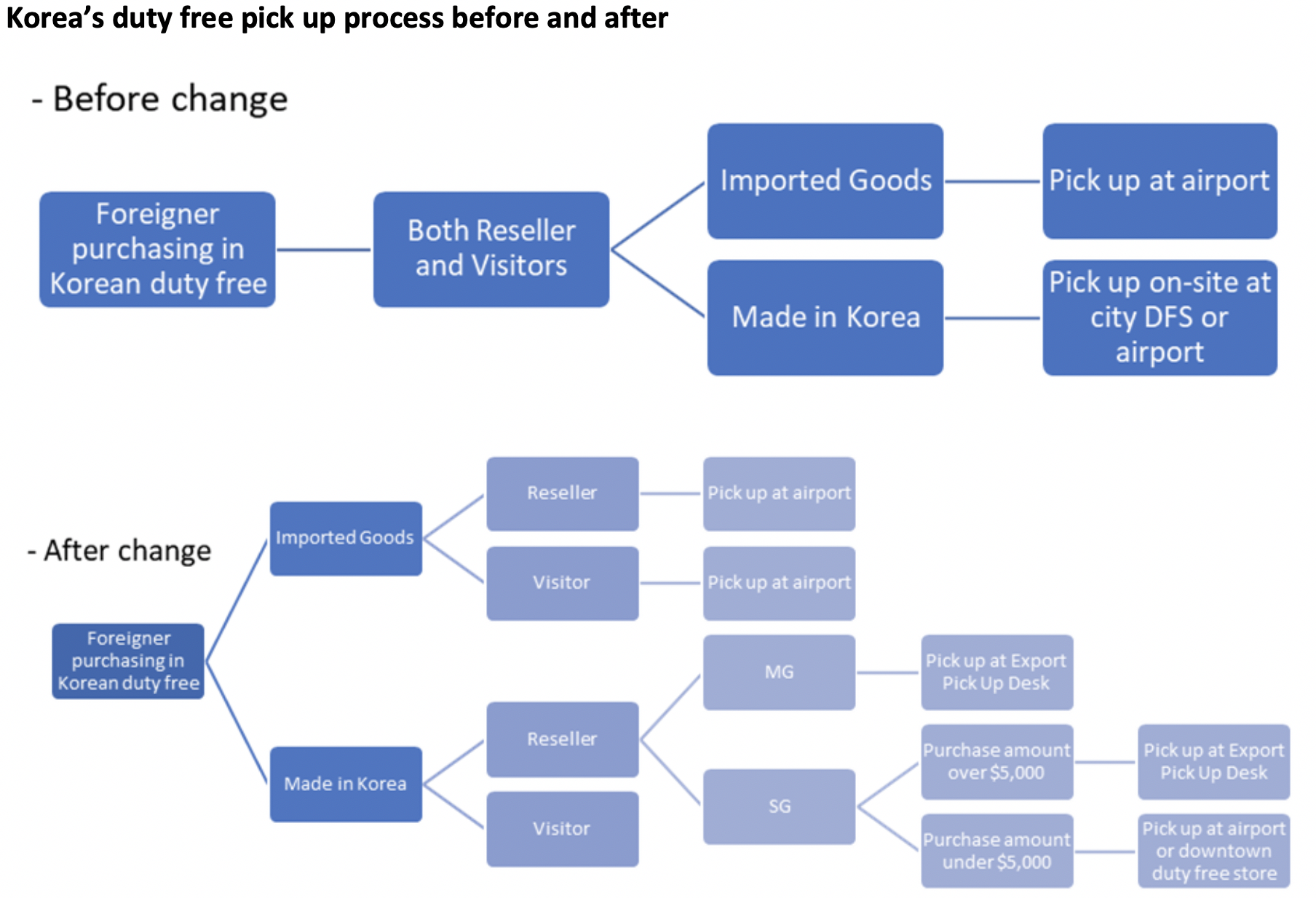
Sales to foreigners in general and Chinese in particular continue to drive the overall Korean duty free market. July’s international traffic and spend per person increased by +12.0% and +22.8% respectively.
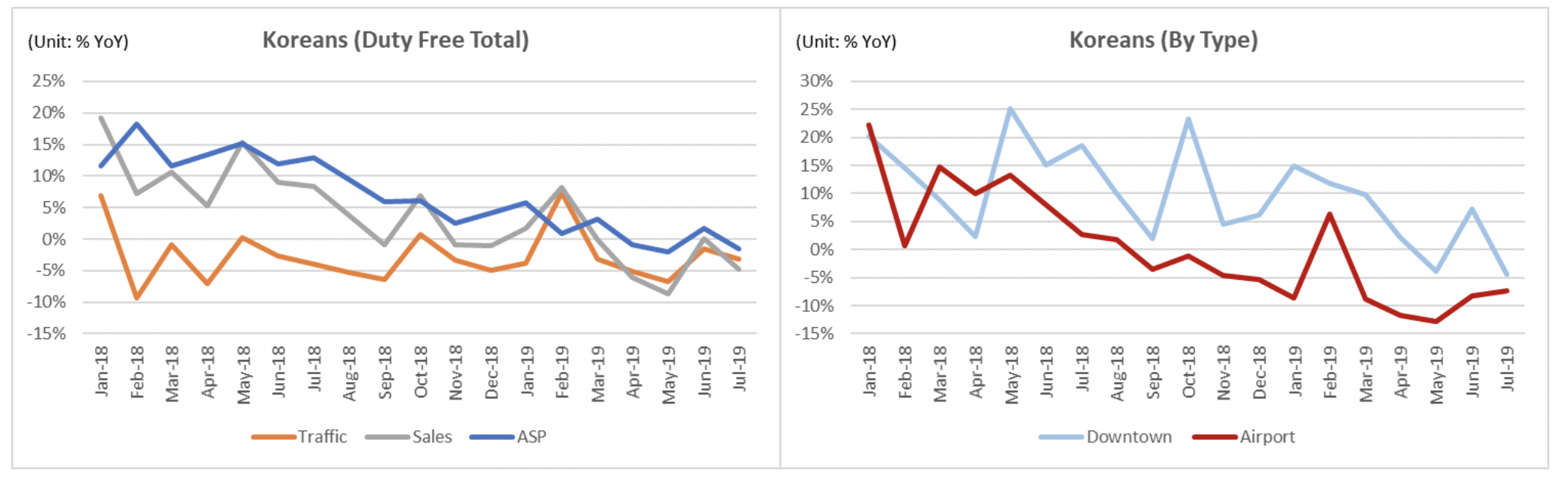
Yet slowing sales to Korean nationals continue to be a cause for concern for duty free retailers. Sales to Korean nationals declined by -4.7% in July with both traffic (-3.2%) and sales per person (-1.6%) declining.
Korean duty free retailers are fighting to inject life into sales to Koreans by providing additional discounts and more reasons to visit their stores (or use their mobile apps to make purchases). Hyundai Department Store Duty Free, for example, is running a half-price event, which started on 20 August and is running for 20 days. The retailer’s event starts each day from 10am and offers a limited number of items per day.
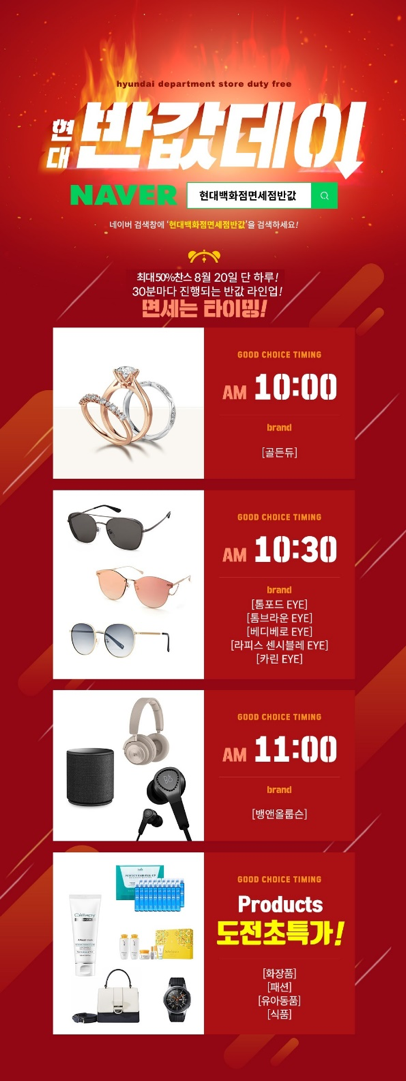
Similar promotional events have become commonplace with new duty free retailers and new stores eager to stay relevant to Koreans, who are becoming more used to looking for bargains. While these promotional events may help to capture new business and customers, prolonged promotional periods may see customers become averse to purchasing for the original retail price.
For the leading operators, July duty free sales grew +33.1% in downtown and +4.7% on-airport. Both sectors were in growth territory thanks to foreigners increasing their spend. Sales to foreigners grew +39.6% in downtown and +18.2% on-airport, offsetting the negative growth posted by Korean nationals whose sales declined -4.4% downtown and -7.3% on-airport.