

Prologue: A bold young airport hospitality player in Malaysia is plotting an ambitious expansion to become a serious force in the sector globally.
Meet CHG, an independent Kuala Lumpur company that offers an intriguing medley of airport passenger services at Kuala Lumpur International Airport (KLIA). A full-fledged hotel caters to the premium traveller, while capsule hotels provide a clean, comfortable and convenient place to rest during transit. Stand-alone pods serve travellers who are on the go, providing a private space to rest and recover.
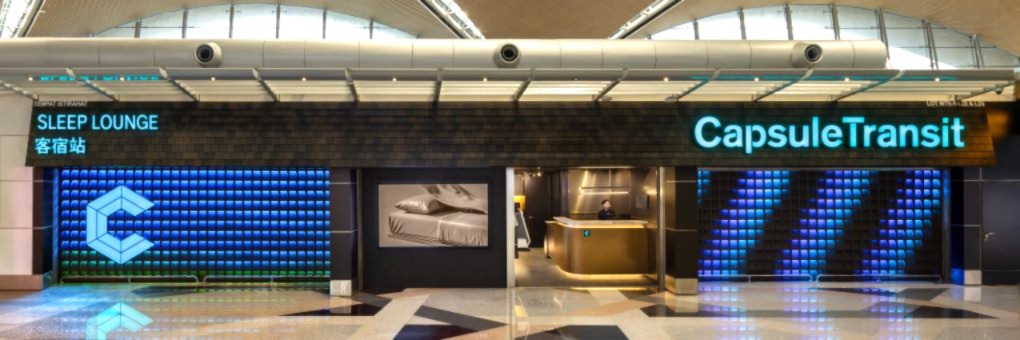
CHG-owned CapsuleTransit recently expanded its airport hospitality offering with the opening of a Sleep Lounge at KLIA Terminal 1. The innovative offer combines technology with dedicated facilities for pre-flight rest and recharge.
CapsuleTransit is Malaysia’s pioneer airport transit hotel, starting at KLIA2 from the terminal’s opening day in 2014. More than a decade and a million guests later, the company runs several design-forward, tech-led hotels across KLIA T1 and T2.
In 2019, The Moodie Davitt Report featured a landmark interview with the then fledgling but deeply promising business. Within two months of that interview, COVID-19 would devastate Malaysian, Asia Pacific and global travel with a catastrophic impact on industry stakeholders. Forced to rationalise, CHG not only survived but later thrived and today is well set for its most concerted development yet.
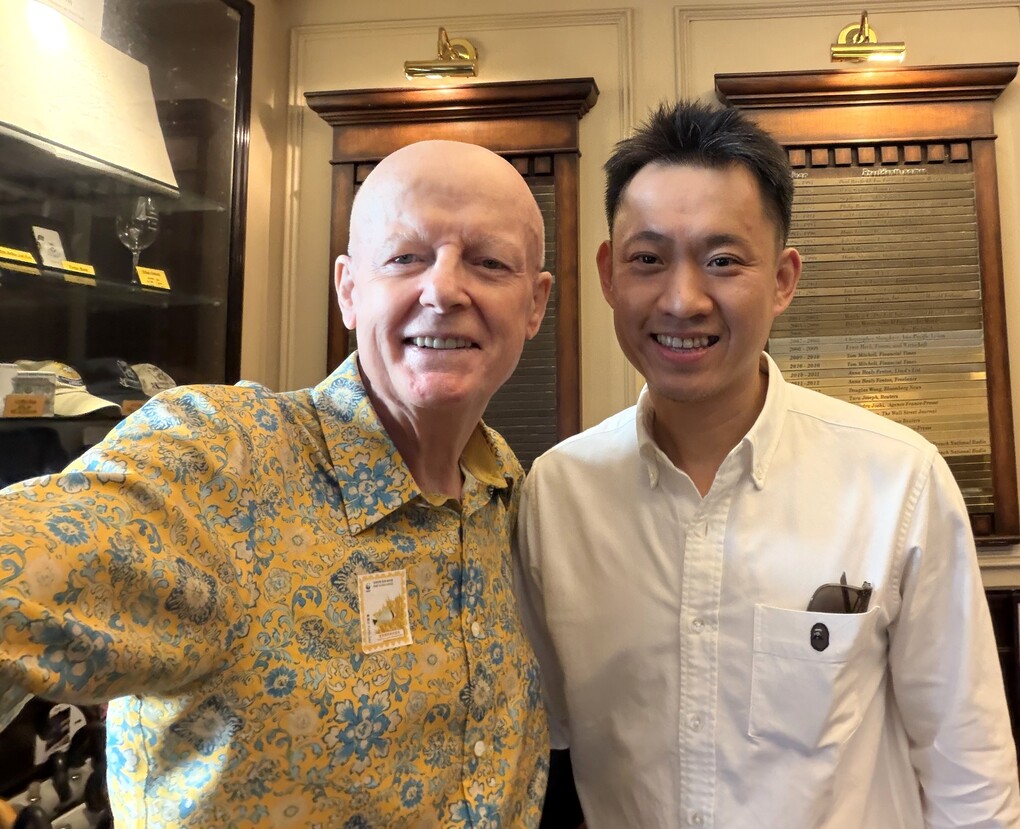
The Moodie Davitt Report Founder & Chairman Martin Moodie caught up with CHG Co-Founder Ryan Loo in Hong Kong recently to find out more.
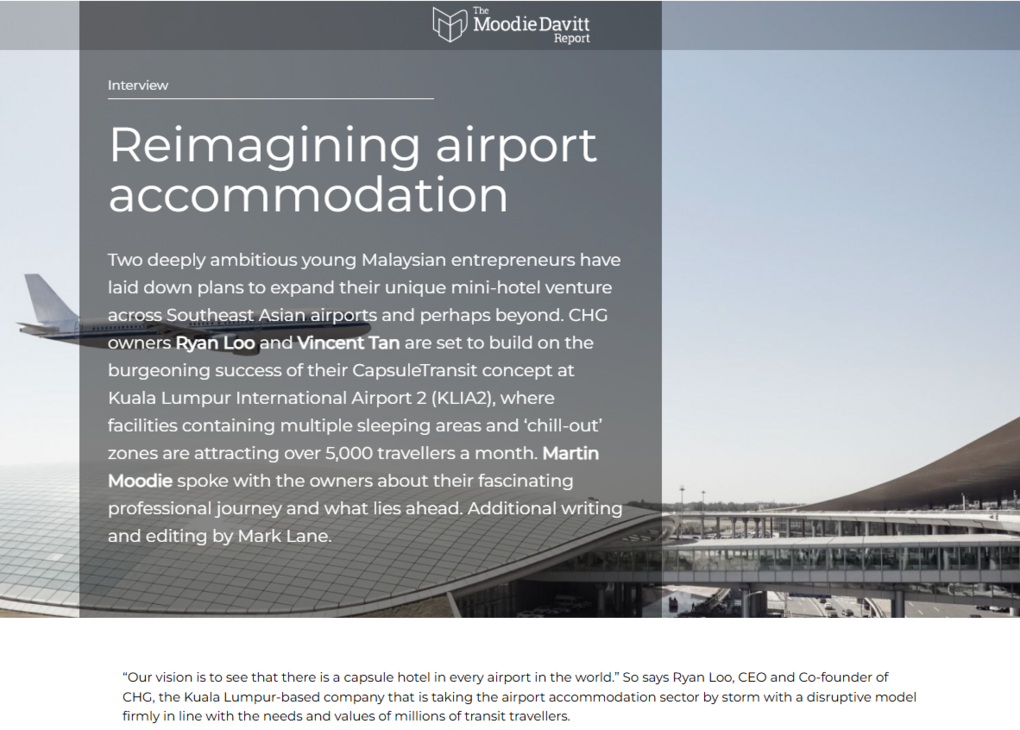
Martin Moodie: Ryan, it’s been seven years since we first sat down to talk about CHG and CapsuleTransit. Much has happened in our industry and with your company since. Tell us about what must have been a heck of a journey in the interim.
Ryan Loo: Martin, it’s really great to have this opportunity to sit down and catch up again after all these years. So much has happened, but somehow we are both looking younger and more energetic than before!
When we last spoke, CHG was still a young company and relatively new to the airport industry. You had also given me the opportunity to speak at The Trinity Forum in Doha in October 2019, something I remain grateful for to this day.
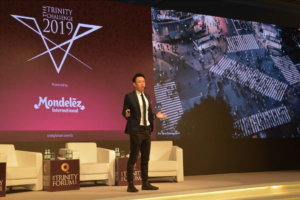
Little did we know what would happen next. Battling through COVID was excruciating. We almost did not make it. But coming out of it gave me some of the biggest and most important lessons I could have received as a young founder. It formed our DNA and challenged us to define who we really are.
Before entering the airport industry, I ran a few boutique city hotels. During COVID, cash was burning quickly, and I had to make the very difficult decision to let go of all three city hotels. That gave us enough oxygen, meaning cash, to keep our two airport capsule hotels alive.
What drove that prioritisation?
It’s because I believed that when things normalised, the travel industry would be one of the first sectors to recover. I’m glad the decision we made during those difficult years has paid off.
And what does 2026 look like in terms of how the company has rebounded from those dark days?
Today, we operate four hotels with 360 beds across KLIA Terminals 1 and 2, both airside and landside. We are also participating in tenders for several major transit hotel opportunities at airports around Asia.
Is the vision you told me in 2019 of having a capsule hotel in every major airport still intact?
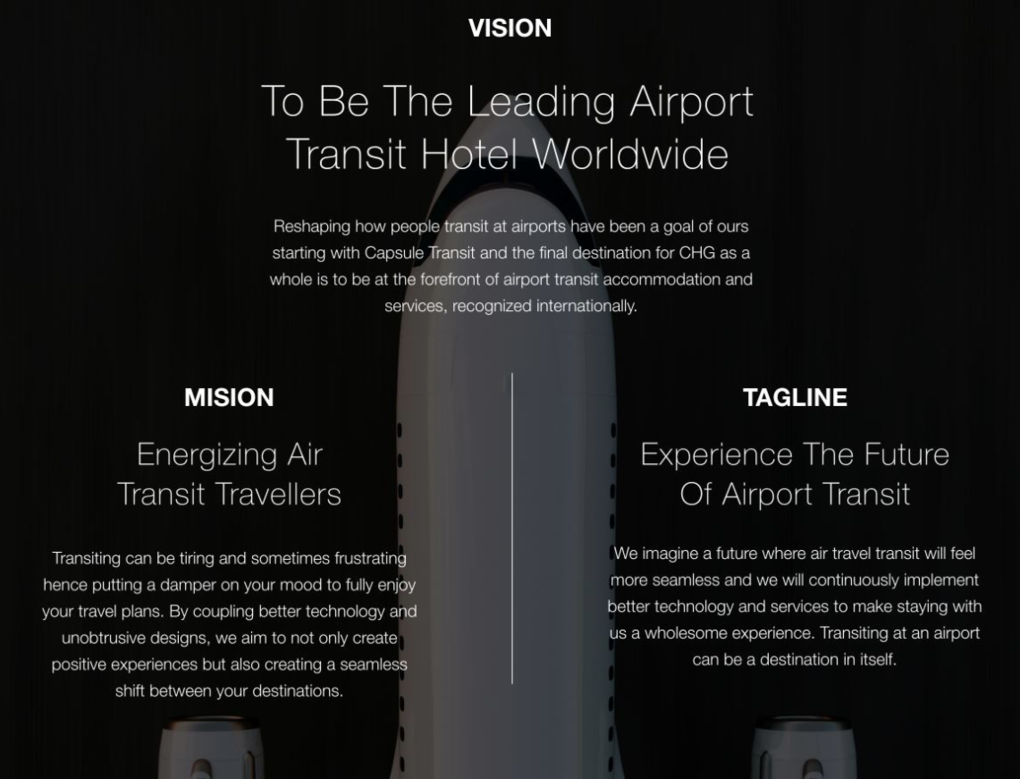
Absolutely. Our vision is still very much intact. Becoming a major player in airport hospitality is an ongoing commitment, and we are working towards the vision of having CapsuleTransit in every major airport in the world.
When we started 12 years ago, capsule hotels inside airports were not common at all. Today, more airports are recognising the value they bring, both commercially and to the overall traveller experience. We are also seeing more capsule hotel and transit accommodation tenders coming out across the region.
Ok, so what is the existing portfolio and operating model and how has it evolved?
We started with capsule hotels 12 years ago. As we grew, we realised that there was a range of travellers we could not serve with capsules alone.
Three years ago, we decided to develop our first full-fledged, upper-end airport hotel. That became CapsuleTransit MAX, with en-suite rooms, a premium lounge, wellness and business facilities.
Today, we look at our products in three ranges. Our full-fledged hotel serves the premium traveller. Our capsule hotels serve the essential need for a clean, comfortable and convenient place to rest during transit. And our stand-alone pods serve travellers who are on the go, giving them a private space to rest and recover close to where they need to be.
With these three products working cohesively, we are able to serve the full range of traveller needs.
Our operating model is about matching the right format to the traveller’s needs, instead of trying to make one product fit everyone. With these products working together, we can serve a full range of airport travellers.
Tell me about the new technology-led offer at KLIA Terminal 1, which we covered recently on our website.
Yes, we have just introduced the latest addition in Terminal 1 Sleep Lounge, our most technology-led capsule so far.
We have always been obsessed with building a better product, and that journey has never stopped. Over the years, we have continued studying how people rest in an airport environment and adopting technology where it can genuinely improve the sleeping experience.
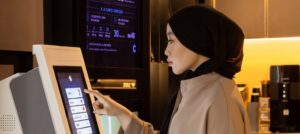
The new capsule comes with a recliner bed that can be set to zero-gravity, reading or flat positions. It also offers sleep analysis covering heart rate, movement and snoring, together with mood lighting, pink noise, wireless charging and central tablet controls. Guests can also view a report showing them how they slept.
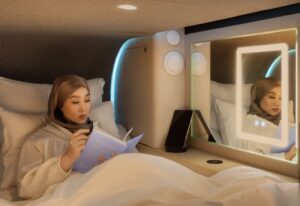
Our goal is to move beyond simply giving travellers a place to sleep. We want to help them recover and arrive at their destination in better shape.
You mentioned the company DNA earlier. How would you sum it up?
People often say that values and character are formed during a crisis, and I couldn’t agree more.
During our toughest period, we had to downsize and stay very lean to weather the storm. Today, around 80% of our core management team have been with us from the beginning. Nobody walked away during the most difficult period. We stayed together through thick and thin, and that loyalty became the foundation of our DNA.
Taking care of one another is now one of our fundamental values. We have also made a promise that every product we create must be something we are proud of and must bring real value to our customers. Otherwise, we will not do it.
As we grow, we also want that growth to have a positive impact on the community.
About two-and-a-half years ago, we committed to donating RM1 (US$0.25) from every check-in across our rooms, pods and lounge. These contributions help provide meals for the homeless and also caring for rescued animals. We are very proud to have contributed close to RM300,000 (US$74,175) through these efforts so far.
What and where next for CHG and CapsuleTransit?
We have spent more than a decade building strong foundations in Malaysia and learning how to design, build and operate airport hotels properly. That experience has become a strong pillar supporting our regional expansion.
Over the next three to five years, CHG will actively pursue opportunities, partnerships and tenders across the region. We want to bring better rest products to more travellers and work with airports that share the same ambition.
Any final message to airport companies reading this interview?
Operating transit hotels for more than a decade has taught us a great deal about traveller behaviour and how to build products around what airport travellers genuinely need. An airport hotel is very different from a city hotel, and that operating experience matters.
To the airports that are looking to develop their next generation of sleep or rest products, we look forward to exchanging ideas and sharing experiences.
As our mission says, we want to turn weary travellers into refreshed explorers. We look forward to working with more airports and making the traveller’s journey enjoyable in the years ahead. ✈
 The Moodie Davitt Report also publishes Airport Hospitality World, the latest edition to our wide-ranging, market-leading travel retail and airport non-aeronautical revenues publishing and event portfolio. Airport Hospitality World covers all forms of airport lounges across international and domestic terminals, including various definitions as follows:
Plus other hospitality-related platforms:
|