

International tourism maintained its upward trajectory in the first quarter of 2026, with arrivals rising +2% despite disruption linked to the Middle East crisis in March.
Latest figures from UN Tourism show that around 307 million people travelled internationally during this period, about 6 million more than in Q1 2025.
While travel demand remained strong at the start of the year, with cumulative growth of +2.5% in January and February, the Middle East conflict weighed on performance in March, when growth slowed to +0.4%.
UN Tourism said the conflict could reduce international arrivals growth by 1-2 percentage points from its original 2026 forecast of 3% to 4%, depending on its duration and scope.
The organisation cited flight disruptions across the Middle East, higher oil prices and jet fuel shortages in some markets as factors contributing to rising air fares and reduced airline capacity.
UN Tourism added that higher travel costs and uncertainty around air connectivity could influence destination choices and overall travel demand.
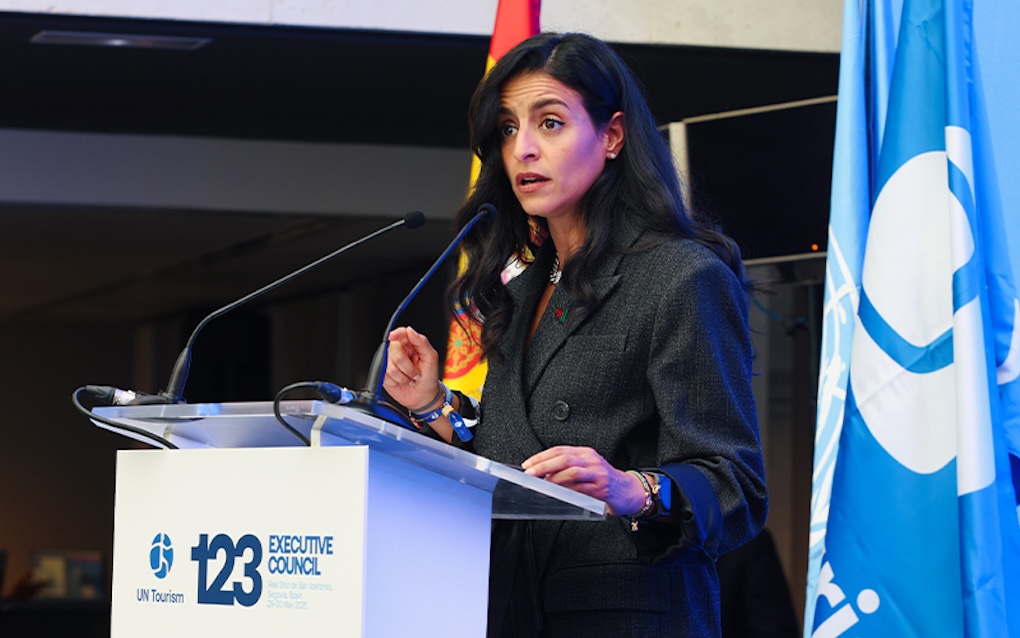
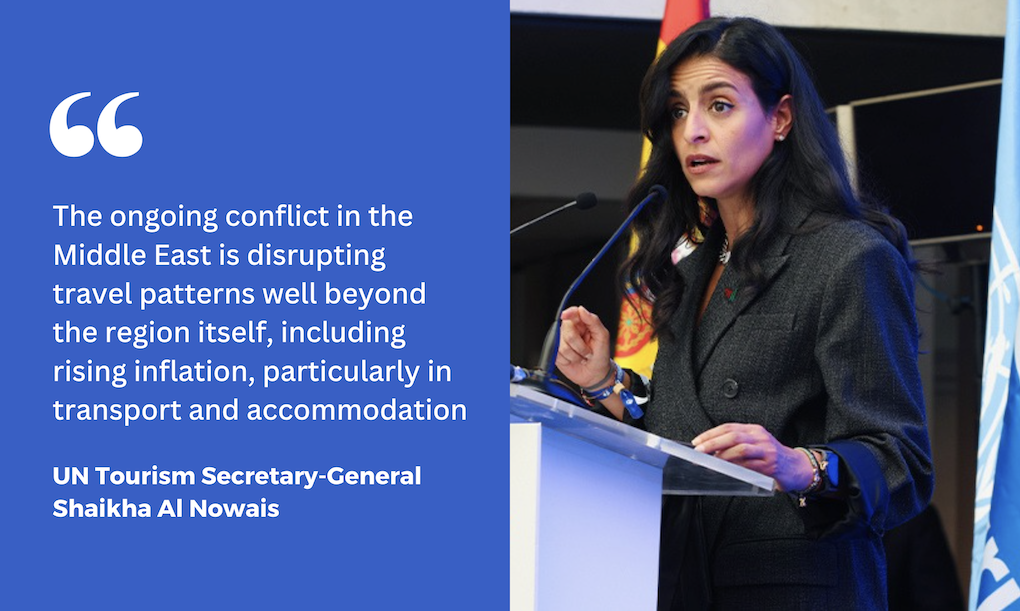
UN Tourism Secretary-General Shaikha Al Nowais said, “The ongoing conflict in the Middle East is disrupting travel patterns well beyond the region itself, including rising inflation, particularly in transport and accommodation.
“This is placing pressure on travellers, businesses and destinations alike. Even amid this uncertainty, international tourism continued to show resilience in the first quarter of 2026, with 307 million people travelling internationally, a +2% increase on last year.
“At a time of growing geopolitical and economic pressure, this reinforces tourism’s wider role in supporting economies, creating opportunity and sustaining communities far beyond the sector itself.”
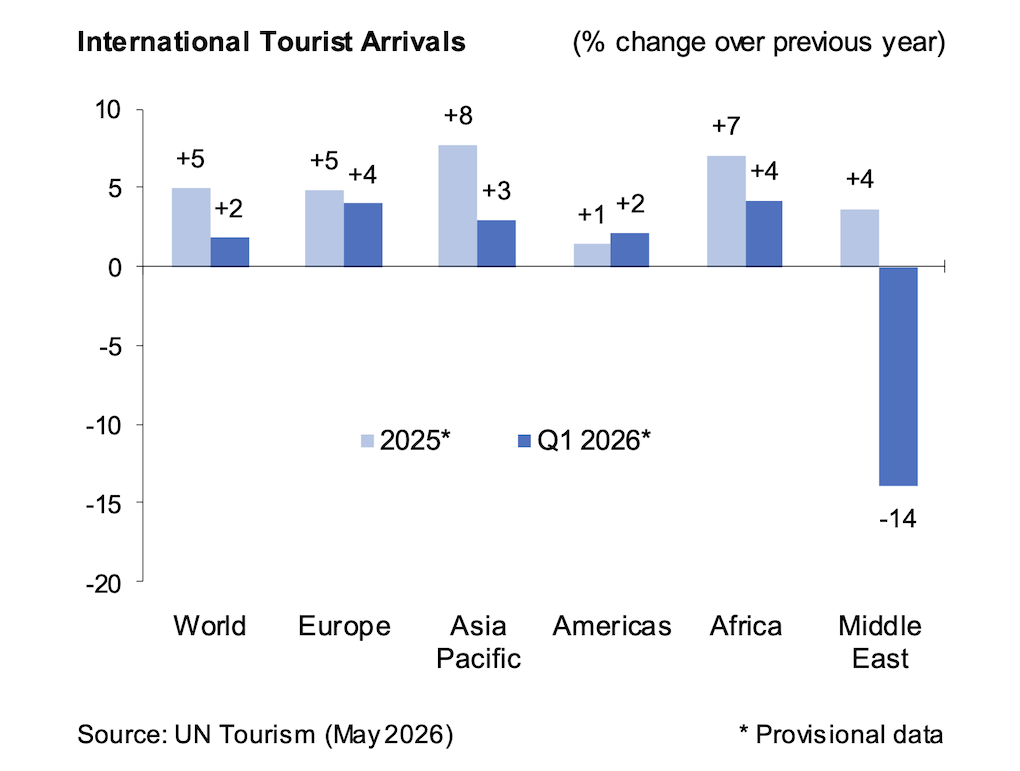
The latest World Tourism Barometer from UN Tourism shows that Europe and Africa delivered the strongest regional growth in Q1 with international arrivals rising +4% in both regions.
Europe welcomed more than 130 million international tourists, with Central and Eastern Europe leading growth within the region at +6%.
Asia Pacific arrivals increased +3%, led by Oceania (+9%) and North East Asia (+5%), although overall arrivals remained 11% below pre-pandemic levels.
The Americas reported +2% growth, supported by an +18% increase in Central America, while South America saw arrivals decline by -1%.
The Middle East was the only region to post a contraction, with arrivals falling -14% year-on-year amid the ongoing conflict. Egypt bucked the trend, recording +16% growth.
According to UN Tourism’s latest survey of the Panel of Tourism Experts, the Middle East conflict, high transport and accommodation costs as well as other economic factors are the main challenges affecting international tourism this year. ✈