

INTERNATIONAL. “In all the indications coming from the airports where we are present, their forecast of passengers and flights are all pointing towards a very good 2024. That is reflected not only in the first quarter results, but on the balance sheet. We confirm not only good expectations for this year, but also good expectations in line with our strong outlook for the upcoming years.”
That was the upbeat summary given by Avolta CEO Xavier Rossinyol, appearing alongside Chief Financial Officer Yves Gerster, when reflecting on encouraging first-quarter results for the travel experience leader during an earnings call yesterday.
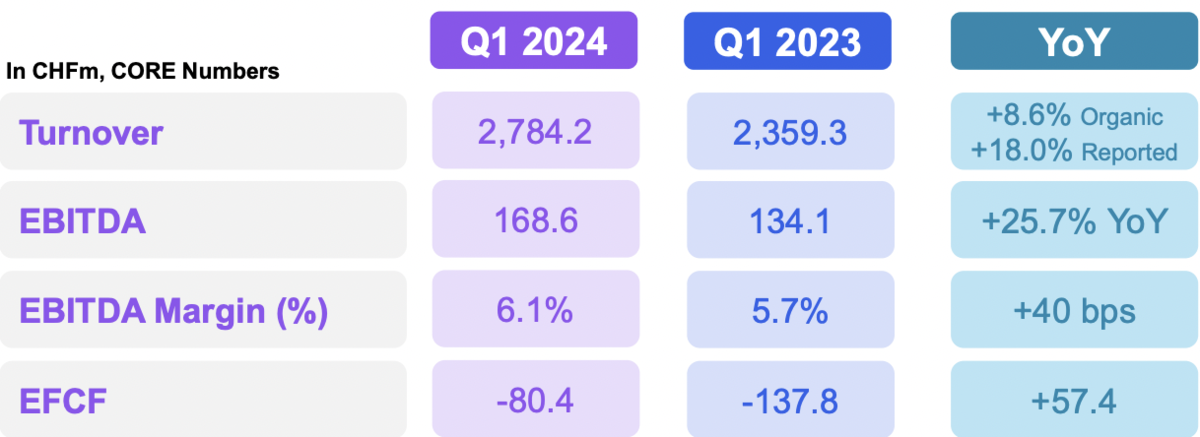
As reported, Avolta posted a consolidated turnover of CHF2,838.4 million (US$3,149 million) and core turnover of CHF2,784.2 million (US$3,090 million) for the January-March period, up by +18% on a reported basis and +8.6% organically.
The encouraging results come from the company with the largest network in the travel retail industry, covering 73 countries with more than 1,000 locations and over 5,000 points-of-sale.
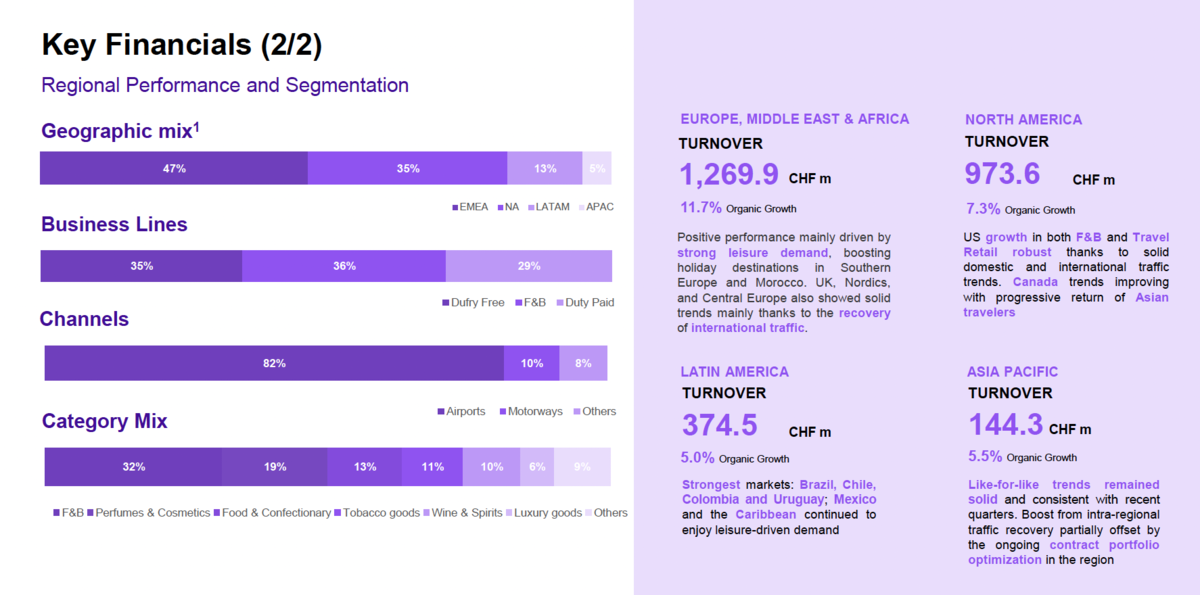
Those points-of-sale cover food & beverage, duty-free and duty-paid retail, and, increasingly, hybrid retail/F&B concepts brought forward by the business combination of Dufry and Autogrill.
“We have the opportunity to combine these three segments in delivering a higher and better experience for the travellers,” said Rossinyol. “We are already doing that; we are cross-selling through these segments, we are staging promotions.

“For example, when you have a coffee, you get an offer to buy something extra [in] duty free and vice versa. We are already using the capacity of delivering hybrid concepts and we have now launched more than 20 of those, combining retail and F&B.”
He continued: “The three segments, the geographies and the size of our network gives us a complete and parallel access to traveller information and traveller data. That means we can understand the travellers better than anybody else and we use this data to continuously improve our offering.
“That not only gives us the capacity to grow faster than others, but the size of our network decreases the risk of external factors affecting this growth; we can cope with external shocks in a much softer manner than anybody else.

“But it’s not only growth and resilient growth, we also do it with a very strict financial discipline,” Rossinyol added. “That’s why in addition to growing the top line, we can expand margins and equity-free cash flow, and we can commit at the same time on investing in the business, deleveraging and paying a yearly dividend.
“I think this is the sixth or seventh quarter where we have published results in line or ahead of expectations. We will fully deliver on the synergies of the merger this year, a year ahead of what was initially disclosed.”
Much interest was generated during the earnings call from Rossinyol’s assertion that Avolta sees Asia Pacific as doubling in share of the company’s total business within two to three years.
This was underlined by his revelation that organic growth (reported +5.5%) in this market during the first quarter would have been +21.6%, were it not for the impact of exiting certain airports (notably from Melbourne last May) and some loss-making concessions.
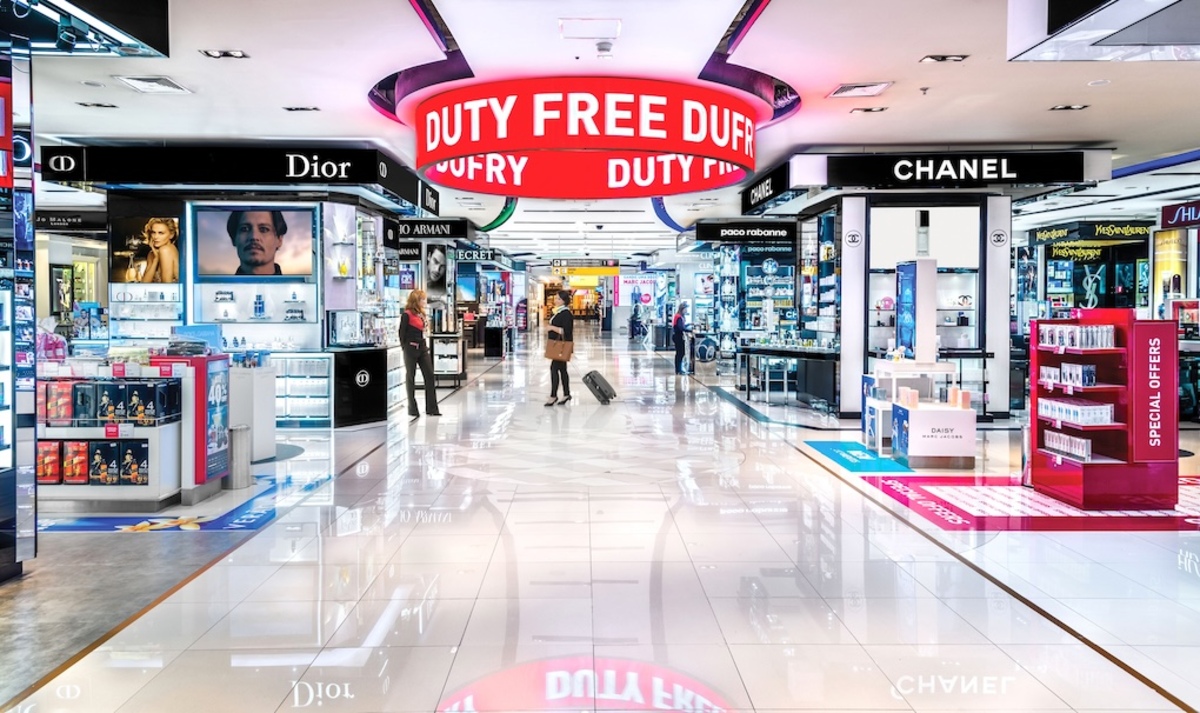
“Asia Pacific today represents 5% of our business,” said Rossinyol. “But not long from now it will probably double in share to 10% of our total revenues. We are having such a pipeline of opportunities that we think this number will be significantly higher in the next couple of years.
“It was a very substantial contract we exited at Melbourne. We have closed down activities in full airports and some specific shops and restaurants [in Asia Pacific]. The leadership in Asia has been very clear on that [strategy]. Before you expand, you need to get rid of those places where structurally it was not the right place to be.
“But with the developments organically of the existing Asia Pacific portfolio and some new contracts that we’re being awarded and signing over the last few weeks and in the next few months, APAC will show a strong growth this year, both organically and in total growth.”
He continued: “It would be excellent if Asia Pacific can reach 10% of our total business in the next two, three years, maybe earlier. It is difficult to give guidance or an outlook on when that specific percentage will be achieved because, at the same time, we keep growing very strongly in the rest of the regions. So to grow the [Asia Pacific] percentage inside the portfolio, you need to grow very fast, but we have good prospects.”
Rossinyol noted that having food & beverage in the Avolta portfolio changes the game in Asia Pacific, as it offers a route into domestic airport terminals in key and emerging markets.
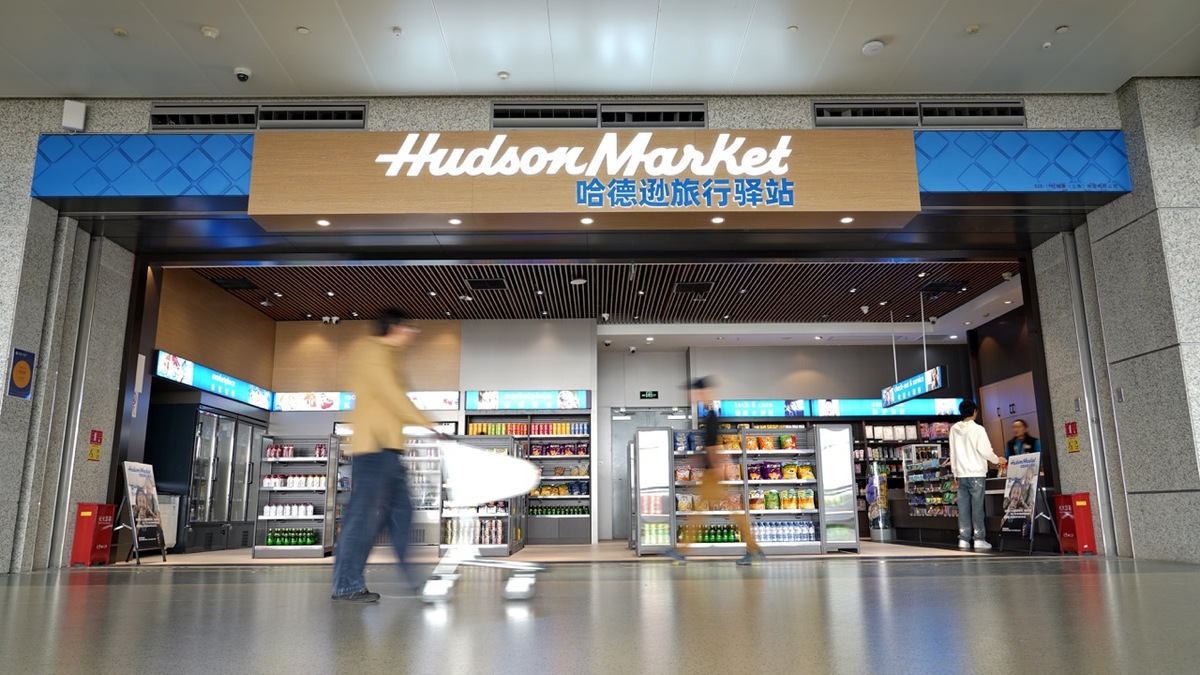

“Thanks to the merger, we have a capacity to expand in domestic terminals in a way we could not do before,” he commented. “If you are a duty-free operator, you basically can expand on international travel [growth]. But now having also the F&B, we can address very interesting domestic markets like China, Indonesia and India.
“In all those countries, we are going to announce soon that we have signed contracts to expand into the domestic market. In international terminals in Asia, duty free remains the most interesting segment, and we will also keep focusing on that. With Chinese international traffic not fully restored, if you are only in duty free you are suffering now. But if you are in domestic with convenience stores and F&B it is very interesting.
“In terms of expectations for the next few years, I think you’re going to see significant expansion in [Asia Pacific] domestic and international airport business.”
Continuing on the theme of returning Chinese international travellers, Rossinyol said: “We have to recognise that Chinese consumers are still coming in very much smaller numbers than they used to. The domestic traffic in China has fully recovered and actually is healthy, ahead of 2019 levels. But international travel is still behind.
“That makes our numbers in Europe, where Asian passengers are very important, and in Asia itself even more striking because they’re based on the lower number of Chinese passengers, which shows the resilience of our business.

“We have something that is unique. We have the lowest reliance on any specific demographic or nationality of anybody in the industry. We have the highest diversification and therefore the lowest impact of any specific [negative] economic situation in any specific country. The effect on us is more moderate than any other of the players in the industry.”
Rossinyol was also asked about Avolta’s association with Chinese ecommerce giant Alibaba and how that will drive future revenues in Asia. He replied: “The Alibaba relationship remains super strong. They are our partner of choice for the technology development, focusing on the Chinese traveller and also in Southeast Asia.
“We have already in the pipeline 20 locations in Asia where we are launching in the next three to six months mini apps provided by Alibaba. That will be an important way to engage with travellers prior to their trip.”
Addressing the subject of declining basket sizes of alcohol and tobacco purchases in duty free, as shown in the Avolta Q1 results, Rossinyol commented: “It’s very interesting that these two categories have decreased in size. It varies across different nationalities and age groups, where we are seeing different consumption patterns. This is balanced by alternative products that are growing in value to us.
“There are places where people focus more on premium wine and spirits than in others. Different trends are emerging, for example a higher demand for tequila. But the beauty of Avolta is that we can adapt to those trends, all of which we follow closely; we just need to change the offering [in line with those trends].
“We have more and better data [as a result of diversification], and it’s only the beginning. We have better data than anybody else, and we can adapt our offering to that. That data access is one of the key advantages of Avolta – it allows us to make a fine tuning of the offer, the promotions, and not only the assortment, but also how we offer that assortment, and how we interact with the different types of passengers.”
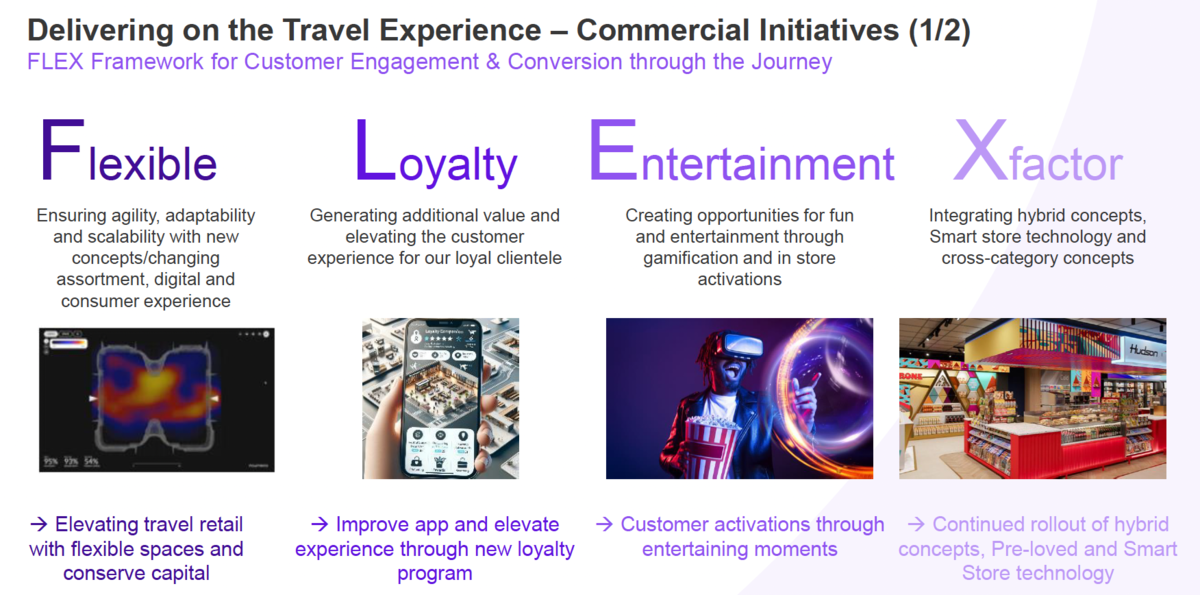
Future spend in duty-free stores, Rossinyol asserted, will be driven by a greater focus on entertainment. He showed a video of staff at an Avolta duty-free store in Buenos Aires dressed as Star Wars characters, noting a very substantial increase in dwell time and spend as a direct result.
“We are now focusing on entertainment at full speed – entertainment is so powerful because it changes the mindset of the traveller. Instead of rushing to the gate, the traveller stops, slows down, because you have something that is good for the children or good for yourself. It might be a gaming component or something else but when passengers enter our store it increases the chances of a higher conversion.
“And again, like the hybrids, like the smart stores, like the digital engagement, it is not theory. It is happening today and it’s proving very useful to increase customer satisfaction and spend per passenger.” ✈