SOUTH KOREA. Downtown operator The Shilla Duty Free is in the middle of a hectic store renovation, but with the company’s expansion restricted by planning rules, management is looking at a “new way of marketing.”
Most recently, new shop-in-shops opened for fashion brands Furla and Malo on 30 June within the 4,200sq m (45,192sq ft) store adjacent to Seoul’s famous Hotel Shilla. A Dunhill store closed recently due to poor sales and profitability, according to Shilla. Remodelled stores have reopened for the leathergoods brand Hunting World, Chanel and Hermès. Gucci is moving to a larger location from the second floor to the first floor. Meanwhile Prada, MaxMara, Hugo Boss and Zegna are all scheduled to extend and refurbish.
“These days it happens a lot,” Shilla merchandising team manager Chris Shin told The Moodie Report in an exclusive interview. “Many deals were done in 1997 and 1998 and now is the time for them to renovate.”
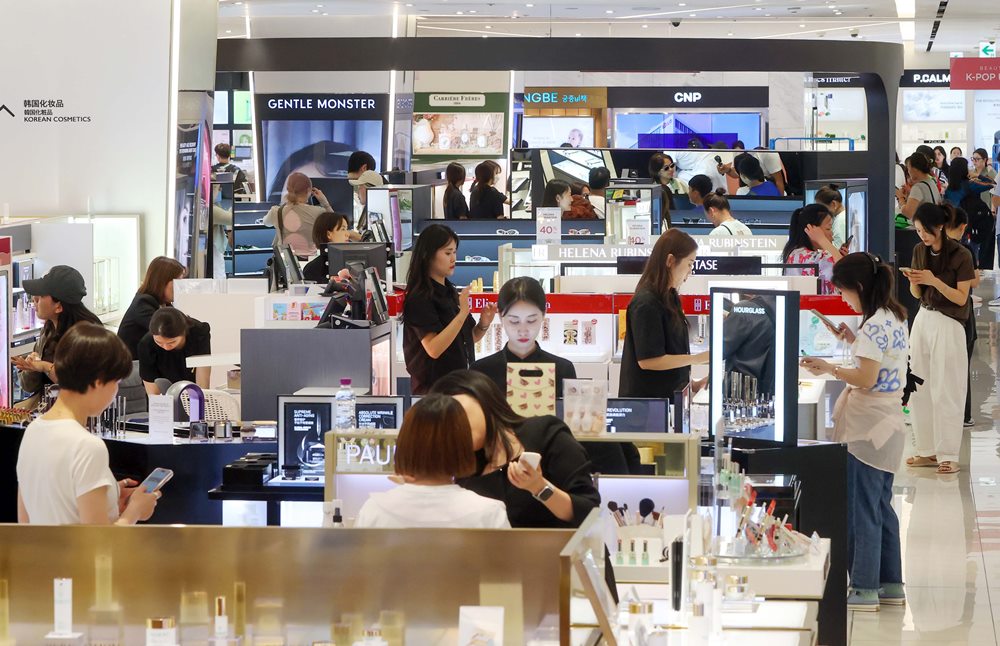
In future, Shilla says it recognises the importance of cosmetics and is planning new cosmetics areas but within the existing physical limitations of the store. This is because of green belt construction restrictions on Namsan (Nam Mountain) where the 508-room luxury hotel is located.
Since 2000, the Samsung Group subsidiary has been introducing more imported brands, following the removal of a government requirement for duty free shops to devote half of their sales space to Korean products. Today Shilla Duty Free retains a 300sq m (3,228 sq ft) area for Korean products on the first floor.
Shilla is also looking to introduce more shop-in-shop concepts. “Our first priority is cosmetics and we are looking for possibilities,” said Shin. “After September 11, our sales value decreased but we noticed that cosmetics didn’t decrease. That was something interesting and amazing.
“Even in the last four months, we didn’t hurt in cosmetics,” said Shin.
Tumi opened recently and this brand is hot with Japanese and Korean customers according to Shin. Another successful opening recently was the French leathergoods brand Vanessa Bruno. The company is also looking at other similar brands to introduce such as Bree and Kipling. Independent Japanese cosmetics brand SK II is also proving to be a big hit and is well-known among Korean customers.
“We see a decrease in leathergoods with ready-to-wear getting stronger, especially with local Korean customers,” said Shin. “Leathergoods used to be one of our biggest sellers but now customers are looking for specific brands.” In this regard sales of US leathergoods brand Coach are booming from a 24sq m (258sq ft) store which is due to be expanded soon.
The company has also had to cope with a radical shift in its visitor and customer base, which used to comprise 90% Japanese tourists. Today local Koreans, with their one-trip travel shopping allowance of US$2,200 represent 20% to 25% of visitors and an even bigger share of spending. Such a trend has contributed to the fall in sales of the Louis Vuitton boutique by -75% from its peak.
Shilla says half of its profits are now attributable to Korean customers and based on this experience the company is looking to accelerate a plan to re-open a third store in Pusan (closed in 2002) to complement the existing Seoul and Jeju downtown stores.
“More local boutiques are a threat and the price gap [with domestic markets] is narrowing,” says Shin, adding that sales in the first half of 2003 were significantly down. “We can’t rely on Korean customers because we don’t know when allowances may change.
“Top management here is thinking of a new way of marketing and is studying the possibilities,” said Shin.