

| Yilin Consulting & Yilin Watch Yilin Consulting, owned by Yilin Wang (pictured) is an acclaimed boutique consultancy based in Paris, specialising in helping brands and retailers engage the new generation of Chinese outbound travellers.
Its focus lies in converting independent, experience-driven travellers through targeted omnichannel engagement and frontline cultural training. Today, as part of our unrivalled coverage of the Chinese travel retail market at home and abroad, The Moodie Davitt Report proudly brings you the tenth edition of our exclusive Yilin Watch column in partnership with Yilin Consulting. |

Yilin Watch is published in exclusive association with The Moodie Davitt Report
Prologue: China’s National Day Golden Week is about to begin and this year it is a Super Golden Week. Mid-Autumn Festival falls on 25 September, and the official National Day holiday runs from 1 to 7 October.
Ten official days off across the two festivals, against eight last year, with three working days sitting in between.
Since early August, Xiaohongshu has been full of annual leave hacks. Take three days off, get 13. Take six, get 17. People are already raring to go, refining itineraries, stacking savings and working out how to squeeze the most out of every day away.
Heatwaves in Europe this summer didn’t cool down Chinese travel appetite, and this demand continues for autumn. Chinese Gen Z travellers have pushed Italy to the #1 destination for Golden Week, where the Airbnb search volume is almost double that of France, the #2 European country on the ranking.
Iceland’s dramatic landscapes make it the most-searched Nordic destination. Thanks to Chinese actor Li Xian’s Norway vlog, demand for Norway is up over +40% vs last year. Their natural hinterlands have also pushed Australia and New Zealand into the first tier of destinations with no low season all year.
As this issue of Yilin Watch appears, global travel retail is about to welcome this Golden Week wave. So, airports, brands and travel retailers, will higher traffic bring higher duty-free spend?
Are your stores ready to make them stop and shop?
In this edition, I embrace two outbound travel topics that went hot on the Chinese internet this summer to look at what an ordinary Chinese traveller hopes for, and what they notice, during a trip abroad.
I am sharing my observations, as both a Chinese traveller and a travel retail professional. And, as we say in China, I am offering a modest brick in the hope of drawing out jade, a small view put forward so that sharper ones across the industry can follow.
My sincere wish is that we come to see, and to treat, the Chinese traveller with a little more warmth, and a little more attention.
If the White Cliffs were in China
For anyone who has never been to the White Cliffs of Dover, I got to know this famous British landmark without even leaving China where I was on holidaythis summer. I simply opened WeChat.
It came from a post titled ‘If the White Cliffs were in China’. A Chinese netizen had used ChatGPT to turn the site into what it would look like if it were operated as a tourist attraction in China. Posted on 15 August, it passed 3 million views within a day.
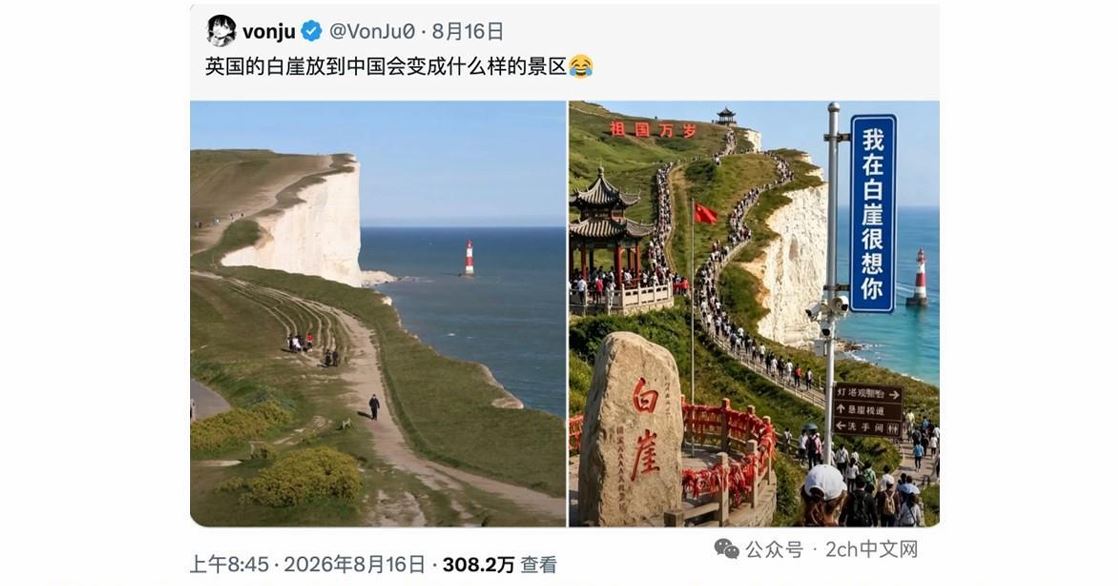
The post went viral, and netizens immediately piled in. With plenty of imagination, they began ‘Chineseifying’ landmarks around the world. From the Louvre entrance to Egypt’s pyramids, all were redesigned as if they were being run as Chinese scenic attractions. Even Iceland got the full treatment.
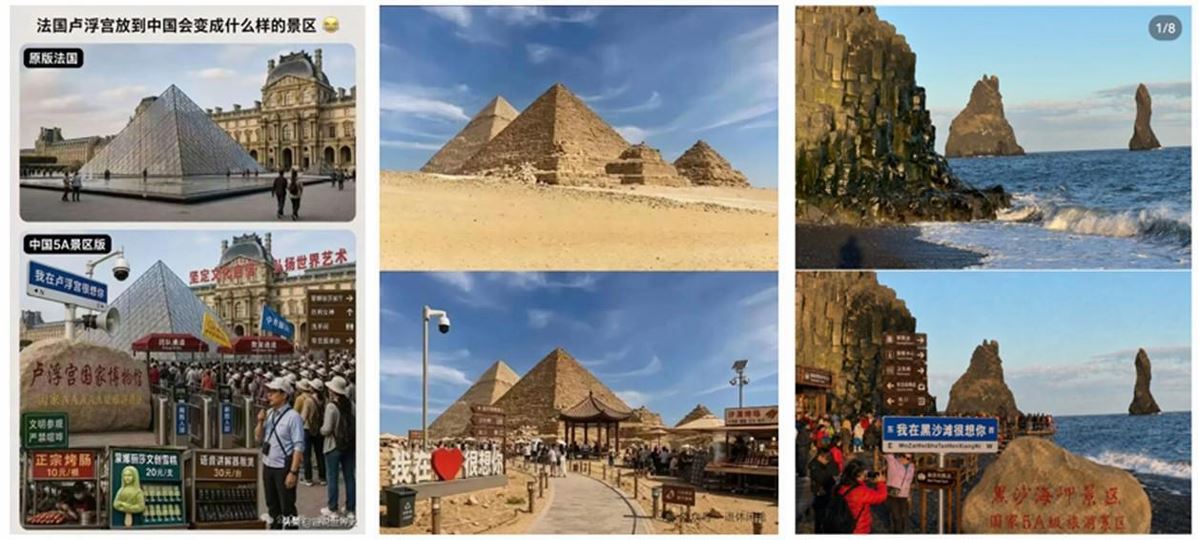
The comment sections were just as busy, and under the most-liked comments everyone seemed to agree quietly. Chinese travellers have developed a widespread aesthetic fatigue with the artificial scenery at domestic tourist spots. The cookie cutter check-in boards from north to south, ‘I miss you in …’ (我在……很想你), ‘The wind of missing you is whispered at …’ (想你的风还是吹到了 …).
Seen from another angle, this explains what Chinese outbound travellers have been asking for in recent years. Natural scenery, living like a local, shopping where locals shop, discovering the brands locals use, visiting markets, hiking, playing tennis, sitting by the sea, slowing down and feeling the everyday rhythm of local life.
Dragon Trail International’s April 2026 sentiment report ranks natural scenery, leisure and local culture among the content types that most inspire Chinese travellers to visit a place. That is why some NTO and DMO social content mixing local lifestyle and products with natural landscape and leisure activities is drawing such attention and engagement from Chinese travellers.
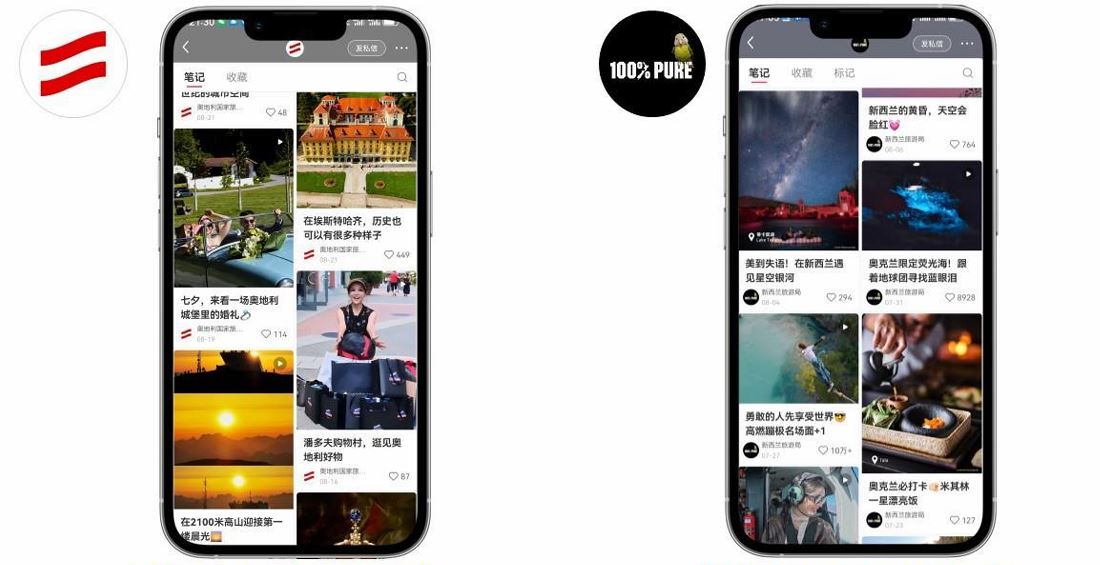
Since Chinese travellers ask so much of a localised travel experience, then as the first and the last stop of the journey, can travel retail link the product offer more closely to that local experience?
The closer an offer sits to the destination experience narrative, the more likely it is to be seen while the itinerary is being planned, saved in advance, and built into the trip.
What do you want to film most at a foreign airport?
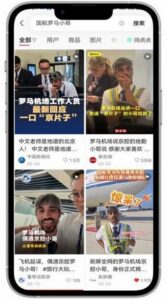
Besides the White Cliffs, the other hit of this summer lasted less than 20 seconds: an Italian ground agent at the Air China counter at Rome Fiumicino Airport calling Chinese passengers for boarding in flawless Beijing-accented Mandarin. Overnight, it went viral across the Chinese internet.
Everyone in the comments delighted in how authentic his Beijing accent was. The video stayed with me for one reason. He studied Chinese at my university, Beijing Language and Culture University (BLCU).
Because the posts took off, he made a second video about how he came to China to study Chinese. That kept the discussion going and won him another wave of goodwill.
If I pass through Rome Fiumicino Airport again, I really want to go and look for him at the Air China counter. If I happen to catch him on duty, I would love to ask which BLCU canteen had the best food back then. With that Beijing ‘er’ sound, I feel we would have plenty to talk about.
Beyond the enthusiasm for service in Chinese, the deeper reason for such a warm response is the feeling of being seen and well greeted while travelling far from home. Anyone who travels abroad often has probably felt it.
Of course, I am not saying that only native Chinese-speaking staff can raise the average duty-free spend of Chinese travellers. Native Mandarin speakers have contributed a great deal of travel retail sales. But goodwill towards a destination, a retailer or an airport never rests on one or a few people who speak one’s mother tongue.
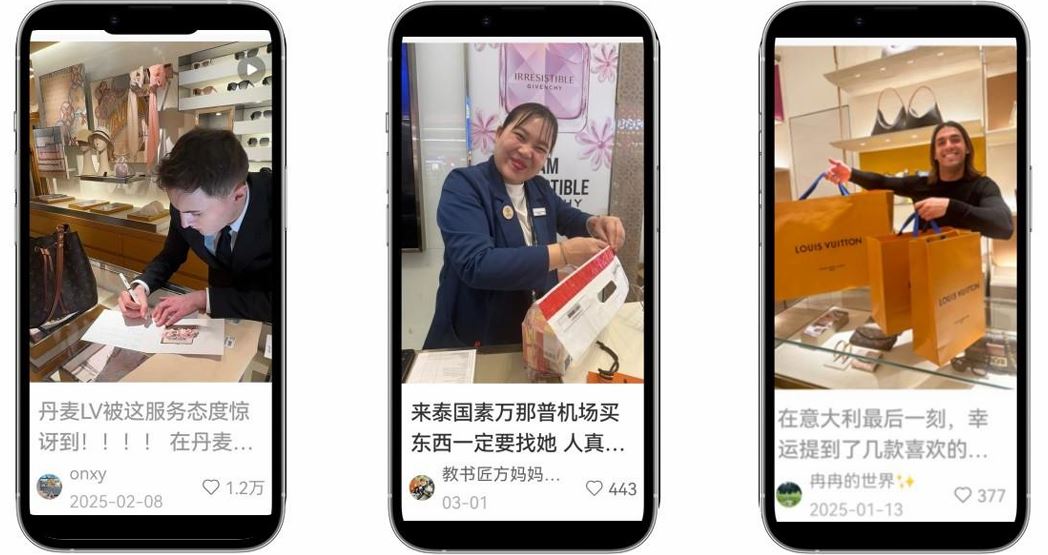
It comes from those small moments when you feel seen, heard and somehow understood. Moments that actually touch you. They get passed on by word of mouth, and they become a Xiaohongshu post or several pictures in a WeChat Moments feed.
So how do you build enough warmth and goodwill that a Chinese traveller, still at home, has already decided to come to you?
For Chinese customers, the best price and the good deal a retailer claims for itself can no longer persuade them to spend. They can check the price the moment they open their phone. The main reason someone would cross half the planet to visit a shopping destination lies in its reputation.
It comes from real people’s experience, from authenticity and sincerity that move you. The Rome ground agent, filmed without knowing it. The completely transparent shop assistant who teaches you, step by step, how to get the most out of the money in your wallet.
Of course, not every airport has a Rome ground agent who can go viral across China overnight.
But you can still make the journey easier to imagine before the traveller arrives. Show the store. Show the route. Show the people. Show how to make the most of their travel budget, and how your staff can help them to make a pleasant journey.
Let a traveller think: I saw this advisor in a post, people said she was efficient and helpful, and I know who to look for.
High Chinese traffic no longer guarantees high Chinese spend. Golden Week can bring them to your airport. Paying attention to what those travellers really need gives them a reason to stop, trust and buy. ✈
{At Yilin Consulting, we design practical frontline programmes for travel retail teams, equipping Brand Ambassadors with the cultural confidence and conversation tools to convert Chinese visitors from the very first interaction.}
Contact: yilinwang@yilinconsulting.com
Yilin Wang | Founder & CEO, Yilin Consulting, Paris
Previously on Yilin Watch: The Xiaohongshu Report
Edition 5: Yilin Watch: The Xiaohongshu Report – Targeting the year-end Chinese traveller
Edition 2: Yilin Watch: The Xiaohongshu Report – Focus on Qatar Airways, Cathay Pacific and All Nippon Airways
Edition 1: Announcing a key new editorial column – Yilin Watch: The Xiaohongshu Report